Medical workers brainstorm at the South Hamgyong Provincial People’s Hospital. Courtesy of The Pyongyang Times.
Originally published on the Leftist Critic blog on June 28, 2017.
This post was analyzed for mistakes and other content in January 2019, as part of an effort to engage in self-criticism. Some changes have been made.
Since June 19, the bourgeois media has been brimming with reports of the death of 22-year-old White college student from Cincinnati, Ohio, Otto Frederick Warmbier. While the family was happy to hear that their son was released from the DPRK, they were the ones that fueled the media firestorm. Warmbier’s father claimed that the DPRK had “murdered” their son, who had died in a coma possibly from an infection or blood clot, leading to anger in subsequent days from unhinged orange menace and “reserved” Tillerson, leading to a new “wedge” between the U$ and the DPRK. [1] As some media reported, the DPRK may have released him in hopes of making a deal with the orange menace. Of course, the orange menace, the fascist in a suit, didn’t want to make a deal, only knowing his supposed (and hyped) “negotiation” tactics from his days as a ruthless real estate magnate and his overrated “Celebrity Apprentice” show on NBC. As the days went on, bourgeois media, in another rash of imperial propaganda, cited varied “experts” who said they were “baffled” with the DPRK’s behavior, with John McCain, Marco Rubio, and Mike Turner following suit, and anti-DPRK columnists coming out of the ground like moles, claiming that the DPRK “murdered” Warmbier, even though he seems to have sought regime change in the country. [2] Even the Republic of Korea (ROK), often called “South Korea,” joined in the criticism. Furthermore, any future tours to the DPRK by Young Pioneer Tours have ended, with a possible ban of U$ tourism to the country floated. The former should be no big loss because the company seems very Orientalist while the latter is just meant to reinforce the empire’s perceptions on the U$ populace. [3]
On Otto Warmbier
The murderous empire won’t rest, from its proposed hideous sanctions to condemning the DPRK’s government as brutal and “oppressive.” Tillerson said that much in his remarks on June 19 on Warmbier: “we hold North Korea accountable for Otto Warmbier’s unjust imprisonment, and demand the release of three other Americans who have been illegally detained.” Later in this article, I’ll get the subject of whether his imprisonment is “unjust” which I do not think it is. There are three U$ citizens imprisoned in the DPRK. One of them, a businessperson named Kim Dong Chul admitted to CNN that he spied on behalf of “South Korean conservative elements” in 2015, saying that they “asked me to help destroy the (North Korean) system and spread propaganda against the government,” starting his spy work in April 2013, including bribing residents who would gather “important materials,” which he smuggled south or into revisionist China. [4] The other two were an academic named Kim Sang-duk or Tony Kim who committed “hostile criminal acts with an aim to subvert the country” which was not related to his teaching, and Kim Hak-song, “a man who was doing business in relation to the operation of Pyongyang University of Science and Technology.” As for Warmbier, a student of Virginia University, he was encouraged to rip down a patriotic banner in a restricted area of the hotel by a member of Friendship United Methodist Church, a secretive university organization, and even the CIA, which some scowled at as only an “accusation.” Truthfully, on January 26, DPRK’s government arrested him for perpetrating a hostile act against the country “after entering it under the guise of tourist for the purpose of bringing down the foundation of its single-minded unity at the tacit connivance of the U.S. government and under its manipulation.” [5] He further admitted this about less than months later. He told, to the Supreme Court of the DPRK, the nature of his crime and asked for forgiveness (across the bourgeois media are video clips of him crying):
On December 29, 2015, I entered the DPRK as a tourist. On January 1, 2016, I committed severe crimes against the DPRK. The task was given to me by the Friendship United Methodist Church. At the encouragement of the Z Society and the connivance of the United States Administration, I came to commit this task. The aim of my task was to harm the motivation and work ethic of the Korean people.This was a very foolish aim…Sharon Webb…deaconess in the Friendship United Methodist Church…said that communist nations rally around political slogans. She asked me to take an important political slogan from North Korea to be hung in her church as a “trophy”. She continued to say that by taking this slogan, we would harm the unity and motivation of the North Korean people and show this country an insult from the West…She offered me a used car worth $10,000 if I was successful. And she said if I was detained and not returned, her church would pay $200,000 to my mother in a way of charitable donations. Since my family is suffering from very severe financial difficulties, I started to consider this as my only golden opportunity to earn money…He said my plan of action would certainly help the Z Society’s goal of spreading “freedom” and eliminating “tyranny”. He said if I was successful, he promised me that he would help me become a member in the Z Society. [6]
The same day, the state media of the DPRK reported that those attending the trial were citizens from “different walks of life” and after his “written indictment confirming his crimes was submitted” the “court sentenced him to fifteen years of hard labor” for violating article 60 of the DPRK’s criminal code. After looking at varied sources (here, here, and here) one English translation of the criminal code, [7] stated the following about article 60, which concerns terrorism:
A person who kills, abducts or injures cadres or people with anti-state purposes shall be punished by reform through labour for more than five years. In cases where the person commits a grave offence, he or she shall be punished by life-term reform through labour or the death penalty, and confiscation of property.
In this case, it was a “grave offence.”
Fast forward to the aftermath of Warmbier’s death. The U$ doctors have belayed propaganda claims, saying that Warmbier was NOT tortured or abused (as his family falsely claims), but that “beyond minor skin blemishes consistent with medical care they found no evidence of fractures or trauma to his body” with the DPRK sending medical records back with him! [8] If they really had tortured him, which they didn’t, they wouldn’t even send any records. Another article says that there is no evidence Warmbier was injured with the MRI scan showing brain damage and that “the medical team at Cincinnati got some medical records from the North Koreans and they said the records show Warmbier has been in this condition since April of last year” but that there is no evidence “of broken bones or other physical abuse, and scans of his head and neck looked normal, except for the damage to his brain.” [9]
Of course, the DPRK released him “according to a humanitarian judgment of the DPRK’s Central Court” on June 13, 2017. [10] In days that followed, with the propaganda about his condition, the DPRK showed they were in the right. The Foreign Ministry said that the U$ administration is engaging in an ” anti-DPRK smear campaign by abusing the humanitarian measure taken by the DPRK” and said that “Warmbier is clearly a criminal sentenced to reform through labor in accordance with the DPRK law” and that he confessed on February 29, 2016 “in tears that he had committed hostile act against the DPRK,” with the US making “every frantic effort to disparage the prestige of the dignified DPRK and stifle it while imposing heinous sanctions.” [11] They also noted that U$ doctors argued that Warmbier was provided with medical treatment in the DPRK, with his death a mystery, questioning why the Obama administration never “made an official request for the release of Warmbier on humanitarian basis.” This is worth noting since they “had no reason at all to show mercy to such a criminal of the enemy state” but provided him necessary medical care anyway. [12]
With Warmbier’s family interestingly declining an autopsy of their son, which will allow rumors to continue, those at least partially (or more fully) sympathetic to the DPRK have not been united. One site, called “Young DRPK watchers” has two opinions on this subject. [13] One says that “Otto Warmbier’s situation arose from neglect and medical incompetence, [rather] than abuse” with American prisoners not “physically harmed at all and are also fed well” and that the DPRK’s medical system is divided into levels for the privileged and everyone else (internalizing imperial propaganda by saying this), concluding that Warmbier “may have fell into the coma as a consequence of an unknown medical condition” with neglect by the DPRK. The other, by the same author, admitting that Warmbier is a victim but is also “an inflated symbol of American privilege.” Both of these opinions are better than that in the bourgeois, they fall into the category of concessions which Vngiapaganda warned about in a post almost a year ago. The same is the case in an article on Stop Imperialism on Warmbier’s death. It accepts the possibility that the DPRK murdered him, which is giving in too much to the bourgeois media narrative. All in all, these opinions are better than the seething Chinese netizens which seem be in up in arms about the DPRK, showing the effects of Chinese social-imperialism with the country’s capitalist system.
With the death of Warmbier, the bourgeois media, capitalists, and their lackeys, along with those not adequately informed by the subject (the U$ public in general) is acting like the DPRK has a medical system that resembles people conducting voodoo (or their perception of people doing this) to “cure people” or wish them “ill.” I’m specifically thinking of those curses conducted by voodoo practitioner, Minerva, in the Hollyweird box office “bomb” titled Midnight in the Garden of Good and Evil, based on the book of the same name. It seemed to be the best example of this mentality which could come to mind, with people acting like the DPRK are in the “dark ages” of medicine and have some archaic medical system.
The propaganda about the DPRK’s health system is nothing new. The Daily NK (an anti-DPRK outlet), the Los Angeles Times, BBC News, The Week, The Telegraph, NY Daily News have declared that the DPRK doesn’t care about healthcare and has a shotty (or “horrifying”) system, which some even thought was on the “brink of collapse.” [14] Much of this imperial propaganda, only some of the publications named above, with some within medical journals as well, was fed by an Amnesty report in 2010 titled “North Korea: The crumbling state of health care in North Korea.” As the report admitted, they conducted interviews “with North Koreans who have settled abroad” since the DPRK (rightly) has not let these humanitarian imperialists into their country, making the report pure propaganda. [15] Luckily, some on the international level know the report is BS. As the bourgeois media reported, the World Health Organization said that Amnesty’s report was based on a small sample of people of those who left the country, with WHO spokesperson Paul Garwood saying “all the facts are from people who aren’t in the country. There’s no science in the research,” not mentioning recent improvements to healthcare in the country, even as he made the concession that Amnesty’s accounts could be “credible” (they aren’t by definition) while saying that Amnesty is not “taking into account some of the things that are happening today” in the DPRK. [16]
Numerous anti-DPRK accounts even admit the advantages of the DPRK’s system. In words criticizing the medical system in the country, one student doctor, had to “grudgingly” admit that the country has well-trained dentists and has a stress on exercise, among other aspects. [17] Even the Library of Congress in their broadly “anti-communist” report on the DPRK, written in 2008, had to admit this. It said that medical care is provided free of charge, that physical exercise is a major focus, and that there are nationwide medical check ups, especially at routine places like schools, factories, offices, and farms. Furthermore, they added that people receive a lifetime health card, the government has been aggressive attacking of diseases that cause epidemics (they say with spraying of DDT and other chemicals), and a high number of physicians and hospitals per capita, one of the highest in the world. [18] They add that more than 75% in the medical profession are women, with most hospitals as general hospitals, many clustered around Pyongyang, and no smoking in hospitals. Even with the supposed drawbacks, like shortages in medicines (because of sanctions), claims of variation in medical care, and economic problems weakened medical system [19], among others, the pages note that there has been a dramatic improvement in life longevity in the country ravaged by famine caused by Western imperial sanctions. Perhaps such “criticisms” shouldn’t be a surprise since most of chapter, which this information is within in, based on declassified CIA report. Even so, it is impressive that the CIA is even admitting the success of the DPRK. These are perhaps positives of progressive nature of the DPRK although the country has accepted too much revisionism for anyone’s liking.
Commie Dad’s writing on this topic, within an article in which he claims that DPRK has a centrally-planned economy (partially questionable due to acceptance of revisionism), is worth noting. He notes how UN sanctions prevented a pharmaceutical company “from importing the chemicals it needed for a healthcare project in the DPRK countryside” and that the DPRK “still guarantees universal healthcare to its people,” which the U$ hasn’t done, a fact even acknowledged by anti-DPRK author Barbara Demick and a CIA report which acknowledges DPRK’s achievements in “free health care, and preventive medicine; and infant mortality and life expectancy rates comparable to the most advanced countries until the recent famine.” [20] He adds that the remarkable public healthcare system of the DPRK, providing ” unconditional universal coverage for citizens”continues to perform well, citing the words of Dr. Margaret Chan, the WHO’s Director-General, calling the country’s healthcare system “something which most other developing countries would envy,” pointing out that the “DPRK has no lack of doctors and nurses,” further praising their system for its “very elaborate health infrastructure, starting from the central to the provincial to the district level.” This quote about envy is used in the title of this article, which also notes the country’s comprehensive healthcare, saying that authorities recognize malnutrition is a problem but it is less of an issue than in the past, and the quality of their healthcare system. [21] Of course, the reactionaries are seething at this pronouncement. A Heritage Foundation fellow claimed WHO was “defend[ing] the North Korean government,” citing the horrid Amnesty report and U$ State Department, along with varied bourgeois media, while American Thinker was shocked at her “praise” of what they called a “totalitarian and rogue nuclear-armed police state.” [22] The only country that falls into that category is the U$ (and its client states in the Mideast, along with Western European capitalist states), not the DPRK. These reactionaries would find friends in the U$ State Department, which warns U$ citizens to not go into DPRK hospitals…because then they will learn that the system is excellent? [23]
While, in the murderous empire, the GOP fights to pass a healthcare bill that would “increase the number of people who are uninsured by 22 million” by 2026 and the Dems fight to keep their insurance-friendly “Obamacare,” the DPRK already has universal healthcare. As I noted in my previous post about the Supreme People’s Assembly (SPA) and democracy within the DPRK, this unicameral legislative body has enacted laws putting in place “perfect and universal free medical care.” [24] The DPRK not only provides rights and duties of citizens, but they have the right to “right to education and free medical care and freedom of scientific, literary and artistic pursuits” along with equal rights for men and women. Furthermore, in January 1947, the DPRK enforced “free medical care for workers, office workers and their dependents” with universal free medical care enforced since January 1953, and complete “universal free medical care” since February 1960, meaning that the state totally bears “the expenses of medical checkups and treatment, bed and board in hospitals, medicines, and even travel costs to and from sanatoria.” This commitment is manifested not only by the type of care the citizens receive but through the establishment of Pyongyang Medical University, the top medical school in the country which was founded in 1948 “when the Department of Medical Science at Kim Il Sung University became an independent university.” [26]
The achievements of this Korean healthcare system are widely acknowledged. While one Cornell medical student (who talked with “the chair of Pyongyang Medical College’s Department of Neurosurgery for 90 minutes”) grumbled that the free medical system comes with “many costs of personal freedom” (his Western bourgeois concept of freedom) with government permission required, and physicians not more highly paid than others, if we are to believe him on that aspect, did admit the following:
“[The medical students] smiled and very proudly told me that the government sends students to college for free – and that is consistent with the medical system, that it’s also free. Even intensive surgeries do not cost a penny…Everything I saw was very unique. Exploring the city [Pyongyang] was unreal. All buildings were beautiful and big – often with posters of the two great leaders in front, which gave off a little eerie feeling. American media give the idea that North Korea is constantly brewing with missiles, focusing on the unreasonable rulers…but the everyday life of North Koreans, at least in the capital, nearly mirrors ours. It was an incredible privilege to meet North Koreans and hear their sentiments, to physically see the land – and in that I realized that they were my fellow people, that we speak the same language, love our families and are all humans. Understanding is the first key to any peace and compromise.”
The WHO notes that the country has a life expectancy of 67 years, or over 70 years if you are relying on the CIA World Factbook, which is impressive. Other data shows that while 3.7% of population drinks, mostly among men over 15 and not women, 78.9% abstain from drinking, with recorded alcohol consumption is steady over time, not increasing since the 1960s significantly. [27] Furthermore, while tobacco usage is strong among males, with almost half of males, smoking, smoke-free legislation affecting hospitals, non-university educational facilities, and public transit. There is also strong tobacco cessation support, partial funding of tobacco cessation, warning on tobacco packages, no tobacco vending machines.
An event takes place at the People’s Palace of Culture on World No Tobacco Day. Photograph is courtesy of the Pyongyang Times.
This is manifested by the fact that late last month, at the People’s Palace of Culture, the country honored World No Tobacco Day. During that day, as the Pyongyang Times reported, officials of the country’s Public Health Ministry, resident diplomatic missions, and international health organizations, talked about how tobacco is a threat to development. The Vice-Director of the Public Health Ministry, Choe Suk Hyon, was quoted as saying that they made achievements in tobacco control the previous year, saying the following:
“What is important in tobacco control is to conduct large scale educational campaigns to publicize the negative impact of smoking on the health and socio-economic life. And we should strengthen scientific research on smoking cessation products which help quit smoking.”
Others, like the representative of the WHO to the DPRK, praised the Korean females in the country for being at the “vanguard of no-smoking campaign” but still wanted them to help their “fathers, husbands, boyfriends and sons to quit smoking if they are smokers” and noted that there is a “newly-revised tobacco control law of the DPRK” with no-smoking “information activities were conducted at the central and provincial hygienic information halls and medical institutions across the country.” While the U$ has developed strong anti-smoking measures as well, there is still a formidable tobacco industry in the U$, something the DPRK doesn’t have.
Apart from strong tobacco control, low alcohol consumption, and general healthcare in the country, there are a number of other accomplishments. For one, infant mortality declined from 1990s to present (same with people with tuberculosis), there has been a relatively steady amount in people with HIV/ AIDS (the country is likely an “AIDS free zone” by now), and immunization for DTP3 among children under 1 almost 100%. Furthermore, maternal death rate has also dramatically declined, less stunting of children than on the past, strong antenatal care, 100% of births attended by skilled health personnel, and broad measles immunization. If that isn’t enough, there almost complete treatment for tuberculosis, obesity is not a major cause for death (like in the U$) but rather it is raised blood pressure among those in their twenties, and much of the population is using improved water and sanitation, to name a few. [28] Other WHO reports show that the population receives Vitamin A supplements to counter some deficiencies, and that the under five mortality rate has been dropping rapidly.
In one medical article apart from the others, there is some praise of the DPRK. In an article that is broadly against the country, the medical researchers must admit that “the burden of mortality due to communicable diseases and malnutrition in North Korea is relatively low in terms of both quantity, expressed in the death rate, and quality,” that tuberculosis’s “mortality rates have declined continuously in the past 15 years.” In one article of a “country study” of the DPRK, it is noted that back in 1938-40 life expectancy was only 38 years old, while it was “70.9 years for males and 77.3 years for females” by 1986, with infant mortality declining, a ” substantial increase in the number of hospitals and clinics, hospital beds, physicians, and other health-care personnel since the 1950s,” growing from 285 in 1955 to 2,401 in 1986, with specialized hospitals, “including those devoted to treating tuberculosis, hepatitis, and mental illness, are generally found in large cities,” and preventive medicine a major focus. Adding to this, a public health law was passed in April 1980 saying that the “state regards it as a main duty in its activity to take measures to prevent the people from being afflicted by disease and directs efforts first and foremost to prophylaxis in public health work” while medical examinations are “required twice a year, and complete records are kept at local hospitals” with a high value afforded on “traditional herbal medicine” and physical education an important part of public health with people “encouraged to take part in recreational sports activities such as running, gymnastics, volleyball, ice skating, and traditional Korean games” along with “group gymnastic exercises.”
There are further aspects worth noting. For one, even with the “development of informal health-care practices” in the country since the 1990s, this sector has actually contributed to the formal healthcare system. In 2007, the DPRK spent 3.02% of its GDP on health expenditures. In 2013, the DPRK spent 38.8% of their budget that year on “health, education, sport, music, art and culture” with an increase of 2.2% for healthcare spending.It is also worth noting that even the World Food Programme must admit that most households aren’t food insecure (see page 33 of this PDF), belaying claims of “famine” in the country.
Recent developments
Kim Jong Un inspects dental care supplies factory. Photograph is courtesy of the Pyongyang Times.
There have been numerous developments of the DPRK’s healthcare system in recent years. In 2010, with the help of WHO, the country launched a “medical video conference network Tuesday aimed at giving smaller, rural hospitals access to specialists in the capital Pyongyang.” [29] Three years later, the DPRK developed a “clinical medicine information service system” which contained “details on 12,000 pharmaceuticals and 154,000 kinds of medicines from more than 50 countries” as Voice of Korea, a state media outlet, noted.
There are other aspects worth noting. While the DPRK has requested medical aid from the UN (since they are under harsh sanctions), they have still made strides. [30] Last year, the Pyongyang University of Science and Technology noted that it was testing a 3D printer for use in medical settings, with likely some progress made. This month ThePyongyang Times reported that a two-storey new people’s hospital opened in Tongsinhung-ri with “over 10 rooms for special treatment and sophisticated homemade medical and experimental apparatuses” and is part of “the telemedicine system whereby it is connected to such central hospitals…[and] linked online to provincial, city and county hospitals.” [31] It was also noted that using this system, the “latest medical science and technology are disseminated and training courses are given by medical workers at central hospitals,” with increased abilities, with telemedicine,”in raising their abilities as well as in treating patients.” Less than a week ago, Kim Jung Un, the chairman of the Workers’ Party of Korea (WPK), chairman of the DPRK State Affairs Commission and supreme commander of the Korean People’s Army, inspected the newly built Dental Care Supplies Factory, which has a floor space of 12,720 square metres, with the factory able to “turn out annually tens of millions of tubes of toothpaste, mouthwash and a variety of dental care supplies.” [32] In that visit he noted that “the Party [WPK] and government are taking full responsibility for the people’s lives and health and that such socialist healthcare is one and only in the world,” adding that factories like this are “needed to ensure the people lead a worthwhile life enjoying themselves the benefits of socialist healthcare,” even though such healthcare is progressive but not socialist.
Like Cuba, which sends doctors abroad, the DPRK also sends doctors abroad for humanitarian reasons. Even those with anti-DPRK beliefs have to admit this. In July of last year, the DPRK’s ambassador, Jang Myong Ho, visited the al-Assad University Hospital in Damascus, affirming the country’s readiness to support and aid Syria’s health sector, hailing the medical services provided by the hospital, saying that Syrian government had a “just health policy and commitment to provide free treatment to all citizens despite the difficult economic conditions under the current crisis.” He also added that this anniversary of 50 years diplomatic and friendly bilateral relations between the DPRK and Syria is “historical and exemplary,” noting that these relations have been “developed and enhanced” over the years.
With all of this, it is no surprise that proposed sanctions would target the healthcare system of the DPRK and their economy. As I noted in my post on these sanctions,
[while] these sanctions show that the imperial monitoring of “the territory, waters, or airspace of North Korea” shall not apply to those vessels or planes which “import food, medicine, or supplies into North Korea,” the fact that there would be monitoring by the US Navy (and Air Force?) is undoubtedly an act of war…Section 104(a), part of an anti-DPRK sanctions law which went into effect last year, mentioned in the above quote as part of the imperial monitoring, shows these efforts are aimed at the DPRK’s economy
Concluding words
At the Korean Rehabilitation Centre for Children with Disability. Courtesy of Imgur, assembled in an album and posted on /r/communism by yours truly.
The healthcare system of the DPRK should be celebrated, not something to ridicule. While the bourgeois media focus on the country’s “problems” there is no doubt that they don’t want people to know of these successes. With the ROK having one of the “world’s highest suicide rates, having overtaken that of Japan” and the leading “cause of death is cancer, followed by cerebrovascular and heart disease” even with their “universal health insurance system that is compulsory and covers employees and their relatives (National Health Insurance, NHI),” there are high doctor consulting fees, and “long waiting lines for treatment and high costs.” The DPRK doesn’t have those issues and doesn’t work with the U$ to streamline their system. There are many other resources I could have consulted to finish up this article. [33] As good comrades, we should stand in solidarity with the DPRK against the clear imperialist aggressors. Anyone who doesn’t do so is not only not a real comrade, but they also are not a communist in name or action.
The life within the DPRK and the country’s policies are not what the West says it is. The country has stood by those fighting for national liberation, has a developed democracy of sorts, and has celebrated the International Day of Persons With Disabilities in 2015, and in years afterward (and before). The country has worked with the UNDP to increase its food security and food production.
Some say that the country became “revisionist” after 1972, which is a valid viewpoint, which will be addressed in another post. Reading a number of books, or looking at other resources can help. [34] If a war with the DPRK occurs, started by the unhinged fascist, the orange menace, who can be easily swayed, we should be prepared to support it even if all many of those in our host country (especially if you live in the West) support the war with a fervor. Not standing by the DPRK and against war would show the weakness of “the Left” and prove the capitalists had “won,” something that none of us want.
Notes
[1] Samuel Smith, “22-Y-O American Otto Warmbier Dies After Spending 17 Months in North Korean Prison,” Christian Post, June 19, 2017; Stacey Leasca, “Otto Warmbier: A timeline of the American student’s capture and release in North Korea,” Mic.com, June 19, 2017; Shreesha Gosh, “Donald Trump Says Otto Warmbier Death Caused By North Korea’s ‘Brutal Regime’,” International Business Times, June 20, 2017; Josh Lederman and Matthew Pennington, “Efforts of one U.S. official bring Otto Warmbier home,” AP, June 18, 2017; David Choi, “‘No words were spoken’ — Otto Warmbier’s roommate in North Korea describes the day Warmbier was arrested,” Business Insider, June 19, 2017; Andy Sharp, “Student’s Death Puts Trump Back to Square One on North Korea,” Bloomberg News, June 20, 2017; Maggie Fox, “What Killed Otto Warmbier? Maybe an Infection or Blood Clot,” NBC News, June 20, 2017; Patrick Grafton Green, “Who is Otto Warmbier? Why did North Korea imprison him? How did he die? All we know on late American student,” Evening Standard, June 20, 2017; Susan Svrluga and Anna Fifield, “Otto Warmbier dies days after release from North Korean detention,” Washington Post, June 19, 2017; Choe Sang-Hun, “Otto Warmbier’s Death a New Wedge Between U.S. and North Korea,” New York Times, June 20, 2017. Months of diplomacy for this release seemed to fade into the background.
[2] Fuster Kung, “Death of American detained in North Korea baffles experts,” AP, June 20, 2017, reprinted in the Washington Post; CNN Wire, “John McCain: North Korea ‘murdered’ former detainee Otto Warmbier,” NBC 4, June 20, 2017; Fred Haitt, “Remind me again why we ignore the thousands languishing in North Korea’s concentration camps?,” National Post, June 19, 2017, reprinted from the Washington Post; Christian Caryl, “The North Koreans treated Otto Warmbier like one of their own,” Washington Post, June 19, 2017; Gordon D. Chang, “State-Sanctioned Murder: North Korea Killed Otto Warmbier,” The Daily Beast, June 19, 2017; Danika Fears, “North Korea kills American student,” New York Post, June 19, 2017; Cortney O’Brien, “Rubio Minces No Words: Warmbier Was ‘Murdered’,” TownHall, June 19, 2017; Patrick Maguire, “Otto Warmbier’s death reminds us of North Korea’s brutality,” New Statesman, June 2017; Jonathan Cheng, “North Korea Claims Otto Warmbier Sought Regime Change,” Wall Street Journal, June 18, 2017; Jack Torry and Jessica Wehrman, “Otto Warmbier’s death after release from North Korean detention brings sympathy, anger,” Dayton Daily News, June 19, 2017; CBS News, “S. Korean leader says N. Korea bears “heavy responsibility” for Otto Warmbier’s death,” June 23, 2017.
[3] Bill Chappell, “Tour Company Used By Otto Warmbier Will Stop Taking Americans To North Korea,” NPR News, June 20, 2017; Andreas Litmer, “Warmbier death: Will people still travel to North Korea?,” BBC News, June 20, 2017; Charlie Chappell, “Otto Warmbier’s Death May Spell the End of American Tourism to North Korea. Sadly, That’s About It,” Time.com, June 22, 2017; Neil Connor, “Otto Warmbier’s travel agency stops taking American tourists to North Korea after ‘risk became too high’,” The Telegraph, June 20, 2017; Adly Choi, “Inside the Sketchy Travel Company That Took Otto Warmbier to North Korea,” Nextshark, June 23, 2017. The father of Warmbier did make an honest perception of the horridness of this company even though it has anti-DPRK diatribes within it: “This Chinese company has slick ads on the internet, claiming no American ever gets detained…They lure Americans. And that’s what happened to my son. He was trying to leave the country and he was taken hostage. They advertise it as the safest tour ever. But they provide fodder for the North Koreans. They took him hostage. And the outcome is self-evident.”
[4] Tim Schwarz, Will Ripley, and James Griffiths, “Exclusive: North Korea reveals alleged U.S. prisoner to CNN in Pyongyang,” CNN, Jan. 11, 2016; Taehoon Lee, “North Korea detains fourth US citizen,” CNN, May 8, 2017; BBC News, “North Korean university names detained US citizen,” Apr. 24, 2017; Tom Cleary, “Tony Kim aka Kim Sang-Duk: 5 Fast Facts You Need to Know,” Heavy.com, May 1, 2017; Anna Fifield, “North Korea detains American at airport,” Washington Post, Apr. 23, 2017; KCNA, “Relevant Institution of DPRK Detains American Citizen Jin Xue Song,” May 7, 2017; James Pearson, “North Korea detains third U.S. citizen,” Reuters, Apr. 23, 2017. On May 7th, KCNA said “a relevant institution of the DPRK detained American citizen Jin Xue Song [Kim Hak-song] on May 6 under a law of the DPRK on suspicion of his hostile acts against it. He had worked for operation of Pyongyang University of Science and Technology. A relevant institution is now conducting detailed investigation into his crime.” Currently there are FOUR detained foreign nationals in DPRK, if Wikipedia is right.
[5] Kathy L. Gilbert, “North Korea releases comatose Otto Warmbier,” United Methodist News Service, June 15, 2017; Pyongyang Times, “American Arrested for His Hostile Act against DPRK,” Jan. 23, 2016.
[8] Jason Hanna, Joshua Berlinger, and Emanuella Grinberg, “Doctors: Ex-North Korea detainee Otto Warmbier has severe brain injury,” CNN, June 16, 2017.
[9] Maggie Fox, “Otto Warmbier Has Extensive Brain Damage, Doctors Say,” NBC News, June 16, 2017.
[13] Jonathan Allen, “Otto Warmbier’s family declines autopsy for US student released by North Korea,” The Sydney Morning Herald, June 21, 2017; Young DPRK Watchers, “An objective assessment of Warmbier’s fate: Challenging U.S mythologies,” June 20, 2017; Young DPRK Watchers, “Otto Warmbier as a symbol of American Privilege,” June 18, 2017.
[14] Daily NK, “The dire reality of “universal health care” in North Korea,” June 2, 2015; Barbara Demick, “North Korea’s healthcare is a horror, report says,” Los Angeles Times, July 16, 2010; Caroline Gluck, “N Korea healthcare ‘near collapse’,” BBC News, Nov. 20, 2001; The Week Staff, “North Korea’s ‘horrifying’ health care system,” The Week, July 19, 2010; The Telegraph, “North Korea’s health system ‘on its knees’,” July 15, 2010; Laura Oneale, “North Korea’s Health Dilemma,” June 22, 2013; Freekorea.us, “A guerrilla health care system for North Korea’s poor,” Sept. 28, 2015; Radio Free Asia, “North Korean Health Care ‘Fails’,” July 20, 2010; Sean Alfano, “North Korea’s health care horror, doctors sometimes perform amputations without anesthesia: report,” NY Daily News, July 15, 2010.
[15] I’m not even going to link this horrible report, just the title page if those who are skeptical want to “prove” that I’m right, which would be utterly obnoxious. If you want to read hideous, disgusting, orientalist propaganda and fill your mind with lies, go right ahead, but you’ll be no comrade of him.
[16] BBC News, “Aid agencies row over North Korea health care system,” July 16, 2010.
[17] Josiah Cha, “‘Every patient had malnutrition’ – on a medical mission in North Korea,” The Guardian, Oct. 8, 2015. I think this is the same medical mission.
[18] See pages 126, 127, 128, 129, 130.
[19] As CNN (“Red Cross: North Korea medical system near collapse,” Nov. 6, 1997) and hateful “North Korea watchers” (Liberty in North Korea, “SONGBUN | Social Class in a Socialist Paradise,” June 25, 2012) admit, if you read between the lines, capitalism almost caused the DPRK’s healthcare system to collapse in the 1990s. Even so, the country has been suffering from a bout of revisionism without a doubt since thee 1970s at least.
[20] The report also acknowledges the achievement in “compassionate care for children in general and war orphans in particular; ‘radical change’ in the position of women; [and] genuinely free housing.”
[21] Jonathan Lynn, “North Korea has plenty of doctors: WHO,” Reuters, Apr. 30, 2010.
[22] Brett Schaefer, “United Nations Defends North Korean Health Care System,” The Daily Signal, July 22, 2010; Sierra Rayne, “WHO’s Delusions on North Korea’s Health Care System,” American Thinker, July 24, 2013.
[23] In their travel guidelines for the DPRK, it almost sounds Orientalist, implying that US hospitals are wonderful, shining, and happy compared to those in the DPRK: “Medical facilities in the DPRK lack resources and electricity. Medical personnel have inadequate or outdated skills. Hospitals in Pyongyang can perform basic examinations and lifesaving measures, but functioning x-ray facilities are not generally available. Avoid surgery. If you have an accident outside Pyongyang, transport back to the capital can be lengthy and without medical assistance.”
[25] They have also “adopted the Constitution’s principles by passing Socialist Labour Law, Land Law, Law on Public Health, Law on the Nursing and Upbringing of Children, Law on Environmental Protection, the Criminal Law, the Civil Law, the Family Law, laws for the “total elimination of tax in kind and taxation which is the remnant of the outdated society” with no tax system no longer in the DPRK, and a law enacting “universal free education and the 11-year compulsory education.””
[26] The ROK claims that chemical weapons were developed here, but it undoubtedly a total lie.
[27] 95% of those who drink, drink spirits. There is also strong alcohol consumption by males, more than among females.
[28] This information also says that strokes are the leading cause of death, with probability of dying highest among men over 70, low in all other categories. It also says that people under age 5 mostly die of prematurity and other causes, that over 60% of population in urban areas, and that life expectancy varies depending on age. It is also worth noting that 16.3% of parliament is composed of women.
[29] Sangwoon Won, “North Korea launches medical videoconference network with help of WHO,” Associated Press, 2010. Reprinted on http://www.wellness.com/.
[30] Elizabeth Shim, “North Korea requests medical aid from U.N. agencies,” UPI, July 6, 2015. There are also claims they were trying to learn from China about AIDs.
Overlay of oil/gas pipelines with Rojava territory. I created this for one of the articles on Rojava I wrote, posting it on Imgur. I am sharing here since I feel it is relevant to this topic. As I said in my article, this map overlay “shows that oil and natural gas pipelines snake through it [Rojava], including one north from Aleppo, and others going through the heart of the territory in Northeast Syria where there is also a concentration of oil and gas fields.”Originally published on the Leftist Critic blog on May 24, 2017.
This post was analyzed for mistakes and other content in January 2019, as part of an effort to engage in self-criticism. Some changes have been made.
Based on recent commentaries, I feel it is right to address this topic after writing a two-part series on Dissident Voice about Rojava. The first part of my series is titled “”A Liberated Area in the Middle East”?: Western Imperialism in Rojava” focused on the broad contours of the supposed “state” while the second part, titled the “The Illegal Entity of Rojava and Imperial “Divide and Rule” Tactics” focused on how this entity is illegal and had illegitimate sovereignty under existing law.
A first stab at the topic
There is more than just the Free Syrian Army or FSA in Syria, without a doubt. As I noted in “The Illegal Entity of Rojava and Imperial “Divide and Rule” Tactics,” herein called “The Illegal Entity of Rojava” there is a new “rebel” group in town: the Free Idlib Army or the FIA, a part of the FSA:
…the Free Idlib Army (FIA), [is] a division of the FSA which would theoretically fight “jihadist groups and pro-government forces in [the] northwestern Idlib province” even as it faces likely targeting from such “al-Qaida-linked factions,” even though it has coordinated with them before. The FIA entity, consisting of 30,000 to 35,000 people, is undoubtedly, as one analyst put it, “100 percent an American project,” with weaponry, financial aid, and more, funneled through Müşterek Operasyon Merkezi (MOM), an operations center based in Turkey, operated by the CIA with the supervision of the Turks.
Furthermore, Operation Euphrates Shield is actually a name for the Turkish military invasion of the sovereign Syrian state, not a U$-led operation, although it is tactily U$-backed. However, articles from the “Turkish military intervention in Syria” Wikipedia page, only a good starting point on this subject, not a good source in general, indicate that the U$ has provided air support for Turkish military operations (and in general), but seemed to halt such support in November of last year. Furthermore, there are reports that the operation has “ended” which he also doesn’t say.
Adding to this, although I admit that I do not know everything about this conflict, I think it is worth pointing out that while the PKK has been involved in a decades-long fight within Turkish in which they have been brutally attacked by the Turkish state, they dropped their demand for an independent “Kurdistan” when Abdullah Öcalan, the “Wizard-of-Oz” of Rojava, was arrested. Furthermore, lest us forget, as I noted in “”A Liberated Area in the Middle East”?: Western Imperialism in Rojava,” called “A Liberated Area in the Middle East” in the rest of this article, the YPG and SDF were helped by US airpower in their efforts to seize control of about 26,000 sq km of Syria, including a 250 mile “stretch of territory along the Turkish border,” which basically constitutes Rojava.
While you could call Turkey’s attack on U$-backed Kurds, an imperialist contradiction, it actually fits with the imperial divide-and-rule tactics to break up the Syrian Arab Republic and nearby “hostile” states so they can ruled effectively to benefit Western capitalists. So, in many senses it isn’t as much as a contradiction as you might think, since the Turks AND and these Kurdish fighters are assisting Western imperialist objectives.
Adding to this, I think that “progressive people” who see the YPG as representing a “just struggle for Kurdish liberation” and as organized “along democratic principles” is typical of the Western and some across the international left. However, as I noted in “The Illegal Entity of Rojava” the “state” itself is ILLEGAL. Not only does its creation clearly violate the Syrian Constitution, tearing at the national fabric of unity, but it violates the UN Charter. Hence, it is an illegal entity with illegitimate sovereignty. As I said throughout my series on this topic, Rojava would not exist if it was not for intervention of Western capitalist powers.
On a related topic, the estimates of how many Kurds there are worldwide vary. The Kurdish Project, a rabidly pro-Kurd website, claims there are 30 million within the ethnic community whereas the Encyclopedia Britannica says it could be as low as 25 million and Cultural Survival says it is 18 million. So, for him to say that they are the world’s largest group of people who is stateless seems questionable if best. This puts his other claims of population figures into question. As I noted in “A Liberated Area in the Middle East,” some have said that there are 4.6 million people within the illegal entity of Rojava. I am aware that the UN Charter talks about self-determination and that the principle, as stated in the International Covenant on Civil and Political Rights and International Covenant on Economic, Social and Cultural Rights is that all peoples “have the right of self-determination” and the ability to “freely determine their political status and freely pursue their economic, social and cultural development.” Some would say that Rojava falls under their requirements, which could be interpreted in an anti-imperialist manner. However, I would argue that just because people have that right, which the good “Kurds” have shown they have exercised, does NOT mean they have to use that right. In this case, the right should be waived and not enforced as that would mean, ultimately, victory for the sneering imperialists. Furthermore, it is worth noting that “self-determination is limited by conditions on territorial integrity” as an anti-Soviet bourgeois scholar even admitted (also see here).
On a related note, there is no doubt that the U$ has allied with the Turks to suppress the Kurds in the past. Sure, the YPG, along with other “good” (by Western standards) Kurds, unlike the “bad” (by Western standards) pro-Syrian government Kurds, as I note in “The Illegal Entity of Rojava” are serving as an U$ proxy force.At the same time, while U$ plans for Syria after the April 6 act of aggression and imperial show of force, are not clear, that attack was a turning point. It meant that U$ foreign policy was basically being handed over to the Pentagon carte blanche, without restriction. Instead of colluding with the imperialists like Obama, the orange menace seems to be willing to let them do whatever they want. As I said in the opening of “A Liberated Area in the Middle East” currently over 17.1 million living in the Syrian Arab Republic which is “ravaged by overt and covert imperialist machinations” the government led by the duly elected National Progressive Front (NPF) with its majority in the Syrian’s People’s Council, the Syria’s parliament, reaffirmed in April 2016 elections by the Syrian people. It is recently that the orange menace dealt such Syrians “a blow” by directly supporting the “good” Kurds.
I also noted in “A Liberated Area of the Middle East” how that fact that the YPG were U$ proxy forces dismayed “two deluded Marxists who thought they were fighting for an “egalitarian utopia”.” If you were going to fight at all in Syria, why not fight on behalf of the Syrian state. To fight on behalf of the YPG and the “good” Kurds is a violent act aimed at the Syrian proletariat and makes those that engage in such acts clear and blatant class traitors. There is no question about this. Such people undoubtedly violate Syrian sovereignty as well, there is no question. Not only would creating a Kurdish region that is “autonomous” clearly violate Syrian sovereignty, but it also would serve the interests of imperialist destruction as it could be a precursor to further U$ presence in the county.
Defeating imperialism in the Middle East is needed for genuine liberation of any people to occur. As I noted in a footnote of “The Illegal Entity of Rojava,” if circumstances were different, with the “good” Kurds asking “for direct support from [capitalist] Russia, [revisionist] China, and the Syrian government, instead going directly to grinning Western imperialists, then I would be inclined to engage in international solidarity with them.”
While some are telling the Kurds what they should focus on, Lieutenant General Vincent Stewart, head of the DIA, recently declared that “Kurdish independence is on a trajectory where it is probably not if but when. And it will complicate the situation unless there’s an agreement in Baghdad,” showing that the imperialists are accepting the “inevitable.” Furthermore, are the stories about how the U$-Turkey relationship could be permanently damaged if the “good” Kurds stay in Raqqa while the US gives the “good” Kurds armored vehicles, arms, “machinery, equipment, supplies” along with, as NPR even admitting, in their pro-military manner: “more American troops to head into Syria – maybe a couple of hundred” who are trainers along with “maintenance people to help with these armored vehicles” which would be there along with “some American troops close to the front lines in Syria, special operations forces like Green Berets and Navy SEALs, helping these local forces.”
Hence, the destruction of Syria will continue full force. I stand by what I said at the end “The illegal entity” about possible next steps for everyone reading the article:
…the next steps forward are up to everyone out there reading this and…the international “left[,]” which needs to get its act together with a strong message of international solidarity with governments (and peoples, but not the “good” Kurds) under attack, not division on countries such as Syria.
Hence, there needs to be a united front. After all, the orange menace is unpredictable in many ways, which some may say is positive but actually bodes badly in trying to counter U$ imperialism as it is hard to predict what will happen next. This reality of the orange menace was noted in a fawning Time magazine cover story. This piece said that the orange menace is not only tuning out “bad news about himself” but he “comes to office with no well-formed ideology,” which sounds a bit like Obama and the “blank screen.” The article further claims that he has “an evolving understanding of history and government” which is clear from his comments about Andrew Jackson ending the Civil War, and uses “his business acumen to help is more fervent supporters” while he is “extremely confident in his own judgment.” The article also notes that the orange menace has a social media director, Dan Scavino, formerly the general manager of the orange menace’s Golf Club in Briarcliff Manor, New York, and that his “willingness to fight is unabated and unfiltered.”
Beyond that, the recent visit to Saudi Arabia seems to indicate that the U$ has its sights set on the Islamic Republic of Iran. As the Parliament Speaker of Iran, Ali Larijani, argued “it was both interesting and unbelievable to hear that the US President clearly announced the volume of cash he had received in order to make the visit” which seems to be true since he was not only there for U$ imperialism but to benefit his cronies (also see here) a sort of “foreign triumph” as he faces the never-ending “Russia conspiracy” the Democrats are using to push him out of office, to unseat him, to overthrow him. I say this even as I dislike the orange menace very much and feel he is an utter monster. Still, I don’t believe the claims of a such a conspiracy in the slightest. It is all a smokescreen to me even if questions about his stability in the future. Focusing on such a conspiracy distracts from the damage the orange menace and his loyal minions are doing to public lands, education, public assistance, and worldwide imperial aggression of course, while supporting increased police brutality at home. As for the journey to Saudi Arabia, it is part of a plan to create an “Arab NATO” (also embraced by Bernie Sanders at one time) which is an idea that threatens the region, which would cause increased instability since the Saudis sponsor many of the Islamic reactionary groups within the region. Clearly, this an anti-Iran move, anger at their measures to mitigate U$ imperialism.
The looming threat of war against Iran seems to be occurring at the same time the Syrian Arab Army (SAA) seems to be winning on the battlefield, implying that Washington wants to stop such successes. As Al-Jaafari put it, their goal is to combat terrorism, but “state terrorism is being practiced against Syria” with violations of international humanitarian law. I could go on, but the reality is that the Russian and Syrian government forces are the only ones earnestly fighting terrorists. The U$ and their international coalition which killed 255 civilians last month as the worthless piece of junk, the Syrian Observatory for “Human Rights” (SOHR) which is an imperialist, anti-Syrian government outlet, claimed. The Syrian government is even moving its planes back to the airfield the U$ bombed in April, showing that the U$ show of force was worthless and pathetic. At the same time, the Russians seem to be willing to weaken the Syrian state and benefit the “good” Kurds possibly because they have a capitalist class as well and see something positive in the “good” Kurds. This is happening at the same time that the U$ slaps more sanctions on the Syrian government and by extension the Syrian people as a whole.
The Syrian government (and people) will continue to be in a precarious situation until the end of the conflict and withdrawal of Western imperialism from the region. The best we can do is pledge solidarity with those fighting the mercenaries of imperial conquest, not only Daesh but the “rebel” forces and “good” Kurds, and all of those standing against global capitalism, even with our respective critiques.
Five ports in China and Russia which would be monitored/”inspected” by the US as part of the recently-passed sanctions. Map was created in Google Earth.
Originally published on the Leftist Critic blog on May 12, 2017.
This post was analyzed for mistakes and other content in January 2019, as part of an effort to engage in self-criticism. Some changes have been made.
On the heels of the orange menace’s aggressive posture toward the DPRK, threatening them with military action (and with diplomatic isolation) if they don’t remove their nuclear weapons, which are their main form of self-defense against the imperial beast, the U$ House of Representatives in a 419-1 vote passed new round of new sanctions against the DPRK, with only GOP Representative Thomas Massie voting against it, and 10 others not voting. As to date, Mr. Massie has not explained his reasons for voting against this legislation, which is currently being considered by the Senate’s Committee of Foreign Relations. Regardless, this legislation is a direct attack upon the DPRK, trying to coax it to surrender to U$ imperialists. This article aims to show how that is the case.
DPRK and Russia respond to the law with strong criticism
Yesterday, the Supreme People’s Assembly, the duly-elected unicameral parliament of the DPRK, sent a letter of protest to the U$ House, condemning the new sanctions. As PressTV describes it, showing that the Iranians undoubtedly feel similar about the legislation, the law targets the DPRK’s “exports and shipping industry” with the new sanctions banning “ships owned or hired by North Korea from operating in US waters or docking at US ports,” prohibiting “products originating from North Korea…from entering the United States,” and requiring the orange menace to report to the Congress within 90 of the legislation on whether the DPRK “has retreated on its activities or should be reinstated on the government’s list of “state sponsors of terror”” which, if put in place, would “trigger even more sanctions.” The KCNA, in an article titled “DPRK SPA Foreign Affairs Committee’s Letter of Protest to U.S. House of Representatives” reprinted the message of the SPA’s Foreign Affairs Committee on the subject:
The SPA Foreign Affairs Committee of the DPRK avails itself of this opportunity to strongly condemn and resolutely reject the “North Korea Interdiction & Modernization of Sanctions Act” (H.R. 1644) that the U.S. House of Representatives passed on May 4, 2017, and extends this letter of protest. The passage of the above legislation amounts to the most heinous act against humanity that not only infringes upon the sacred sovereignty of the DPRK as well as its people’s rights to existence but also arbitrarily violates universal principles of sovereign equality and non-interference in the internal affairs of other countries which run through the United Nations Charter and international laws. That the U.S. House of Representatives passed the above legislation speaks volumes about the ignorance of U.S. politicians who know nothing about the root cause of the long-standing hostile relations between the DPRK and the U.S. and the essence of the nuclear issue on the Korean peninsula; it is yet another product of hostile policy towards the DPRK. The hostile policy and acts of the United States of America targeting the DPRK – including but not limited to the abovementioned legislation – run counter to the efforts aimed at ensuring peace and security on the Korean peninsula; it will only further handicap the USA in its attempt to resolve the nuclear issue. If what the U.S. House of Representatives really wants is peace and security on the Korean peninsula and resolution of the nuclear issue, it would do well to delve into more relevant issues such as the establishment of lasting peace regime on the Korean peninsula, enactment of laws aimed at putting an end to the hostile relations between the DPRK and the USA, etc. There’s no denying that the DPRK is fully capable of safeguarding its sovereignty along with its rights to existence and development. The consequences will be dire if the U.S. House of Representatives, obsessed with inherent sense of disapproval towards the DPRK, misjudges the DPRK’s determination and capabilities and continues to meddle in other’s internal affairs and bring pressure to bear on another country by invoking its domestic laws. The U.S. House of Representatives should think twice. As the U.S. House of Representatives enacts more and more of these reckless hostile laws, the DPRK’s efforts to strengthen nuclear deterrents will gather greater pace, beyond anyone’s imagination. The DPRK will keep a watchful eye on the next moves of the USA and continue to take legitimate actions for self-defense to counter the hostile policy of the USA towards the DPRK. The SPA Foreign Affairs Committee of the DPRK takes this opportunity to reiterate its position that the U.S. House of Representatives must have [a] correct understanding of the essence of the current situation and make rational moves as regards the issue of the Korean peninsula.
The arguments that the law infringes on DPRK sovereignty, violates “principles of sovereign equality and non-interference” and tries to deny “the DPRK is fully capable of safeguarding its sovereignty along with its rights to existence and development,” among others in the above quote are completely valid. Similarly, within Russia, the reactions to the law have been broadly negative and rightfully so. Konstantin Kosachev, head of the upper house Committee for International Relations within the Russian Duma, argues that realization of this bill “includes a proposed force scenario in which the US Navy would conduct compulsory inspections of all ships. Such a scenario is simply unthinkable because it means a declaration of war.” In another translation of the same quote, Mr. Kosachev is more reserved, hoping that the bill is not implemented because it if it is, it “envisions a scenario of power with forced inspections of all vessels by US warships” which he argues is “beyond comprehension, because it means a declaration of war.” Other high-ranking Russian officials felt the same way. Frants Klintsevich, the deputy chairman of the State Duma Committee for Defense and Security, was more specific, saying what was important was “the list of nations where US congressmen want to have special control over sea ports” which he notes includes ports within Russia, China, Iran and Syria, showing that “the United States is again trying to expand its jurisdiction all over the globe.” He added that doing this is almost telling “Russia, China, Iran and Syria that these nations are suspects in crime, which is nonsense, according to international law.” Finally there was Andrey Krasov, the other deputy chairman of the State Duma Committee for Defense and Security, saying that “the US administration will receive a symmetrical adequate response to any unfriendly steps toward Russia and our allies. In any case, no US ship will enter our waters.”
The law itself
Looking at the text of the law, it is clear that concerns of the DPRK and Russian governments are well founded. The section 104 of the law that talks about imperialist monitoring shows this to be the case:
(a) REPORT REQUIRED.—
‘‘(1) IN GENERAL.—Not later than 180 days after the date of the enactment of this section, and annually thereafter for 5 years, the President shall submit to the appropriate congressional committees a report—
A) identifying the operators of foreign sea ports and airports that have knowingly—
‘‘(i) failed to implement or enforce regulations to inspect ships, aircraft, cargo, or conveyances in transit to or from North Korea, as required by applicable United Nations Security Council resolutions;
‘‘(ii) facilitated the transfer, trans-shipment, or conveyance of significant types or quantities of cargo, vessels, or aircraft owned or controlled by persons designated under applicable United Nations Security Council resolutions; or
‘‘(iii) facilitated any of the activities described in section 104(a)
…
“(b) SPECIFIC FINDINGS.—
Each report required under subsection (a) shall include specific findings with respect to the following ports and airports:
‘‘(1) The ports of Dandong, Dalian, and any other port in the People’s Republic of China that the President deems appropriate.
‘‘(2) The ports of Abadan, Bandar-e-Abbas, Chabahar, Bandar-e-Khomeini, Bushehr Port, Asaluyeh Port, Kish, Kharg Island, Bandar-e-Lenge, and Khorramshahr, and Tehran Imam Khomeini International Airport, in the Islamic Republic of Iran
‘‘(3) The ports of Nakhodka, Vanino, and Vladivostok, in the Russian Federation.
‘‘(4) The ports of Latakia, Banias, and Tartous, and Damascus International Airport, in the Syrian Arab Republic.
‘‘(c) ENHANCED SECURITY TARGETING REQUIREMENTS.—
“(1) IN GENERAL.—Except as provided in paragraph (2), the Secretary of Homeland Security may, using the Automated Targeting System operated by the National Targeting Center of U.S. Customs and Border Protection, require enhanced screening procedures to determine whether physical inspections are warranted of any cargo bound for or landed in the United States that—
‘‘(A) has been transported through a sea port or airport the operator of which has been identified by the President in accordance with subsection (a)(1) as having repeatedly failed to comply with applicable United Nations Security Council resolutions;
…
‘(2) EXCEPTION FOR FOOD, MEDICINE, AND HUMANITARIAN SHIPMENTS
—Paragraph (1) shall not apply to any vessel, aircraft, or conveyance that has entered the territory, waters, or airspace of North Korea, or landed in any of the sea ports or airports of North Korea, exclusively for the purposes described in section 208(b)(3)(B), or to import food, medicine, or supplies into North Korea to meet the humanitarian needs of the North Korean people.
‘(d) SEIZURE AND FORFEITURE
—A vessel, aircraft, or conveyance used to facilitate any of the activities described in section 104(a) under the jurisdiction of the United States may be seized and forfeited under [certain laws]
While these sanctions show that the imperial monitoring of “the territory, waters, or airspace of North Korea” shall not apply to those vessels or planes which “import food, medicine, or supplies into North Korea,” the fact that there would be monitoring by the U$ Navy (and Air Force?) is undoubtedly an act of war.
Ports within Iran and Syria that will be subject to imperial monitoring and inspection. Map was created with Google Earth, with titles of countries added in a photo editing software.
Section 104(a), part of an anti-DPRK sanctions law which went into effect last year, mentioned in the above quote as part of the imperial monitoring, shows these efforts are aimed at the DPRK’s economy. An excerpt from this section shows this is the case, saying that President shall designate, except under certain circumstances [1], any person who he determines “knowingly, directly or indirectly” imported, exported, or re-exported the following to the DPRK:
“any goods, services, or technology” which could be used for “weapons of mass destruction [WMD] or delivery systems”
luxury goods
“a significant amount of precious metal, graphite, raw or semi-finished metals or aluminum, steel, coal, or software” which can be used in “industrial processes directly related to weapons of mass destruction” or for the Workers Party of Korea (WPK), the Korean armed forces, “internal security, or intelligence activities, or the operation and maintenance of political prison camps”
“any arms or related materiel”
This isn’t all. Also, any person engages in the following can be sanctioned as well:
provides training or other services for such “WMDs”
engages in “significant financial transactions” relating to the creation or use of such “WMDs”
facilitates or engages in DPRK “censorship”
responsible for purported “serious human rights abuses” by the government
money laundering to support the government
“the counterfeiting of goods or currency” by the government
“bulk cash smuggling” by the government
narcotics trafficking that supports the government
“significant activities undermining cybersecurity through the use of computer networks or systems against foreign persons, governments, or other entities” on behalf of the government
Considering that the country’s industries focus on military products, building of machines, mining of coal, iron ore, and numerous other “precious metals,” along with food processing and tourism, while importing “metallurgical products, manufactures (including armaments)…and fishery products” if the CIA World Factbook is to be given any credibility on this matter [2], these sanctions are not “targeted” but are rather meant to strike a dagger in the DPRK’s economy. Furthermore, these sanctions strike at the country as a whole by attempting to stop any measures of self-defense (restricting arms transfers, cyber-defense, necessary censorship), or further development (stopping importation of purported “luxury goods”). This is followed by with the common slurs against the DPRK, including its purported “serious human rights abuses,” and other “new” ones including money laundering, counterfeit “goods or currency,” “cash smuggling” and narcotics trafficking by (or supporting) the DPRK’s duly elected government.
The use of narcotics as a slur against governments declared “communist” by imperial elites is nothing new. In his book, Strength of the Wolf, Douglas Valentine writes that while there were Chinese gangs in Shanghai in the 1920s and 1930s, with the profits from opium allowing Chiang Kai-Shek’s Nationalist government/KMT (Kuomintang of China) to survive, working directly with the drug traffickers, the New York Times alleged that Arnold Rothenstein used some of his drug money to finance “communist-sponsored strikes” in New York City’s garment district, the first time in U$ history that “politicians and policemen were linked with Bolsheviks and drug traffickers.” [3] That’s not all. He added that Chiang’s government, which came to power violently in 1927, which depended on drug smuggling profits, had created an “opium monopoly”/syndicate and paid for individuals to serve as part of their Communist suppression unit, such as Du Yue-sheng. [4] Adding to this, Henry J. Anslinger, Commissioner of the Federal Bureau of Narcotics from 1930 to 1962, was unwilling to acknowledge this reality. As it was evident that the Chinese Communists were engaged in “anti-narcotics activities,” not the Nationalists, Mr. Anslinger dismissed this, continuing to seek evidence that “would link the Communist Chinese to drug rings in Japan, Korea, and China” although no such evidence existed, with later anti-China propaganda asserting that all of the “illicit dope” that reached Japan came from Communist China or People’s Republic of China (PRC) while the U$ backed the Nationalists. [5] Anslinger made these claims even though he knew they weren’t true as part of a smear campaign against the PRC as the CIA and other entities worked with the KMT in their drug smuggling operations.
Getting back to the law, other provisions show the sanctions are even more extensive section 105, prohibits DPRK vessels (or vessels of any of the DPRK’s allies, like Russia, China, Syria, or any country not complying with sanctions on the DRPK) from entering or operating in “the navigable waters of the United States” and section 106 requires a report on the “coordination” between Iran and the DPRK. Adding to this, section 107 puts in place a report delineating if UN Security Council Resolutions are being followed by other countries, section 108 denies financial messaging services to the DPRK, and sections 201 and 202 put sanctions on the DPRK for “human rights violations.” Section 203 also rewards informants who allow them to implement murderous sanctions, section 204 declares the DPRK as a “state sponsor of terrorism,” and section 103 broadens an arms embargo on the country. Finally, section 102 limits financial interactions with the DPRK, section 101 modifies and expands sanctions on the Korean populace of the DPRK. [6]
The illegality of anti-Korean sanctions
Recently, in a post criticizing the orange menace’s imperialist act of aggression against Syria, revisionist Stephen Gowans wrote that some say that military strike was illegal because it did not have UN Security Council approval and it “represented an unauthorized act of war,” only unilaterally ordered by the White House. However, he says that such discussion of illegality is “academic” because the United States has “amassed a sizable record of crimes in Syria…[including the] intrusion of US military personnel on Syrian soil” which is an act of war. Hence, he concludes that since the US is “at liberty to violate international law with impunity” as an imperial monster, with “no higher authority capable of enforcing international law through the threat of a force” greater than the Pentagon, and that, as a result, expecting the US to “yield to international law is naïve and therefore any discussion of whether this or that act of the United States violates international law is a discussion of no consequence.” While I agree that holding the U$ accountable for violating international law is near impossible, I do think it is important to highlight if acts are illegal or not, as it shows the corrupted nature of the murderous empire. So, that’s where I disagree with Gowans.
This horrible law violates many international agreements, showing that the law, in and of itself, is illegal. While the legal status of blockades is murky, there is no doubt that this law violates the Kellogg-Briand Pact which basically bans war “as an instrument of national policy in their relations with one another,” the UN Charter which requires all member states to refrain from the threat or use of force against other member states while preserving state sovereignty, even as it has not acceded to the 1952 International Convention for the unification of certain rules relating to Arrest of Sea-going Ships or the 1999 replacement, both of which Syria is a party to. Even more, the 1966 International Covenant on Civil and Political Rights, to which the DPRK has seemingly withdrawn, prohibits “any propaganda for war” which this law has engaged in, even if you take into account the typical imperial reservations by the U$ Congress. Inspection and monitoring required by this act would undoubtedly violate the 1988 Convention for the Suppression of Unlawful Acts Against Safety of Maritime Navigation which prohibits individuals from unlawfully and intentionally seizing and taking control of “a ship by force or threat thereof or any other form of intimidation; or…[destroying] a ship or [causing] damage to a ship or to its cargo which is likely to endanger the safe navigation of that ship.” Since the DPRK, Iran, Russia, Syria, and China, all of which acceded to the previous convention, just like the U$, are serious about defending themselves from outside threats, there is no doubt they will defend themselves, meaning that U$ actions to take commercial vessels will become an act of war since those ships cannot, by any means, be considered warships.
There are many more treaties I could consider here in this section, but I do not wish to do that at this time. [7] There is no doubt that the use of force against a state would be illegal as any act of war or forceful action has to be approved by the UN Security Council but also violates the US Constitution which requires that war can only be declared by Congress, with this law basically giving that power to the President, once again. I know that citing the U$ Constitution may seem like a bourgeois approach, but it is only used here to show that the law is illegal in many forms. Hence, it isn’t worth going through every single international law since the U$ will likely never be held to account for it.
A conclusion
With all of these approaches, it is evident that the DPRK was right to say the law is “the most heinous act against humanity” and the Russians to call it “simply unthinkable” as it will lead to a declaration of war with further ban on U$ ships entering sovereign Russian waters. After all, as the murderous empire, the U$ has not ratified the United Nations Convention on the Law of the Sea (UNCLOS) which has been ratified by the Russians and Chinese while the DRPK and Iran have signed the agreement, with the Syrians neither signing or ratifying it. Hence, the U$ may feel it has the “right” to enter the sovereign waters of Russia, China, Syria, and Iran so they can suffocate the DPRK’s government, making in “bow” in submission.
The DPRK is stuck in a difficult situation. Recently, the DPRK has foiled an attempted joint CIA-South Korean IS (Intelligence Service) attempt to assassinate Kim Jong Un. The Ministry of State Security of the DPRK said on May 5 that both forces “hatched a vicious plot to hurt the supreme leadership of the DPRK…[using] biochemical substances including radioactive substance and nano poisonous substance,” handing the perpetrator, part of a terrorist group that was within the country, $20,000 to commit the act. [8] This shows that the DPRK’s efforts at self-defense on its islands, with its power stations, while standing up to the U$ imperialists with “deterrence for self-defence.” These ideals are, in a sense, echoed by the 25% of Russians who believe that nuclear weapons can be a “deterrent for the most aggressive forces in the world” with the “fear of mutually assured destruction encourages peaceful conflict resolution” and honored even by the Zimbabwean state paper, The Herald. If this isn’t enough, just like Syria, to an extent, the DPRK, is surrounded by enemies (Japan, South Korea, and the ever-present U$). However, they are buoyed by the anti-THAAD protests in South Korea even as the South Korean government (not the one that was recently elected) has liked the U$ missile “shield” program in the past, even as there are daily protests against it “by villagers in Seongju and Gimcheon.” But the DPRK should rest assured even though the U$ and S. Korean forces still need to properly understand the will of DPRK that Cuba and Syria have pledged their solidarity with them. Even though this solidarity will not, by itself, stop the Pentagon from leading 300,000 troops in a rehearsal for military invasion and “decapitation” of the regime, assisted by, of course, the South Korean government, but it is an important part of an anti-imperialist alliance against U$ (and Western) imperialist actions which aim to undermine “unfriendly” governments, even if they differ in ideology.
Recently, the orange menace, the purveyor of “gunboat diplomacy,” says he is willing to talk with Kim Jong Un. However, this requires that the DPRK has to surrender to U$ imperialism, a sentiment reinforced by a senior fellow at the Foundation for the Defense of Democracies, Anthony Ruggiero, who declared that the orange menace should only meet with Kim Jong Un if the DPRK surrenders its nuclear weapons, close its supposed “prison camps,” and not “threatening” the U$, saying it should bow before US, which is equally unacceptable. It is worth pointing out that many of those living in the US have internalized anti-communist and imperial values. For one, 68% of the U$ feels it “is important that the U.S. be No. 1 in the world militarily,” 86% of the populace has unfavorable views of the DPRK, with “Iran, Syria, Afghanistan and Iraq” also in the same category. With this chauvinism of US populace, it should come as no surprise that 65% of the U$ are concerned about the DPRK with nuclear weapons, with 78%, in Pew’s results, having an “unfavorable view” of the country.
Despite the recent spat between the state media of the DPRK and Chinese media over the justified nuclear and missile program of the DPRK, it seems evident that the “strong bond between the two countries” will stay in place. [9] Hence, this “expected” victory for the U$ imperialists will not happen as the imperial threats continue from the “World’s Worst Human Rights Abuser.” After all, the U$ hopes they will remove the DPRK’s “nuclear deterrence for self-defence” is not going to happen. With the power of the DPRK pushed along by the WPK, even under current conditions, this can resist the hardline positions of the U$ State Department, with Mark Toner showing that he is one of the many faces of imperialism by saying that “our conviction that we need to apply greater pressure on North Korea to get it to comply to international concerns. There are a number of options…isolation, diplomatic isolation being another one.”
Adding to this, it is troubling that China agreed to “suspend all coal imports from North Korea until the end of this year” in order to curry favor of the U$, to appease it. After all, as some recently pointed out, if China brought the DPRK economy to its knees, U$ imperialism would win. With the WPK having the determination to not “yield to the war threats being hurled right now by the criminal agents of U.S. imperialism” with every right to self-defense, including against the “biggest nuclear weapons state in the world,” the United States, will China hold its ground? The likelihood is that they ultimately will not as they are Chinese social-imperialists after all. Likely CIA plant Brian Becker, ANSWER Coalition National Coordinator, addressed this at the end of an April 18 post in Liberation News, declaring “Today, the danger of igniting regional and global confrontation is real. China and Russia are backpedaling, hoping that their prudence, or possible appeasement, will deter or deflect the danger. Their position is understandable given the level of risk. But appeasement, as we know from history, poses its own risks in the face of bullying and aggression. Appeasing the bully, the aggressor, invites more not less aggression.”
While Mr. Becker makes a valid point, he is understating the existing revisionism and social-imperialism of China and Russia. Any concessions to the US imperialists should be strongly criticized, no matter if by Russia, China, or any other state. As the CIA creates the Korea Mission Center to “purposefully integrate and direct CIA efforts against the serious threats to the United States and its allies emanating from North Korea,” and watch the country like a persistent hawk, complains about the DPRK going to the Belt and Road Forum, the “existential threat” of the DPRK (in the strange mind of CIA chief Mike Pompeo) is being closely scrutinized, like always, by the imperialists. [10] With accusations abound by the DPRK throughout the bourgeois media, the nation can only use its own wit and existing alliances in case of an imperial attack. If war under unpredictable orange menace occurs, we should stand beside the DPRK in solidarity even if the war is popular within the United States, any Western country, and especially within those countries in the global periphery.
Notes
[1] If he grants a humanitarian waiver, there are activities relating to “identifying or recovering the remains” of past POWs taken during the Great Fatherland Liberation War (“Korean War”) from 1950-1953, complying with the agreement on the UN headquarters or Convention on Consular Relations, or allowing “financial services” by a non-DPRK foreign financial entity as part of a waiver.
[2] The CIA World Factbook lists the following as the country’s industries: “military products; machine building, electric power, chemicals; mining (coal, iron ore, limestone, magnesite, graphite, copper, zinc, lead, and precious metals), metallurgy; textiles, food processing; tourism.” It also says the country exports “minerals, metallurgical products, manufactures (including armaments), textiles, agricultural and fishery products” while importing “petroleum, coking coal, machinery and equipment, textiles, grain” with their biggest trade partner (76.4% from China, 5.5% from the Republic of the Congo).
[3] Douglas Valentine, The Strength of the Wolf: The Secret History of America’s War on Drugs (New York: Verso Books, 2004), 8, 10-11.
[8] KCNA, “DPRK Warns U.S., S. Korean Intelligence Agencies of Merciless Punishment: Ministry of State Security,” May 5, 2017; KCNA, “Statement of DPRK Central Public Prosecutors Office,” May 12, 2017; KCNA, “DPRK Foreign Ministry Gives Briefing on Situation,” May 11, 2017; Jason Hanna and James Griffiths, “North Korea wants South’s spy chief extradited over alleged Kim plot,” CNN, May 12, 2017.
[9] A DPRK (North Korean) view on the current situation as noted in a BBC interview. On May 3, 2017, KCNA released an article titled “Commentary on DPRK-China Relations” which was reprinted in Rodong Sinmun under the title “Reckless Remarks Undermining DPRK-China Relations Should Be Stopped,” by Kim Chol, a Vice Minister in the Korean Army, the same person who the bourgeois media claimed falsely was executed by mortal bombardment even though Foreign Policy said it was pure speculation. His article says the following:
The People’s Daily and the Global Times, widely known as media speaking for the official stand of the Chinese party and government, have recently carried commentaries asserting that the DPRK’s access to nukes poses a threat to the national interests of China. They shifted the blame for the deteriorated relations between the DPRK and China onto the DPRK and raised lame excuses for the base acts of dancing to the tune of the U.S. Those commentaries claimed that the DPRK poses a threat to “the security in the northeastern region of China” by conducting nuclear tests less than 100 km away from its border with China. They even talked rubbish that the DPRK strains the situation in Northeast Asia and “offers the U.S. excuses for deploying more strategic assets” in the region. Not content with such paradox, the commentaries asserted that to remain averse to the DPRK’s access to nukes is to preserve interests common to the U.S. and China, calling for slapping harsher sanctions against the DPRK in order to avert a war which would bring danger to China. The newspapers, even claiming China holds the initiative in handling the DPRK-China relations, made no scruple of letting out a string of provocative remarks urging the DPRK to choose one among such options if it doesn’t want military confrontation with China–“whether to face protracted isolation or to preserve national security by making a U-turn” and whether to break Sino-DPRK friendship or to dismantle its nukes. This is just a wanton violation of the independent and legitimate rights, dignity and supreme interests of the DPRK and, furthermore, constitutes an undisguised threat to an honest-minded neighboring country which has a long history and tradition of friendship. China is hyping up “damage caused by the DPRK’s nuclear tests” in its three northeastern provinces. This only reveals the ulterior purpose sought by it, being displeased with the DPRK’s rapid development of nukes. As far as “violation of national interests” oft-repeated by politicians and media persons of China is concerned, it is just the issue that the DPRK should rather talk much about. It is just the DPRK whose strategic interests have been repeatedly violated due to insincerity and betrayal on the part of its partner, not China at all. Some theorists of China are spouting a load of nonsense that the DPRK’s access to nukes strains the situation in Northeast Asia and offers the U.S. an excuse for beefing up its strategic assets in the region. But the U.S. had activated its strategy for dominating Asia-Pacific long before the DPRK had access to nukes, and its primary target is just China. China should acknowledge in an honest manner that the DPRK has just contributed to protecting peace and security of China, foiling the U.S. scheme for aggression by waging a hard fight in the frontline of the showdown with the U.S. for more than seven decades, and thank the DPRK for it. Some ignorant politicians and media persons of China daringly assert that the traditional relations of the DPRK-China friendship were in line with the interests of each county in the past. They are advised to clearly understand the essence of history before opening their mouth. Their call for not only slapping stricter sanctions but also not ruling out a military intervention if the DPRK refuses to abandon its nuclear program is no more than an extremely ego-driven theory based on big-power chauvinism that not only the strategic interests but also the dignity and vital rights of the DPRK should be sacrificed for the interests of China. One must clearly understand that the DPRK’s line of access to nukes for the existence and development of the country can neither be changed nor shaken and that the DPRK will never beg for the maintenance of friendship with China, risking its nuclear program which is as precious as its own life, no matter how valuable the friendship is. The DPRK, which has already become one of the most powerful nuclear weapons state, does not feel the need to think over how many options it has now. China should no longer try to test the limits of the DPRK’s patience but make proper strategic option, facing up to the situation. China had better ponder over the grave consequences to be entailed by its reckless act of chopping down the pillar of the DPRK-China relations.
[10] Joseph Hincks, “CIA Sets Up a Mission Center to Address North Korea Threat,” Time, May 10, 2017; Jason Hanna and James Griffiths, “The CIA has just set up a unit to deal with North Korea,” CNN, May 11, 2017; Ben Blanchard and John Ruwitch, “Exclusive: U.S. complains to China about North Korea’s attendance at Silk Road summit,” Reuters, May 12, 2017; Matthew Pennington, “North Korea poses ‘existential’ threat, U.S. intel chief warns,” Associated Press, May 11, 2017.
Originally published on the Leftist Critic blog on May 3, 2017.
A scene from “Lisa the Skeptic” (S9e8), barely within the Simpson’s “Silver Era.” This is uttered by Moe after the mob breaks into the Springfield Natural History Museum and a tusk of a wholly mammoth falls on his back.
This post was analyzed for mistakes and other content in January 2019, as part of an effort to engage in self-criticism. Some changes have been made.
Recently, I wrote a two-part series for Dissident Voice on science within capitalist society. I am not as pessimistic about it as Mr. Edward Curtin, who published an article the same day as the last part of my series, quoting Orwell (a bad sign), the Beatles, and declared that the recent climate and science marches “were perhaps well-intentioned, but they were delusional and conducted without any sense of irony. They served power and its propaganda,” going on to say that science has become “untethered from any sense of moral limits in its embrace of instrumental rationality,” leading to “a spiritual alienation that goes to the roots of the world crisis.” [1]
…The [science] march and rally beforehand, like many of the other marches for environmentalism through the Obama years, likely will have no effect on policy or direction of the [current] reactionary…Administration…the demonstration…was predictably [against the administration]…it was partially inspiring to see tens of thousands of people in the rain advocating for science…science is more important than ever…climate change/global warming…[the] climate catastrophe, is happening….there is a more direct threat. It’s…the reactionary backlash against science, with the bourgeois media portraying it as a “debate” between climate scientists and deniers. We are facing, in advanced capitalist society, at least, a dilemma…Clifford D. Conner…claims to write a history of proletarian science in his tome, A People’s History of Science…[later] Mr. Conner’s book starts going into anti-Soviet and anti-communist diatribes, claiming that Trofim Denisovich Lysenko’s science was “wrong,” claiming that Stalin opposed “proletarian science” even as he criticizes the Green Revolution…All in all, while Mr. Conner’s book is a competent history, it is still replete with bourgeois ideas, especially falling in line with the criticisms of the Soviet Union by Trotskyists and other deluded anti-revolutionary individuals.
While this first article was largely a critical book overview/review, the second article combines more elements, arguing how we can science can bounce “Back Against the Corruption of Science in Capitalist Society.” A quote and excerpt from that article is below, like the last piece:
…science has often failed the proletariat, used in their oppression, and as a form of destruction…In August 1945, the United States committed a grave war crime on the world stage. On August 6 and 9th, two cities, Hiroshima and Nagasaki, were obliterated off the face of the Earth by two hideous weapons of war, atomic bombs…In what was a very masculine endeavor, the [atomic] scientists thought that building the bomb showed that mankind could do anything…Geoffrey C. Ward even admits…that…from 1944 to 1945, U$ aircraft bombed with napalm and burned over 60 “Japanese cities, killing at least 300,000 Japanese civilians, injuring 1.3 million, and leaving 8 million more without homes”…In Medical Apartheid, Harriet A. Washington, a Black female author, writes about the years of medical abuse the Black masses in the United States have suffered [over the years]…For his part, foreign policy critic William Blum writes in a similar vein, with multiple chapters on his book, Rogue State, focusing on use of chemical and biological weapons by the murderous US empire…The Black Panther Party (BPP), a…group distorted by Deray McKesson for his own personal gain as a black bourgeois figure serving White power, among others, recognized that science could be destructive…The BPP not only recognized the diseases facing the Black community…but they had people’s community survival programs…With science helping capitalist class bend to horrible ends, it can still be used for positive human development…Karl Marx himself was deeply interested in science, using it to argue that there is a rift between capitalist society and nature…While reading Marx can sometimes be fraught with difficulty, there is no doubt that scientific discipline informed and influenced his works…Any sort of corporate-funded or military-funded science should be rejected as fraudulent and worthless. Science that accumulates knowledge, and engages in related practices to benefit the masses, should be encouraged…It is clear that science is important but we must reject bourgeois science in all its manifestations, the forms of which oppressed people of the world know all too well”
As always, I open to criticism on this subject, but felt it necessary to write about science after the science march and everything else.
Notes
[1] He goes on to quote Dostoevsky, Goethe, John Saul Ralston, Paul Virilio, Jacques Ellul, and say rightly that climate change and nuclear destruction are the “result of the marriage of science and technique that has given birth to the technological “babies”” and saying that “the Save-the-Earth-Science marchers failed” because logical thinking has become inverted as “the search for truth, celebrated as a goal of science, is slyly eliminated,” saying that marching for science is “marching for a means to a means” since science, in his view “serves no ultimate end but its own existence.” He adds that in his view “American society is nihilistic and the ruling political and intellectual elites are, of course, the leading nihilists” echoing unconsciously what Cornel West wrote in Democracy Matters back in 2004. He ends by saying he will write in a sequel to the article about “a path out of the seeming impossibility of escaping the cul-de-sac of our spiritually disinherited current condition.” While I share his skepticism, I don’t share his pessimistic viewpoint.
One of the victims of the imperialist US airstrike. Courtesy of SANA.
Originally published on the Leftist Critic blog on Apr 8, 2017.
This post was analyzed for mistakes and other content in January 2019, as part of an effort to engage in self-criticism. Some changes have been made.
The Syrian Arab Republic is under attack! Yesterday afternoon, two U$ destroyers in the Mediterranean Sea fired 59 Tomahawk missiles at Syria’s Al-Shayrat Air Base, in Homs Province, with the U$ government claiming, falsely, that this was where a chemical weapons attack had been initiated. [1] This strike, deemed a “vital national security interest” by the orange menace himself, rests on the idea, reminiscent of Bush’s attacks on the Republic of Iraq in 2003. The top echelons of the war machine once again claim that “there can be no dispute” that Syria carried out a chemical weapons attack, and that there is a “high level of confidence” of Syrian involvement, with the U$ striking the air base’s logistics. [2] At the same time, oil man Tillerson has reversed his more reasonable position that Bashar Al-Assad’s “long-term status” should be determined by the Syrian populace to calling for outright regime change. More dangerously was not the orange menace’s predictable argument that past approaches to Assad “failed very dramatically” or that the orange menace is contradicting himself by opposing Obama’s war in 2013 and now authorizing similar action, but that Russians were at the air base hit by U$ missiles! [3] This portends that there will be a wider war. This is hinted by a number of facts. For one, 900 marines, Army Rangers, and other troops are currently in Syria, which may include or add to the 279 Military and Civilian Personnel who are currently in Syria. [4] It is not known whether they were participate in this war or not. Regardless, the orange menace is a clear warmonger, engaging the same strike plan Obama readied in 2013, building on the imperialist Obama legacy of eight years.
While I am aware that this war is a distraction from the orange menace’s fascist agenda to cut down funding for social services, support police murders, greenlight pipelines like Keystone XL and Dakota Access, among many others, that trample on the rights of indigenous people, and many other horrors, I do think this deserves some treatment so this war can be effectively written about, the bourgeois liberals and bourgeois progressives can be exposed, and an anti-imperialist strategy forward to oppose a war that the capitalist class is giddy about can be proposed.
The reasons for war
Like in Bosnia (1999), Iraq (2003), Libya (2011), and many actions since, this war has a humanitarian reason behind it. While this military action is hypocritical since the U$ coalition killed more civilians than Russia or ISIS (called Daesh in the rest of this post) last month, that the amount of explosives in Syria and Iraq will take 40-50 years to clean up, and that this missile strike is one of the many U$ military forays in the 21st century, with this one putting the U$ in a proxy battle with Russia’s military, the Pentagon doesn’t seem to care about these consequences. [5] On April 4, the orange menace declared that the “chemical attack in Syria” was “reprehensible and cannot be ignored by the civilized world,” saying that the actions by the “Bashar al-Assad regime are a consequence of the past administration’s weakness and irresolution,” claiming that Obama’s administration “did nothing” (not true), and going on to say that the U$ “stands with our allies across the globe to condemn this intolerable attack.” While this is typical imperialist boilerplate, it should be debunked right here and now.
While the narrative pushed by the Western capitalist government and compliant media claim that Syria is responsible for the attack on Apr 4 in Idlib, indications seem to say this isn’t the case. Even the OIC (Organization of Islamic Cooperation) showed itself to be an organ of imperialism when it declared that “the Syrian regime [needed] to stop using the war machinery, torture and killings against its own people.” Apart from the rush to judgment in this case, the Russian narrative that the SAA (Syrian Arab Army) bombed a terrorist stockpile with chemical weapons, which they didn’t know were in there, seems compelling and credible. [6] This is made further ridiculous by the fact that Syria has already destroyed their chemical weapons stockpile and even if they did, they wouldn’t use them. They have done so in compliance with the Organisation for the Prohibition of Chemical Weapons (OPCW), which is still investigating the attack as I write this. Recently, capitalist Russia, to its credit, stood up for Syria in the UN Security Council by stopping a Western-backed resolution on the chemical weapons attack which presumes that the “guilty” party (who they peg as Syria) cannot be allowed to be innocent, leaving countries like Iran to call for disarmament of all terrorist groups in the country, something the West won’t dare to say.
By April 6, the foundation was set for war. When asked about military action in Syria, the orange menace gave no specifics to the compliant media, only saying that “what Assad did is terrible…what happened in Syria is one of the truly egregious crimes,” indicated that he may talk to Russia in the future about it, and declared that “what happened in Syria is a disgrace to humanity. And he’s there, and I guess he’s running things, so something should happen.” Such vagueness was in line with the new Pentagon position to not reveal how many troops are fighting Daesh, with 3,825 in Iraq and 300 in Syria, as of June of last year, the latest numbers. It also is reminiscent of the orange menace’s “secret plan” to defeat Daesh that he “didn’t want to reveal” during the presidential campaign.
In his speech later that day at his lush resort in Mar-A-Lago, the orange menace showed that he is a murderous imperialist just like the presidents before him. He called Bashar al-Assad a “dictator,” saying that he was responsible for killing “lives of helpless men, women, and children” and declaring that he ordered “a targeted military strike on the airfield in Syria from where the chemical attack was launched” which he said was a “vital national security interest” of the U$, along with declaring that Syria used “banned chemical weapons,” violated the Chemical Weapons Convention, that previous attempts to change “Assad’s behavior have all failed,” and called on “all civilized nations to join us in seeking to end the slaughter and bloodshed in Syria, and also to end terrorism of all kinds and all types.” It is this speech that the title of this article comes from, although I twisted his phrase to use it in an anti-imperialist manner rather than an imperialist one. He ended with a typical religious message, claiming ridiculously that as “long as America stands for justice, then peace and harmony will, in the end, prevail.” Anyone with sense knows this is an utter lie, that the U$ empire is a ravenous, blood-sucking beast.
Later that day, oil man Tillerson, the Secretary of State, and war criminal McMaster, the National Security Advisor, gave a wide-ranging press conference. Tillerson spoke to the media, knowing that they were not adversarial, declaring that there had been two “chemical attacks” carried out by the Syrian govt. on Mar. 25 and 30th, saying that the US government had a “very high level of confidence” this was the case, sounding eerily like the arguments for the Iraq invasion in 2003, part of the first thirty year war on the country (1991-2011). He went on to blame Russia for being responsible for not following UN resolutions, claimed laughably that Assad is “normalizing the use of chemical weapons” (no, the Western-backed terrorists are), arguing that the strike was “proportional…against this heinous act,” said that the U$ government did not have any “discussions or prior contacts” prior to the attack with Moscow or Putin, saying that the U$ operated under “military de-confliction agreements in place with the Russian military.” If this wasn’t enough, he went on to expect that the Kurds (the ones the U$ supports) and Turks would applaud the action while Bashar al-Assad and Russia, would oppose it, saying that the US$wants to “stabilize areas in the south of Syria…Restore them to local governance,” use the Geneva Process to “resolve Syria’s future in terms of its governance structure,” and push out Assad, and said out right that “our target was this airfield and the Syrian regime.” This is just imperialist rhetoric, but it could indicate a broader war in the future. McMaster, also the NSA Director, had a lot to say as well. He noted that the attack had been two days of planning, repeating that the U$ had a “very high degree of confidence precisely where the location originated, and…the sort of chemicals that were used in the attack” thanks to the intelligence community, going on to give a vague story of “three options” available to the orange menace, but no specifics, and claiming that “the regime will maintain the certain capacity to commit mass murder with chemical weapons we think beyond this particular airfield,” when those committing mass murder is really the murderous U$ empire. McMaster went on to say that “this was not a small strike,” claimed widely that there had been “50 chemical attacks previously, post-2013, when the U.N. resolution went into effect,” saying that this was “entirely a U.S. operation” did not have “Russian permission” (why would it?)
So apart from the imperial lies and distortions, it is important to recognize the consequences of this murderous action by the orange menace’s administration.
The consequences of international murder
As the Russia hacking narrative seems to fade away into the wind or at least will be pushed away by war, people are suffering from U$ military aggression in Syria. Before getting to that, it must be recognized that this came at a time that U$ military aggression in Yemen is increasing, with a U$-made famine, a new U$ drone policy has been declared, more money has been set aside for war, and the SAA is advancing in its fight against Daesh, with the liberation of Aleppo most notably, as the U$ engages in varied war crimes. [7] So, this was comes at an opportune time. With low approval ratings of the orange menace’s presidency from Gallup and Pew Research Center, among others, reported relatively recently, the war provides a way for orange menace to take advantage of the rally ’round the flag effect to boost his approval rating. Also, it is undoubtedly a distraction, like all wars are, and a way to flex U$ muscles.
Each of 59 the 2,900 pound Tomahawk missiles, hit “aircraft, hardened aircraft shelters, petroleum and logistical storage, ammunition supply bunkers, air defense systems, and radars” at the Al-Shayrat Air Base, as the Pentagon claimed, backed up what they implied was “actionable intelligence.” [8] Early indications are that six to nine people, including four children and three SAA soldiers, were killed, with the Syrian media now saying that 20 were injured and one killed, but there is no doubt that this strike makes the US partner of the Western-backed (and Gulf-backed) terrorists within Syria, with unfounded claims by “experts” in the Western bourgeois media. [9] There are questions whether most of the missiles were shot down, but indications seem to say this was not the case. What is clear is that the air base attacked by U$ missiles had 45 airplane hangers, which were very fortified, reportedly used by Russian jet fighters, along with helicopter gunships, all to fight the terrorists within the country, Daesh and its affiliates. [10] Global Security described more of what the base had:
“…military ammunition and equipment warehouses…fuel materials storage…In 2015, Russia expanded the runways to accommodate Russian aircraft. The forces of the 50th Air Brigade, in particular the 677th and 685th squadrons of the Su-22M3/M4 fighter bombers and the 675th squadron of the MiG-23ML/MLD fighter jets, were based there. Some of the MiG-23s had not moved for many years and obviously were in a state of incapacity. Taking into account losses for previous years, probably, there could be about one and a half dozen of the combat-ready Su-22s at the airbase at the moment of the missile strike…In February of 2016, the Russian military doubled the number of attack helicopters stationed at Shayrat…Russia’s 120th Artillery Brigade with six 152 mm 2A65 Msta-B towed howitzers was deployed at a Syrian Arab Army base to the south of the airbase. There are reports that the Russians also allowed Iranian Air Force squadrons to utilize the facilities.”
In sum, apart from the smoke and broken fences, the damage was extensive: “runways, refueling stations and MiG-23 planes in their hangars” were destroyed, as Russian air defense systems ‘did not act as the Tomahawk cruise missiles flew past them.” One assessment said that “some 20 Syrian waplanes have been destroyed by US cruise missiles.” ISi, a satellite imagery company, said on a webpage which is sadly only available through Google cache, the following:
“…the total of 44 targets [were] hit. Several targets may have hit twice…An in-depth examination of the damage to the objectives shows that 13 double hardened aircraft shelters (HAS) got 23 hits. 5 workshops got hit. The workshops are not necessarily related to WMD, but to aircraft and their ability to do maintenance and fly…Ten ammunition storages got hit. Seven fuel reservoirs of the AFB got hit at two sites with eight hits total. Two locations remain untouched. One SA6 Battery utterly destroyed along with its radars and control systems. In total, five SA6 Battery elements hit…The results show that the target hits were accurate and that the Tomahawks have been used effectively against quality targets. Although 58 missiles hit the base, it seems that the overall damage to the base is limited because the warhead of the Tomahawk is not considered large”
To get to the point, the base that was bounded was used to fight Daesh, so it only an unsurprising coincidence that Daesh would attack the airbase AFTER the missile attack (also see here). Its almost like they knew it was going to happen. So in that way, the U$ attack, which is aggression and an act of war, seems aimed at stalling the Syrian anti-terrorism effort.
Other consequences are as dire. Attempts to keep in place the UN ceasefire, will be harder than ever. Also, relations between the United States and Russia will become more frayed. With Russia suspending a 2015 agreement of military cooperation with U$, condemning U$ military strike as “aggression against a sovereign government,” there were also claims that the US-Russia communication line was cut, although this was just rumors and untrue since the U$ contacted the Russians before the missile strikes. [11] Beyond this, Russia has pledged itself to shore up Syria’s air defenses, gave its military bases enhanced air cover, and sent a warship bound for Syria’s port of Tartus. The U$, with this aggression, is dangerously close to a military clash with the Russian military, as Prime Minister Dmitry Medvedev said on Friday, saying that the strikes were “one step away from military clashes with Russia. President Putin views the U.S. strikes on Syria as aggression against a sovereign state in violation of the norms of international law and on a made-up up pretext. This step by Washington will inflict major damage on U.S.-Russia ties.” [12] The Russian Foreign Ministry put out an even broader statement condemning the attacks:
“The United States conducted strikes against Syrian government troops in the early hours of April 7, using chemical weapons attacks in Idlib Province as a pretext. The US opted for a show of force, for military action against a country fighting international terrorism without taking the trouble to get the facts straight. It is not the first time that the US chooses an irresponsible approach that aggravates problems the world is facing, and threatens international security. The very presence of military personnel from the US and other countries in Syria without consent from the Syrian government or a UN Security Council mandate is an egregious and obvious violation of international law that cannot be justified. While previous initiatives of this kind were presented as efforts to combat terrorism, now they are clearly an act of aggression against a sovereign Syria. Actions undertaken by the US today inflict further damage to the Russia-US relations. Russia has expressed on numerous occasions that it was ready to cooperate on resolving the most urgent issues the world is facing today, and that fighting international terrorism was a top priority. However, we will never agree to unsanctioned action against the legitimate Syrian government that has been waging an uncompromising war on international terrorism for a long time. Seeking to justify military action Washington has totally distorted what had happened in Idlib. The US could not have failed to grasp the fact that the Syrian government troops did not use chemical weapons there. Damascus simply does not have them, as confirmed a number of times by qualified experts. This was the conclusion reached by the Organisation for the Prohibition of Chemical Weapons (OPCW). Over the recent years this organisation inspected almost all the facilities linked or possibly linked to Syria’s chemical weapons programme. As for Idlib, the terrorists operating there used to produce toxic land mines intended for use in Syria and Iraq. These manufacturing facilities were put out of operation in a military operation carried out by the Syrian air force. The US pretends that it does not understand obvious things, turning a blind eye to the use of chemical weapons in Iraq, officially confirmed by Baghdad. The US refuses to believe the evidence provided by certified documents confirming the use of chemical weapons by terrorists in Aleppo. In doing so, the US is abetting international terrorism and making it stronger. New WMD attacks can be expected. There is no doubt that the military action by the US is an attempt to divert attention from the situation in Mosul, where the campaign carried out among others by US-led coalition has resulted in hundreds of civilian casualties and an escalating humanitarian disaster. It is obvious that the cruise missile attack was prepared in advance. Any expert understands that Washington’s decision on air strikes predates the Idlib events, which simply served as a pretext for a show of force. Russia suspends the Memorandum of Understanding on Prevention of Flight Safety Incidents in the course of operations in Syria signed with the US. We call on the UN Security Council to hold an emergency meeting to discuss the latest developments.”
With the UN Security Council meeting on the missile strike, which I’ll discuss in the next section, there is no doubt that this war will not get any easier, even with Mossad supporting U$ imperialism with their false claim that Syria engaged in chemical weapons attack, and Russia standing by Syria. [13]
The condemnations and international reaction
First and foremost, the Syrian government rightly condemned this imperial act of aggression. The People’s Council, or what is called the “People’s Assembly” in Syrian state media, with Hadiyeh Khalaf Abbas as its speaker, condemned the missile strikes, saying that “this blatant aggression came in defense of the collapsed terrorist organizations and in an attempt to revive them since that Israel failed to carry out this mission before…This new US aggression…reveals again the falsity of the US allegations on combating ISIS terrorist organization.” Additionally, Bouthaina Shaaban, the Presidential Political and Media Advisor, criticized the action as contradictory, the Syrian military said that the attack makes the US partners of Daesh, and duly elected President Bashar al-Assad argued that the attack was “an unjust and arrogant aggression…an outrageous act that clarifies in conclusive evidence once again what Syria has been saying that the succession of administrations of this regime does not change the deep policies of its entity which is represented by targeting states, subjugating peoples and the attempt to dominate the world.” Syria was not alone in this condemnation, with many countries showing their solidarity.
Iran and Russia were the main countries that condemned the attack. Iran argued that U$ strikes were unwise, dangerous, destructive, and violate international law with one Iranian cleric, Ayatollah Mohammad Emami Kashani, saying that it is an “utter lie” Syria engaged in chemical weapons attack and “anti-US” slogans shouted at Friday prayers. [14] For Iran, the attack is worrisome because the possibility of a war with Iran looms larger than ever. The U$ is, as Mohammad Javad Zarif, Iran’s Foreign Minister, put it, “fighting on same side as al-Qaida & ISIS in Yemen & Syria.”
As for Russia, as previously discussed, condemned the attacks as aggression, saying that they will help bolster Syrian military defenses. Before April 6 meeting of the UN Security Council, Russian Ambassador Vladimir Safronkov argued that
“It has come down to us that we do not cover the regime, but that we are in the country at the invitation of a legitimate government and that we are conducting an anti-terrorist operation there. Therefore, if there is a national point of view, it should remain within the national framework, and not be presented as truth in absolute authority…We will review the information, but we do not forget that on April 5, 2003, preparing the ground for the war in Iraq, General Powell, then the US Secretary of State waved a test tube with anthrax. Speaking of intelligence about the…types of WMD which in Iraq have never been found…They are trying through their project to gain access throughout Syria. This is unclear, because the investigation must be conducted at the crime scene.”
The embattled Bolivarian Republic of Venezuela showed their solidarity. Their Ministry of the People’s Power for External Relations issued a similar, statement, actually talking about U$ imperialism unlike the Russians:
“The Bolivarian Republic of Venezuela rejects the unilateral attack, contrary to the Charter of the United Nations and International Law, perpetrated by the United States of America against the Syrian Arab Republic, by launching missiles at the Syrian air base Ash Shairat in the Province of Homs, yesterday. Venezuela points out that neither the United Nations nor the Organization for the Prohibition of Chemical Weapons (OPCW) have yet reported the results of their investigation into the chemical weapons incident on 4 April Resulted in a tragic loss of 86 deaths and dozens of injuries. The Venezuelan Government condemns the production, stockpiling and use of chemical weapons by any country, person or entity, in any part of the world, whatever the circumstances and the reasons. It is deeply concerned that imperial factors justify and legitimize military interventions by endorsing actions by terrorist and extremist groups to the Syrian government through false positives. This attack has also allowed the logistical reconstruction of the terrorist groups, who then attacked the Syrian national army. The US attack on the Syrian Arab Republic constitutes an aggression to the sovereignty of this country and violates the principles and purposes of the UN Charter, such as the principle of territorial integrity, self-determination of peoples, non-interference in matters States and sovereign equality. The Bolivarian Republic of Venezuela reiterates its deep friendship with the sister Syrian Arab Republic, a member of the Non-Aligned Movement (Mnoal), and reaffirms its commitment to all political and diplomatic efforts for the sake of peace. Syria, respecting its sovereignty, independence and territorial integrity.”
Likely, the DPRK will soon voice their solidarity as well after Syria opposed imperial machinations in the Korean Peninsula aimed against Iran and because of the cordial relations between the two country, along with their brotherly solidarity.
At the U.N. Security Council’s meeting on U$ airstrikes in Syria, streamed live by C-SPAN, numerous member states spoke out against imperial aggression. Bolivia’s representative gave an impassioned speech to UN Security Council, saying, while holding up a picture of Colin Powell, that
“Now the United States believe that they are investigators, they are attorneys, judges and they are the executioners. That’s not what international law is about…I believe it’s vital for us to remember what history teaches us and on this occasion (in 2003), the United States…affirmed that they had all the proof necessary to show that Iraq had weapons of mass destruction but they were never found… never were they found”
As for Russia, they opposed war, as did Senegal, although the latter’s reasoning was weak, sounding like an imperial puppet state. As for Kazakhstan they support negotiations, doesn’t want ceasefire to go away and opposes war, saying sovereignty of states must be respected, and said that OPCW is working with Syrian govt., Ethiopia said that if situation worsens the Syrian state could collapse, terrorists win, we need to be wise now, and have good statesmanship. UK, France, Sweden and Ukraine’s representatives supported the airstrikes, even though the Swedish ambassador wounded if the U$ strike follows international law. Then there was horrid Nikki Haley, who happened to be the chair of this meeting of the UN Security Council, for some reason. She claimed widely that the Syrian government has murdered hundreds of thousands, said it is “beyond a doubt” that the Syrian government has used chemical weapons, claimed that US “destroyed the airfield.” She went on to say that that the Syrian government engaged in “crimes against humanity,” that Iranian and Russian governments have a major responsibility for attack, and that US doesn’t want to strengthen Assad but this will lead to “more murder.” Her charges went further, declaring that Russia is lying about chemical weapons, that U$ strikes are “measured” but they are “prepared to do more” and they want a “political process” to push Assad out. The Syrian representative arguably had one of the best speeches apart from the one by Bolivia’s representative. He argued that the U$ engaged in a “barbaric act of aggression,”leading many to be injured and wide-ranging damage, that the U$ has used false pretexts of chemical weapons, the very same pretext used by terrorists and their supporters in the West. He went on to say that Syria does not have chemical weapons and has not used them, that terrorists had chemical stockpiles, that the illegal American aggression violates UN charter, and that this is a grave extrapolation which came out of US covert assistance to opposition groups. He went further to say that the US has become a partner of terrorists, trying to weaken SAA and its allies, with this action saving Al-Nusra after grave damage by SAA,and that the U$, UK, and France, are spreading the same sorts of lies they used to attack Iraq. He ended by mentioning the Colin Powell speech, saying that US is using fabricated information for attack, saying that US wants to target states and assert their hegemony across the world, that the West haven’t cared about human rights for years, want hegemony and control of resources, and that this military action will lead to more chaos and threatens peace and security in the region. Right after this, Russia’s representative was recognized once again, saying that it is not right for other countries to insult Russia, like Nikki Haley. It was right after that the meeting is adjourned, with no more speakers. With this open meeting showing broad opposition to U$ action, except from a few countries, who were U$ allies.
Numerous international organizations showed their solidarity. Yemen’s Houthi Ansarullah movement, said that they support any Syrian response to the U$ aggression. Hezbollah, also called the Lebanese Resistance, argued that the U$ missile strikes were a continuation of aggressive policy toward Syria “in the service of the Zionist entity and to achieve its ambitions in the region” and that it is a “stupid action by the orange menace’s
administration will mark the beginning of a major and dangerous tension in the region and increase the complexity of the situation around the world.” The Syrian Communist Party- Bakdash, had one of the strongest statements against the imperial aggression:
This attack is a new step from the American imperialist aggression on our homeland Syria, which was preceded by the landing of American military units in the north-east of our country without any accepted justification in international law…This aggressive step comes in the context of imperialist and Zionist policy aimed at the depletion and division of Syria, which is a steadfast fortress in the face of total colonial domination over the Eastern Mediterranean and the Arab world in general…America is the largest international terrorist in the world. The Syrian Communist Party calls upon the masses of our proud people to close ranks more and more in the face of the imperialist aggression and to provide all support to our brave national army in its fierce battle against the aggressors and their accomplices from terrorist gangs. The Syrian Communist Party goes to the world progressive public opinion, to all the progressive and democratic forces, to the free world, in a call to denounce the American imperialist aggression on Syria and increase their solidarity with the Syrian national steadfastness that contributes effectively to the struggle of global liberation forces against imperialism and imperialism.
This was followed by a statement by the party’s Secretary General, Ammar Bakdash, toto Damascus Radio, saying the following, in part, in much stronger words:
“What happened today is a continuation of the American aggression on our country. This attack on a military base of the Syrian army is a continuation of the American aggression…This aggression proves once again what we have already pointed out that the main enemy of our people is American imperialism and its ally in the Zionist-Israeli region…America once again proves that it is the world’s greatest terrorist. It practices State terrorism against all the peoples of the world in accordance with its expansionist colonial interests…America has a consistent expansionist policy throughout the world, especially in our region, and all the disasters that have been taking place in the region and the tragedies that our people have been living for more than six years are mainly due to the policy of American imperialism. Our main enemy is America, which has never disappeared from the scene…Therefore, anyone who thinks that America can have a positive role in terms of the peace process in Syria, is also important, this is the catch of the wind, and the void of falsehoods. America is in its interest to subjugate the peoples of the region to its full dominion by setting up its chief agent, Zionist Israel, as an agent for this region.”
The Communist Party of Italy also condemned the attacks in similar terms, saying that the orange menace has “declared war…against a country already destroyed by a violent imperialist war by the US and NATO,” saying (translation of this one is not exact) that “the use of chemical weapons by Syria would be political suicide” and that the
“US military attack against Syria is nothing but an extension of the long and strategic imperialist attack against the entire Middle East region, horrendous and bloody attack that continues, unpunished for decades and has already seen complete destruction of Iraq, Libya and Syria, with hundreds of thousands of dead and missing, of entire peoples thrown into despair and hunger, destruction of entire nations…it is equally clear that the US and NATO, and believe they have done the dirty work in Iraq and in Libya…it must be remembered how, with a fierce apology and cynical, the US and NATO attacked Syria in 2011: then, a vast arc of forces…(USA, France, Saudi Arabia, Qatar, Turkey, the UK) invested politically and economically in the construction of “social movement orange” against Assad and even more invested in the construction of ” Free Syrian Army ‘against Assad, “Free Army” of 100,000 men who joined in the military struggle against the legitimate Syrian government, the jihadists of Al-Nusra Front and the militia of the Caliphate…now that Assad, backed by Putin’s Russia, fought back and defeated on the field is the ‘ “Free Army” imperialist that the Caliphate…the US attack again…Trump “promises” war everywhere. The danger of imperialist world war…it really is time that the communist forces, leftist, democratic, pacifist all, come back, joined in the field, to fight and to reconstruct what is missing too long: a struggle and mass movement against the war. Against the imperialist policies against rearmament and the exit from NATO…THE PCI is in the field, it will be in every street, to struggle and to build the broadest unity against the war.”
The National Secretariat of the same Communist Party said something similar. They strongly condemned the war, saying that is no evidence that the Syrian military used chemical weapons, saying it “would be a political suicide for the Syrian government,” that the orange menace has “threatened war against North Korea, he has threatened China. Now he has launched an attack on Syria.” They further argued that
“A new wind of World War II threatens the world, driven by US imperialism. The struggle for peace is the first task of the communist forces, leftist, democratic. You need to rebuild a mass movement against the war, is now closer than ever. The PCI is in the field and calls on all progressive forces and anti-war unity.”
Additionally, the World Peace Council which denounced the imperial action, saying
“The World Peace Council denounces and condemns the recent missile attacks of the USA against Syrian targets on 6th April,as an act of further escalation of the imperialist intervention in Syria and the region, based on the alleged use of chemical weapons in Khan Sheikhoun town near Idleb by the Syrian army, a crime with suspicious motives. The US bombing of Syria constitutes not only the violation of the principles of the UN Charter but is also the continuation of the US policies of the previous US administrations, now by the Trump administration…The WPC expresses its solidarity with the Syrian people and the peoples of the region for their rights to determine freely and without any foreign interference their fortunes. We denounce also the hyprocrisy and double moral of the imperialists, who support and/or carry out attacks on peoples and nations, driving hundreds of thousands to become refugees, and at the same time “shed tears” about the displaced people who run away for their lives. The WPC calls upon its members and friends to condemn the imperialist interventions and plans in the region and to express their solidarity with the peoples in need.”
Bourgeois progressives and libertarians also opposed the war. The socially democratic Green Party of the United States, condemned the attack, only for the reasons of not having congressional approval, international support, while Ajamu Baraka of the Green Party went further, saying that the “U.S. has no moral right to wage war on Syria.” Then, there was the people of bourgeois peace organization, CodePink. Medea Benjamin, of the latter organization, and Ann Wright, said that in 2013, “four years ago, massive citizen opposition and mobilization stopped a possible U.S. military attack on the Assad government of Syria,” said that “the U. S. military is already heavily involved in the Syrian quagmire,” and cited the Iraq War as an example. Of course, neither the Green Party peoples, Benjamin, or Wright declared their solidarity with the government of Syria or mentioned the word imperialism. This was reflected in the fact that CodePink blared out that there should not be a war in Syria, that war is not the answer, that there is congressional authorization, and rejecting U$ escalation, showing that they have a bourgeois analysis. The same goes for Katrina vanden Heuvel of The Nation, who only said there is no “military solution” to the “crisis” in Syria, Rep. Ted Lieu who opposes US war in Syria but has no solidarity, or libertarian Senator Rand Paul who condemns what happened in Syria and says that intervention in Syria will not make the U$ safer, that there needs to be congressional authorization. Even Ben Norton and Max Bluementhal teamed up to write an antiwar article which says “U.S. intervention would be the last hope for Syrian rebels, and a shot in the arm to al-Qaeda, which has grown to record size thanks to America’s military meddling across the Middle East” but barely mention the words “Russia” and “Assad,” while never using the words imperialist or capitalist.
Worst of all are the statements of bourgeois progressive groups. CREDO, Peace Action, Win Without War and MoveOn put out a joint statement saying that the attack was unilateral, reckless, and without an “apparent plan for what comes next and with no legal authorization,” saying that “this was an illegal act of war, launched in violation of the U.S. Constitution and international law” and saying that “Trump cannot bomb his way to peace,” adding that the orange menace should “be leading the world in a diplomatic effort to end the war, increasing American support for humanitarian assistance, and welcoming Syrian refugees to the safety of America.” As I have discussed before on this blog, diplomacy of the U$ is a form of imperialism. Then there’s Paul Kawika Martin, senior director for policy and political affairs for Peace Action, who argued that “only a political solution can end the carnage in Syria” and that if we go too far, the U$ would “risk retaliation against U.S. troops stationed in Syria, and could dangerously escalate tensions with Russia and Iran,” adding that “Congress has not authorized the use of military force against the Assad government, which should be a prerequisite to any military action.” [15] These pathetic, milquetoast statements will not get anyone anywhere. In fact, Martin’s statement is basically an imperialist one, worrying about risks to U$ footsoldiers of imperialism! These bourgeois progressives are clearly, and likely will never be, comrades of the Syrian people. They are as bad as the dumb liberals who are still complaining about Russian involvement, saying that “Assad is a butcher” (progressive talk radio host Sam Seder), which just leads to more war. Even Democracy Now! is entertaining the notion that the orange menace’s attack “could” violate international law, not saying it DOES violate international law. Even British politician Nigel Farage, formerly of the fascist UK Independence Party (UKIP) and self-declared orange menace’s supporter said that Assad is secular and that “previous interventions in the Middle East have made things worse rather than better,” with the same in this case.
We then get to the people who support the war. Clearly, the Democrats want more war with pathetic words from people like Rania Khalek which do not inspire confidence. More directly, U$ Senators Mitch McConnell, Mark Warner, Marco Rubio, Lindsey Graham, and John McCain applauded the action, Barbara Lee called for a vote, like Nancy Pelosi, Seth Moulton and Steve Russell, former vets, only are concerned because there is “no plan” presented yet. [16] Beyond this, NATO’s Secretary General, Angela Merkel of Germany, Francois Hollande of France, Justin Trudeau of Canada, Carl Bildt of Sweden, Donald Tusk of EU Commission, Saad Hariri of Lebanon, and the governments of the UK, Jordan, Bahrain, Turkey, Japan, France, Britain (also see here) Italy, Australia, Israel, Germany, Netherlands, and Saudi Arabia, support the attack while the UN Secretary General, who caved to Israeli and US demands recently, tried to take a middle position. They were joined by Shlomo Bolt of Syrian-American Council who said that says the orange menace’s made “right decision” to go to war, horrid Erdogan of Turkey, who clearly wants more war, the Democratic “Socialists” of America clearly as anyone can see, and last, but not least, Bernie Sanders, an imperialist worth despising. Of course, the big capitalist enterprise of Rayethon supports the war since their stock is rising as a result of the use of their Tomahawk missiles in the strike, as does the Syrian National Coalition and the pro-market NDP (National Democratic Party) in Canada with its weak response, as does the oil companies with oil prices rising since the attack. [17] Even Chomsky continued his imperialist run, declaring that “the Assad regime is a moral disgrace. They’re carrying out horrendous acts, the Russians with them.”
Then there’s the bourgeois media. Some, of course, went further, saying that the orange menace is taking a “stand for humanity,” while NBC Nightly News anchor Brian Williams, who earns $10 million a year, said that he was wowed by the “beautiful pictures of fearsome armaments,” which some were angry about ONLY because Rachel “Madcow” Maddow wasn’t allowed to give her warmonger speech, saying that MSNBC was being sexist. [18] It is a silly complaint not because the allegation of sexism is wrong but because the imperial warmongering would have delivered either way. If that wasn’t enough as the U$ beats drums for WWIII with its illegal missile strike, the bourgeois media in the U$ was gushing for war, from CNN to the New York Times, with Fareed Zakeria even saying that air strike made orange menace a “president,” and beyond, along with opinions saying that there cannot be any peace under Assad, that orange menace should “commit” to Syria, and that we shouldn’t be shocked by chemical weapons in Syria. [19]
A conclusion
There is no doubt that wars have been escalating under the orange menace’s watch, even with Steve Bannon seemingly out of the picture, and that this war should be opposed. Speaking of Bannon, it seemed like suspicious timing that ONE DAY before the military strike McMaster replaced Bannon on the National Security Council. Jeffrey St. Clair, the editor of CounterPunch agrees with me on that point, while seeming to not side with the Syrian or Russian governments, a weird sort of middle position:
“I don’t know who was behind the grisly chemical attack in the northern Syrian city of Khan Shaikhoun…Obama…made the right call in 2013, when he rejected the demands of many in his inner circle and in Congress to escalate the US intervention in Syria…All of the incentives for launching this attack favor those who want the Syrian war prolonged and the Assad regime overthrown. And it seems to have worked…Trump…swiftly followed suit, mumbling his own fatwa against the Assad regime a few hours before those missiles hit Homs…So mission accomplished for the neocons and the Hillaroids…Little Marco Rubio said Congress would be “open to ground troops” in Syria and the New York Times’ Lt. Gen. (honorary) Nicholas Kristof advised that it was “Trump is right to make Syria pay a price for war crimes, and taking out airfields is the best approach.”…A few hours before Trump fired his volley of cruise missiles at the Shayrat Air Force Base, Hillary Clinton…advised Trump to “take out Assad’s airfields”…Trump’s Rasputin, Steve Bannon…went into a rage and threatened to quit after getting 86’d off of the National Security Council, but stayed after Trump assured him he can continue to attend meetings…Bannon needed to be evicted from NSC before the Syrian airstrikes could be launched.”
Other than what St. Clair says, we should recognize that for one, the Syrian Coalition, an opposition group, welcomes the senseless missile strike, which may just “reinforce the balance of power between the combating factions rather than lead to a turning point,” even though it is evident that that the orange menace’s policy is now regime change by military action. [20] It is interesting that Indonesia, home to the world’s largest Muslim population, condemned use of chemical weapons in Syria, but said the country is “concerned with unilateral actions by any parties, including the use of Tomahawk missiles, in responding to the chemical weapon attack tragedy in Syria.” Of course the bourgeois media declares that Syrians are “split” over the U$ missile strike, with the narrative that those in rebel-held regions supporting the strike, and those in government-held regions think differently, although there is no doubt broader opposition than their claims. [21] There will be even more opposition since it seems evident that only ground forces in Syria itself can topple the duly-elected government of Bashar al-Assad and the National Progressive Front.
For any of those who said that the orange menace would be non-interventionist because of his campaign promises and not understanding how he took a more pro-military position as the campaign progressed forward, like the often cited and anti-leftist analysis from the libertarians at antiwar.com, Zero Hedge, or anywhere else, they were completely wrong. Even as the Syrian government is open into international inquiries of the chemical attacks, the future of the war seems bleak, with more money going to war, and the Senate not coming out of recess to vote on Syria war. [22] But that doesn’t mean we can’t stand in solidarity with the Syrian people and the progressive state of Syria against the imperialist monster which threatens to tear the country apart.
With the slim, but affirmed victory in Ecuador of Lenin Moreno, there is still hope on the horizon. There is a possibility for opposing “limited action,” an imperialist war, in Syria, and we don’t have to listen to the propagandists like Avaaz who declare that “some have gone so far as to suggest that the Syrian Army did not actually drop the Sarin gas. This is such a far-fetched claim I can only assume they have been captured by Russian propaganda media,” or the bourgeois media who reprints commentaries by U$ generals about what is “happening” in Syria. There is no doubt that the orange menace angered his base, those who voted for him originally, while an approval rating bump is in question.
As radicals, revolutionaries, socialists, communists, or what have you, the first step as of now is to protest this horrid imperialist war which will benefit the capitalist class, causing them to smile in glee. This strike, I feel, is only the beginning of something greater, which was hinted at by Tillerson and Haley in recent days. This will again support terrorist propaganda that the “Christian nation” of the United States is bombing a “Muslim” nation in Syria. I don’t want to say it will lead to blowback, which is a distorted version of what former CIA analyst Chalmers Johnson declares in his many books about U$ empire since he is talking about foreign response to covert actions, not overt actions like military strikes, but also because I think the idea of blowback seems to bring with it, at least how it is commonly interpreted, a sort of Orientalism. I have credit my fellow comrade, Karen (kazahann) with that insight, which I’ve built upon here.
I don’t see this as a one-off strike which will go away. While we can stay critical of independent capitalist Russia, as William Blum has called it, we should stand in solidarity with the Syrian state and the proletariat therein. As most of the readers who encounter this post likely live in the core, we must do what we can to stop the imperialist beast. What that entails is up to personal discretion. But, a powerful peace movement would be a welcome addition to what currently exists now. As critics and those trying to spread our ideas to the masses, we must counter the bourgeois liberals and bourgeois progressives, exposing their milquetoast ideas as garbage, showing that there are better ideas to move the world forward. I would have provided a more through analysis here of Syria, its history, politics and whatnot, but do to certain complications, I cannot do that at this time, but promise that such a post may come in the future. For all of those comrades out there who stand against this hideous war and those living in Syria especially, I stand with you.
UPDATE:
There are numerous statements and sayings that I missed in working through this article. Just today, the DPRK’s state media released a statement saying that Kim Jong Un, chairman received a reply from Bashar Al-Assad two days ago, thanking the former for “his kind congratulations on the occasion of the 70th anniversary of Syria’s Baath Arab Socialist Party” and expressed thanks for him “having appreciated the role of the Party guiding the Syrian Arab people in the struggle to meet such challenges as sinister actions of the world’s terrorists and encouraged Syria to successfully weather the crisis without fail.” [23] The statement also said the relations between the two countries should stay strong. There was also, as international media reported that the DPRK said that “the U.S. missile attack against Syria is a clear and unforgivable act of aggression against a sovereign state and we strongly condemn this,” even though the KCNA did not report ANY articles with such words. There was then, the stories that the U$ wants more intervention in Syria, just like I had said yesterday, that no proof of chemical weapons use from the Syrian airfield has been presented. Apart from statements by other groups, a study guide of articles on the Syrian conflict has been assembled by a fellow comrade.
Now, for the statements of differing groups. I start with the statement of the anti-revisionist American Party of Labor which was issued yesterday:
“The American Party of Labor condemns in the strongest terms the attack of April 6, 2017 of the United States Navy against a Syrian airbase…this attack is clearly an effort to bolster the hegemony of the United States in the midst of Trump’s own catastrophic incompetence and a myriad of evolving geopolitical environments…Trump has openly vilified refugees fleeing the Syrian conflict, showing that his administration and its supporters have little care or respect for the lives of oppressed people except when it is politically expedient. Both Trump and his administration are but the newest faces in the evolution of American imperialism…this attack by the U.S. is not done for the sake of humanity or any ethical principle. The U.S. has been sinking its teeth into Syria for years now…The pronounced ethics of the imperialist state are nothing more than a sham. This attack also demonstrates the strengthening of the international antagonisms between the imperialist powers…The threats of war are now being expressed more openly than ever. Imperialism sees war as a solution to the economic crisis and stagnation…There is an increasing risk that regional wars instigated by the imperialist powers, particularly the USA, may escalate to world war. This attack is another blatant example of “humanitarian” imperialism and has grave consequences for the peoples of the world…The American Party of Labor…condemns in the strongest terms the neo-fascist Trump regime, its warmongering and militaristic aggression, and its violation of the sovereignty of Syria.”
Of course, the Trotskyists had to get their foot in the door too, with their group, In Defence of Marxism (part of the International Marxist Tendency). They condemned the attacks but said, almost parroting imperialist propaganda, that “…the Assad regime is fully capable at carrying out such an attack…It has the upper hand in the civil war, thanks to Russia’s backing,” and going to claim that the “Russians and the Syrians were bombing Aleppo” without saying that this was part of the liberation of Aleppo! Even if you said their statement was partially anti-imperialist, they said that the war is a plan to “divide the Russia-Iran-Assad alliance and to prepare to negotiate the future of Assad,” even as they said that “there is nothing progressive in the Assad regime or in the dirty games of Russia in Syria,” although this is ridiculous especially when it comes to the Syrian government, and they add that “the only real solution is a clear independent class position…we cannot give any support to the competitors of our own imperialists, to Putin, Assad or the Mullahs in Iran.” Such absurdist reasoning shows why for one Trotskyists cannot be trusted and two that they are not believing in international solidarity.
“President Trump’s decision to launch 59 US Tomahawk cruise missiles at Syrian Air force base in Homs province was not driven by his humanitarian desires to help the Syrian people against the Assad regime…the US war in Syria will never resolve the problems in the country and will only create more chaos, destruction, and death. The proxy war in Syria can seem very complicated, but underneath all the political rhetoric of good versus evil…thousands of innocent Syrians have been killed and thousands having to flee their home country as refugees is due to US monopoly capitalist interest…The root of all US wars of aggression lies in imperialist geopolitical interest to expand its hegemony over land, natural resources, trade routes, consumer markets for US surplus products and cheap labor markets…Both the Trump and Assad regimes are using the same exact rhetoric of “Fighting the War on Terror” as their reasoning behind their attacks on the Syrian people, but we must uncover the truth behind their interest in this war which is economic power in a centrally located oil rich region of the world…We demand an end to US warmongering and intervention for the sake of humanity. We call on all peoples of the world to stand in solidarity with the Syrian people and their rights to self-determination for their own country.”
In news beyond this, CNN spouted imperialist propaganda about “another” chemical weapons attack, citing unnamed activists (like we should trust that), the U$ engaged in an airstrike supposedly aimed against Daesh but actually killing 13 Syrians when it hit an internet cafe, along with protests outside US embassy in Turkey, UN Office in Syria, followed by condemnation from Turkey’s Patriotic Party. [24] Beyond this, while the Saudis praised the attack, pro-Western moderate Iranian President Hassan Rouhani condemned it, while Iranian Foreign Ministry Spokesman Bahram Qassemi condemned the “US’s open aggression against Syria.” There’s also the reported news that the SAA attacked a a U$ recon aircraft in Northern Syria.
Notes
[1] Luis Martinez, David Caplan, and Adam Kelsey, “US launches military strike on Syrian airbase,” ABC News, Apr. 6, 2017; Luis Martinez, David Caplan, and Adam Kelsey, “US launches strike on Syria air base after chemical weapons attack,” ABC News, Apr. 7, 2017.
[2] Ibid; Barbara Starr and Jeremy Diamond, “Trump launches military strike against Syria,” CNN, Apr. 6, 2017; Dana Bash, Jeremy Herb, Barbara Starr, and Jeremy Diamond, “Trump on Syria’s Assad: “Something should happen”,” CNN, Apr. 6, 2017.
[3] Barbara Starr and Jeremy Diamond, “Trump launches military strike against Syria,” and Dana Bash, Jeremy Herb, Barbara Starr, and Jeremy Diamond, “Trump on Syria’s Assad: “Something should happen”.”
[4] Luis Martinez, David Caplan, and Adam Kelsey, “US launches military strike on Syrian airbase,” ABC News, Apr. 6, 2017. Also see the recent data (Dec. 2016) from the DMDC for the data on the 279 military and civilian personnel in Syria
[5] Rachel Roberts, “US-led coalition killed more Syrian civilians than Isis or Russia in March, figures show,” The Independent, Apr. 3, 2017; Edith M. Lederer, “UN: 40-50 years needed to clear weapons in Iraq and Syria,” ABC News (originally an AP story), Apr. 4, 2017; Josh Lederman, “Syria Strikes Add to List of 21st Century US Military Forays,” Bloomberg News (originally an AP story), Apr. 6, 2017. The missile strike in Syria adds to the list of US military forays in Afghanistan (started 2001), Iraq (started 2003), Libya (2011, recent years), drone wars (esp. 2009-2014), and ISIS (2014 onward).
[9] Faith Karimi and Jason Hanna, “What you need to know about US strike on Syrian air base,” CNN, Apr. 7, 2017; CNNWire, “At least 6 killed in Syria: Russia calls U.S. military strike an ‘act of aggression’,” Fox8, Apr. 7, 2017; Lizzie Dearden, “Syria attack: US ‘deliberately avoided bombing sarin stockpile at Assad airbase’ during Trump air strikes,” The Independent, Apr. 7, 2017; Holly Williams, “Russia, Syria’s explanation for chemical attack countered by experts,” CBS News, Apr. 6, 2017; Raja Abdulrahim, “Rebels Hail U.S. Strike, Syria Says 16 Killed,” Wall Street Journal, Apr. 7, 2017; Lizzie Dearden, “Syria chemical attack: Sarin gas likely weapon used in Idlib as experts say Russian claims ‘don’t add up’,” The Independent, Apr. 5, 2017. In the latter article, Dearden cites the commander of the Free Idlib Army rebel group, Hasan Haj Ali; a research fellow at Chatham House and former member of NATO, Beyza Unal; a volunteer with the traitorous White Helmets, Hamid Kutini; analyst at the Centre for Science and Security Studies and bourgeois “expert”, Hassan Elbahtimy; and a citizen journalist and Reuters photographer, Ammar Abdullah, as “experts.” Amnesty International, Médecins Sans Frontières (MSF), and World Health Organisation (WHO) are also mentioned, but no specific person is quoted. Clearly, their “experts” are total crap. Lest us forget that Jan. 2013 article in the horrid Daily Mail, which has now been deleted, which said that the US planned to launch a chemical weapons attack on Syria and blame it on Assad. Did that happen in this case? Its hard to know.
[10] Jack Stubbs and Maria Tsvetkova, “Russia’s military presence in Syria is as ‘powerful’ as ever,” Reuters, Apr. 15, 2016; Tom Parfitt, “Russia sends MORE jets to Syria in bid to wipe out evil ISIS as Putin builds ANOTHER base,” Express Newspapers, Dec. 1, 2015; Reuters, “Syrian Observatory: Russia expands air base near Homs, uses another in the province,” Dec. 3, 2015; Now News, “Russia plans new Syria airbase: report,” Nov. 30, 2015.
[11] David Filpov, Russia condemns U.S. missile strike on Syria, suspends key air agreement, Washington Post, Apr. 7, 2017; BBC, “Syria war: US warns of ‘more’ after missile strikes,” Apr. 7, 2017. This article also says that Syria used to have an effective air defense system but it has been weakened by civil war and that the fact that there are Russian surface-to-air systems makes airstrikes by US warplanes unlikely and cruise missile strikes continuing as a possibility.
[12] Steve Holland, Andrew Osborn and Tom Perry, “U.S. strikes on Syria came close
to clash with Russia: Medvedev,” Reuters, Apr. 7, 2017.
[13] Associated Press, “The Latest: US calls for transparency in UN Syria summit,” Apr. 7, 2017; Bethan McKernan, “Syrian chemical attack on Khan Sheikhoun approved by ‘highest levels’ of Assad regime, Israel’s Mossad finds,” The Independent, Apr. 6, 2017; Deutsche Welle, “World powers clash with Russia at UN over Syria suspected chemical attack,” Apr. 2017; Thomson Reuters, “Russia stands by Syria at UN over chemical weapons attack,” Apr. 5, 2017.
[14] Ramin Mostaghim and Shashank Bengali, “Syrian ally Iran blasts U.S. missile strikes as ‘dangerous, destructive and a violation of international law’,” Los Angeles Times, Apr. 7, 2017; CBS, “Allies and adversaries react to U.S. attack in Syria,” Apr. 7, 2017.
[15] Tom LoBianco, Deirdre Walsh and Jeremy Herb, “Congress wants a say on Syria strategy, split on timing, what to do,”CNN, Apr. 7, 2017; Eleanor Muller, “Kaine: ‘No legal justification’ for Syria strike,” CNN, Apr. 7, 2017; Deirdre Shesgreen, Nicole Gaudiano, and Bill Theobald, “Syria strikes draw Capitol Hill support, calls for greater congressional role,” USA Today, Apr. 7, 2017; Leah Barkoukis, “Even Schumer, Pelosi Applaud US Airstrikes in Syria,” Town Hall, Apr. 7, 2017; Courtney O’Brien, “Pelosi Demands Immediate Debate on AUMF for Syria,” Town Hall, Apr. 7, 2017; Democracy Now!, “Syria Attack Launched Without Congressional Authorization,” Apr. 7, 2017; Susan Jones, “Rand Paul, Barbara Lee, Tim Kaine: ‘Unconstitutional’; Schumer Tells Trump, ‘Come Up With a Strategy’,” CNSNews.com, Apr. 7, 2017.
[16] Twitter, “World reacts after US forces launch strikes on Syria,” Apr. 7, 2017; Patricia Zengerle, “U.S. lawmakers back Syria strikes, ask for broader strategy,” Reuters, Apr. 7, 2017; CBS, “Allies and adversaries react to U.S. attack in Syria,” Apr. 7, 2017; Lizzie Dearden, “Syria chemical attack: Pope Francis appeals to ‘conscience’ of culprits as Russia vows to support Assad,” The Independent, Apr. 5, 2017.
[17] BBC, “Syria war: US warns of ‘more’ after missile strikes,” Apr. 7, 2017; Michelle Nichols, Andrew Osborn and Tom Perry, “Russia warns of serious consequences from U.S. strike in Syria,” Reuters, Apr. 7, 2017; Jessica Resnick-Ault, “Oil rises after U.S. missile strike in Syria, weekly gain 3 percent,” Reuters, Apr. 7, 2017; Fred Imbert, “Stocks close mostly flat despite Syria attack, mixed jobs report,” CNBC, Apr. 7, 2017.
[18] Associated Press, “Brian Williams calls images of US missile launch ‘beautiful’,” ABC News, Apr. 7, 2017.
[19] Sam Sacks, “Guest after guest is gushing. From MSNBC to CNN, Trump is receiving his best night of press so far. And all he had to do was start a war,” Apr. 6, 2017; Sam Sacks, “I mean, we’re just weeks removed from her Trump tax return spectacle & now @maddow is making the Trump admin’s case for war to her audience,” Apr. 6, 2017; CNNI, “”What is it going to take?” Watch @arwaCNN‘s emotional appeal to the world about Syria after gas attack,” Apr. 4, 2017; NBC News, “So, what IS a Tomahawk Land Attack Missile?,” Apr. 6, 2017; John Harwood, “on CNN, ex-CIA director Jim Woolsey suggests that Trump respond to Assad gas attack with military strikes against both Syria and Iran,” Apr. 6, 2017; earwulf, “fuck the New York Times, seriously,” Apr. 7, 2017; Walid, “CNN hits a new low with its interview with Bana on alleged Sarin attack. How can this interviewer go through with this charade?,” Apr. 6, 2017; Walid, “Congressman @RepKinzinger is a known supporter of the Jihadist insurgency in #Syria. CNN asked him how he would respond to Bana,” Apr. 7, 2017; Kersten Knipp, “Opinion: No peace under Assad,” Deutsche Welle, Apr. 2, 2017; Farzana Hassan, “Trump needs to commit to Syria,” Toronto Sun, Apr. 6, 2017; Michael Petrou, “No decent politician should profess to be shocked by the latest chemical attack in Syria,” CBC, Apr. 5, 2017.
[20] Harout Akdedian, “Will the US missile strike be the turning point in Syria’s shifting war?,” Asia Times, Apr. 7, 2017; Reuters, “UPDATE 3-U.S. allies show support for strikes on Syria,” Reuters, Apr. 7, 2017.
[21] John Davidson, “In divided Syria, U.S. strike both welcomed and condemned,” Reuters, Apr. 7, 2017; Asharq Al-Awsat English, “Syria: Khan Sheikhun Families Grateful for US Strikes,” Apr. 7, 2017; Hamin Mostaghim and Shashank Bengali, “Syrian ally Iran blasts U.S. missile strikes as ‘dangerous, destructive and a violation of international law’,” Los Angeles Times, Apr. 7, 2017.
[22] Reuters, “Syrian government sets terms for any inquiry into gas attack,” Apr. 6, 2017.
[23] KCNA, “Reply Message to Kim Jong Un from Syrian President,” Apr. 8, 2017; Ju-min Park and Jack Kim, “North Korea calls U.S. strikes on Syria ‘unforgivable’,” Reuters, Apr 8, 2017.
[24] Associated Press, “The Latest: Syrians protest outside UN office in Damascus,” Apr. 8, 2017; Euan McKirdy, Jason Hanna and Barbara Starr, “Syria strikes: Site of chemical attack hit again,” CNN, Apr. 8, 2017.
Originally published on the Leftist Critic blog on Mar 15, 2017.
While the corporate media in the U$ focuses on the orange menace’s right-wing declarations, they completely ignored a recent conference in the Islamic Republic of Iran in support of the Palestinian struggle against the murderous Zionist state. While white propaganda outlets like Voice of America and Radio Free Europe/Radio Liberty, right-wing outlets like Breitbart, and Zionist media organizations condemned the conference outright. The reality was very different.
The conference in Tehran was the 6th International Conference in Support of the Palestinian Intifada (Uprising). The conference, promoted in the Iranian Parliament earlier this month, tried to not only counter Zionist schemes, but to show “Iran’s unyielding back-up for the oppressed Palestinian people and the legitimate Palestinian cause.” Delegations from 80 countries, over hundreds of participants, with estimates of 500–700 people, coming from parliaments, such as 20 high-ranking parliamentary groupings, academia, youth and NGOs and resistance forces” were scheduled to attend the conference, organized by Amir-Abdollahian, the secretary-general. Among the attendees was Brazilian journalist Pepe Escobar, who said that he was “one of several hundred foreign guests, including a small group of foreign journalists, guests of the Majlis (Parliament) for an annual conference on the Palestine issue.” One could say, with confidence, that this is just meant to raise the profile of the Iranian bourgeoisie. Even so, this conference is still important to talk about
This conference was, as Iranian media put it, a move to “express solidarity with the Palestinian people,” and counter the murderous Zionist state by asserting “the just cause of Palestine.” It comes at a time that there is growing U$ support for the Zionist state and hostility toward Iran. Assistant Speaker of the Iranian parliament Hossein Amir Abdollahian, while denying that Iran exploits the Palestinian cause, described how the two-day conference, lasting from February 21 to 22, included four committees. As decided by detailed discussions of the Islamic Consultative Assembly, Iran’s legislative body, the first committee would discuss the role parliaments can play in supporting Palestine, the second would discuss how NGOs and non-profits can support Palestine, the third would be a legal committee examining human rights abuses in Palestine and resisting Zionist settlements, and the fourth is for Palestinian factions.
On February 21, the two-day conference, with the theme of “Everyone Together in Support of Palestine,” opened at the Islamic Republic of Iran Broadcasting (IRIB)’s International Conference Center, a common meeting place for huge conferences in Tehran. It began with a call to Islamic prayer and the speaker of the Iranian Parliament, Majlis, Ali Larijani, who was set to preside over the conference proceedings, briefly addressing the conference and mentioning the country’s Constitution.
Before moving on, it is worth noting a number of aspects of the current constitution of Iran. Article 152 declares that Iran’s foreign policy is to preserve its independence, territorial integrity, defend the rights of Muslims, non-align with “hegemonist superpowers” (Russia, China, and U$?) maintain peaceful relations with “non-belligerent States,” and reject all forms of domination. The following articles add that any agreement resulting in “foreign control over the natural resources, economy, army, or culture of the country” will be rejected (Article 153), that Iran rejects “all forms of interference in the internal affairs of other nations” (Article 154), and that Iran may “grant political asylum to those who seek it” unless they are deemed as “traitors and saboteurs” by Iran’s laws (Article 155). These are positive, but the state is still not at all progressive or socialist, but is only religiously nationalist.
After Larijani’s speech, Supreme Leader of the Islamic Revolution, and Ayatollah, Ali Khamenei, addressed the conference, paying tribute to the “memorial of martyrs of Palestinian Intifada” when he arrived. In his speech, broadcast live on Iran’s state television, he said that “the issue of Palestine can and should be the pivot of unity for all Islamic countries,” said that the “cancerous tumor” of the Zionist state “has been developing in several phases until it turned into the current disaster,” adding that as long as Palestine’s name and memory are preserved “it will be impossible for the Israeli regime to strengthen its foundations.” He added that the Zionist state’s creation in 1948 was a “plot hatched by extra-regional powers,” allowing the “real being” of Palestine to be replaced by a “fake being” of Palestine, then calling for supporting Palestinian resistance.
Khamenei makes a valid point because the “usurping Zionist entity in Palestine” has been oppressing “the indigenous Palestinians and Arabs” and their homeland for many years since Zionism fundamentally is a “racist, violent, colonial, and illegitimate project. The United Nations General Assembly recognized this in November 1975 when Resolution 3379 was passed. This resolution declared that there was an “unholy alliance between South African racism and Zionism,” that Zionism was a “racist and imperialist ideology,” and that Zionism is, simply, “a form of racism and racial discrimination.” Of course, this resolution was sponsored by UN members ranging from Cuba and Libya to Morocco, and while it was supported by even the Soviet social-imperialists, Mexico, Nigeria, Turkey, and others, it was opposed by the Zionist state, the U$, the United Kingdom, and other Western or Western-friendly nations. Sadly, on December 16, 1991, ten days before the dissolution of the Soviet Union, the same Assembly voted to rescind Resolution 3379, with one sentence. This was because the Zionist state had demanded Resolution 3379’s removal as a condition for their participation in another one of the worthless peace conferences, in this case the Madrid Peace Conference.
Back to the speech, Khamenei went farther than condemning the Zionist state and solidarity with Palestinians. At the beginning, he reminded the audience that February 21 is the “martyrdom anniversary of Malcolm X, an American Muslim leader” and requested for all attendees to “recite Sura Fatiha and Sura Tawhid for the soul of this martyr.” Before going on, this is significant because it means that Khamenei is honoring a Black nationalist leader who challenged the white racial-capitalist order for which he was gunned down for by Nation of Islam (NOI) assassins, possibly with the help of local or national law enforcement. He goes on say that Palestine has a “sorrowful story” because of its oppression, that while there has been “cruel occupation of that region,” with many millions becoming homeless, there has been “courageous resistance” by Palestinians. Adding to this, he noted that Mideastern countries have often supported the Palestinian people but that there have been “existing crises in several Islamic countries” which have undermined support for Palestine. These countries include Saudi Arabia, Jordan, Egypt, and other “friendly” Arab countries, with alliances currently being encouraged under the orange menace’s administration to “counter” Iran.
Khamenei fingers on the “Zionist regime” as working to undermine such Arab unity in favor of Palestine. As an extension of this, he says that the Zionist state should be challenged daily by resisting the idea that the “issue of Palestine” should have a low priority and that despite differences among Islamic countries, “the issue of Palestine can and should be the pivot of unity for all Islamic countries,” making this issue the “first priority of the world of Islam and freedom fighters all over the world,” with the goal of creating harmony and unity to support the Palestinian people in “their truthful and justice-oriented fight.” Khamenei adds that this be seen as politically significant and that there are “signs of the collapse in the Zionist regime.” He says that the global environment recognizes the hostile, illegal and inhuman activities” of Zionist state, leading to possibly confrontation in the future. He goes on to describe these horrid acts as the brutal suppression of the Palestinian people, occupying Palestinian lands, building illegal settlements, and violating citizens’ basic rights, to name a few aspects. He doesn’t stop there. He argues that currently there may be a “third intifada” in place, in occupied Palestine, with Palestinians fighting on genuinely and that he hopes it will inflict another defeat, while noting that the “compromise strategies” to undermine the Zionist state are fundamentally flawed.
Khamenei goes on to say that the Zionist state is an “illegitimate entity” which will only exist if “it is founded on the ruins of Palestine’s identity and entity.” He criticizes “compromise tactics” with Zionist state as not considering the “current condition of Palestine” or taking into account “the expansionist, oppressive and greedy characteristics of the Zionists” and that a “paradigm of heroic and continuous resistance and holy intifada stands against the compromise paradigm.” He then says that while Palestinian resistance has not achieved “the complete freedom of Palestine,” it has allowed Palestine to be kept alive. Such resistance, as he puts it, has a served as a “major barrier in the way of Zionist projects” whether in the narrow victory in the 1973 war, with burden put upon Hezbollah to help Palestinians fight back after 1982, “the liberation of southern Lebanon and Gaza,” and efforts of all other groups which are “involved in the Palestinian Resistance,” citing the Islamic Jihad (IJ), Hamas, Fatah, and the Popular Front for the Liberation of Palestine (PFLP) as examples. He closes by saying that dangers from the presence of the Zionist state shouldn’t be ignored, that the needs of the Palestinian people and its resistance should be met, with no demands of “special expectations,” and that this resistance should cooperate together despite its differences or those who want to “sell it to the enemies of the Palestinian nation in their secret transactions with them.”
Later that day, it was reported that pro-Western moderate Hassan Rouhani would address the closing ceremony of the conference and that a statement would be released at the conference’s end. Apart from Rouhani, Iranian media reported, that the Speaker of the Syrian People’s Assembly Hadiya Abbas, Iranian Judiciary Chief Ayatollah Sadeq Amoli Larijani, and Iranian Lawmaker Kazem Jalali, the spokesperson for the conference, would be attending. Photographs of the conference from official media, showed that there were delegations from Iran, Bosnia, Syria, the DPRK (Democratic People’s Republic of Korea), India, Malaysia, Ghana, Palestinian Authority/State of Palestine, Lebanon, Kenya, Libya, Ecuador, Qatar, Brazil, Algeria, Oman, El Salvador, Uganda, Tanzania, capitalist Russia, revisionist China, Hezbollah, Hamas, Mauritania, Zimbabwe, Sri Lanka, Turkmenistan, Pakistan, and Iraq. Since there were individuals from 80 countries, at most, this is only a partial list of the countries who attended.
The same day, Hezbollah’s Secretary Sayyed Hassan Nasrallah praised Iran’s support for Palestine and said that the conference sent a strong message of solidarity to the Palestinian people and that “the most important result and message of this action for the Palestinian nation is that you have not been left alone and that an important and powerful country in the region supports you,” saying that the conference’s timing coincides with recent policy changes in the U$, showing the true intent of Zionist state. There is another reason that Nasrallah would say this. According to the SIPRI Trade Register, Iran has delivered 560 anti-tank missiles, 100 portable surface-to-air missiles (SAM), 35 mobile rocket launchers (MRL), eight Mohajer drones, five heavy artillery rockets, five anti-ship missiles, and two surface-to-surface missiles (SSM) between 1980 and 2006. While some deluded individuals could call this “terrorism” it can be more accurately called solidarity and assistance of armed Palestinian resistance to the murderous Zionist state.
In the last day of the conference, there was much activity. Apart from a Palestinian school in Tehran ringing a bell “in support of the Palestinian uprising,” Jacob Francis Mudenda, the current Speaker of Zimbabwe’s National Assembly, condemned the Zionist state for construction of illegal settlements, praised the role of Iran in the region, and reaffirmed Zimbabwe’s support for Palestine until it turned “into a full-fledged and established country.” Others who spoke in favor of Palestinian solidarity included Hamad Saleh al-Qattane, a Kuwaiti author, and Salah Al-Zawawi, Palestine’s Ambassador to Iran, the latter saying that he appreciated Iran’s efforts and said that “US hostility…towards Muslims is becoming more evident day by day.” Other people who spoke on the sidelines of the conference include the speaker of Lebanon’s Parliament Nabih Berri who suggested that Islamic states shut down their “embassies in Washington if the U.S. decides to relocate its embassy to al-Quds, or Jerusalem in Israel,” the current head of IJ, Ramadan Abdullah Shalah, an Iranian geopolitical analyst named Alexander Azadgan who declared the orange menace was the first “openly shameless Zionist president” with his blunt and undiplomatic support of the Zionist state, while praising the BDS movement, and the speaker of Iraq’s Parliament, Salim al-Jabouri who condemned the Zionist state for failing to abide by UN resolutions. Other guests met with President Rouhani on the sidelines of the conference. These individuals were high-level government officials from Arab and Asian countries such as Hadiya Khalaf Abbas, a Syrian parliamentarian, Salim Zanoun, the speaker of the Palestinian National Council, Atef Tarawneh, the Speaker of Jordan’s House of Representatives, Pandikar Amin bin Haji Mulia, speaker of the Malaysia’s lower house of Parliament, and Rebecca Kadaga, the Speaker of the Ugandan Parliament.
Later in the day, Larijani, the speaker of the Majlis, made remarks in side meetings with Parliamentarians. While on the sidelines of the conference he told Ms. Kadaga that the Palestinian nation has legitimate rights to peace and security and told Sardar Awais Ahmad Khan Leghari, the Chairman of the Pakistani National Assembly that “countries in the Persian Gulf region should forge unity and exercise vigilance to thwart plots hatched by the ill-wishers in order to prevent those sowing the seeds of discords among them” and further added that it is not acceptable to have “normalization of relations with the Zionist regime.” In other meetings he said that Palestine is an important issue for the whole world and that the “voice of the oppressed Palestinian nation” has spread worldwide.
President Rouhani gave the closing speech of the conference. He argued that the Palestinian issue has “pricked the international community’s conscience for 70 years,” shown the “ineffectiveness of international organizations,” and said that the Palestinian Intifada is “manifestation of resistance” against the Zionist state along with being a “kind of resistance for survival.” He added that the Zionist state is engaging in “fear-mongering” against Palestinian resistance by Muslim and Arab states. Rouhani specifically was referring to, as it put it, the attempts of the Zionist state to “normalize its situation” by referring to “certain Arab countries as its allies against the resistance front, instead of describing them as its enemies,” and claiming that most Arab countries are not Zionist enemies but share the “same phobia about resistance.” He declared furthermore that “isn’t it time that neighbors once and for all say ‘No’ to war and fratricide?” He also closed by thanking that “all the distinguished guests, speakers, parliamentary delegations, leaders of movements and resistant currents, scholars, personalities and the political, cultural, media activists, as well as the parties and groups supporting Palestine, ambassadors, foreign diplomats and heads of the regional and international organizations” for attending the conference and saying that “dear Palestine” has suffered from the “mishap of [the] global community and shamefulness of certain Muslim countries.”
After the conference ended, a pro-Palestinian 24-point statement was released. The statement in particular voiced support for rights of the Palestinian nation, the need for the Zionist state’s occupation of Palestinian land to end, need for unity among Palestinians, that the international community needs to pressure the Zionist state to end inhumane measures such as “killing and forced expulsion of Palestinians” and that the parliaments of Arab and Muslim countries should ban “any political and economic relations with Israel.” Beyond this, there was also a call for “collective efforts of all Muslim countries to defend legitimate rights of the Palestinian nation,” and that Muslims and freethinking people should support the Palestinian Intifada, among other aspects.
The following day, February 23, the “International Conference for Activists and NGOs Supporting Palestine,” hosted by the Iranian Parliament in Tehran, ended. During this meeting, four committees were created, including a supreme committee which comprised 25 members “including senior Palestinian officials, Palestinian NGOs, non-Palestinian NGOs and fellows from interested countries’ parliaments,” with the idea that NGOs in today’s world could not only be “the voice of Palestinian nation in the world” but ultimately could “bring about serious challenges for the Zionist regime.” The same day, a book, compiling remarks made by Khamenei on Palestine, helping readers undermine the Zionist state, was released.
In days that come, Iran will continue to oppose, undoubtedly, the Zionist state’s attempts to create alliances with Arab countries, work with such countries, like Lebanon, to oppose the Zionist state, and unconditionally supporting the Palestinian Intifada. In the end, we should take something from this recent conference by engaging in critical solidarity with Palestinian resistance to the murderous Zionist state.
“A dancing party of women’s union officials and members took place at the plaza of the Arch of Triumph on Feb. 16, the 75th birth anniversary of leader Kim Jong Il.”- Rodong Sinmun on February 20
Originally published on the Leftist Critic blog on Mar 8, 2017.
This post was analyzed for mistakes and other content in January 2019, as part of an effort to engage in self-criticism. Some changes have been made.
Recently, with the whole controversy over the death of Kim Jong Un’s brother and the stance of the DPRK (Democratic People’s Republic of Korea) criticizing revisionist China whom seems to engaging in appeasement, by banning coal imports into the country, of the imperialist desire (especially the orange menace’s arrogance) of the U$ to weaken the DPRK. [1] The DPRK is not only threatened by forces within “South Korea” (the Republic of Korea), programs like THAAD, provocations from the orange menace’s administration, leading to defense of the country with nuclear weapons (rightly so) but it has been attacked by the “human rights” organizations in the West, along with the corporate media in wildaccusations. I’m specifically talking about Human Rights Watch and Amnesty International. The latter claims that citizens in the country “suffer violations of most aspects of their human rights” and the former saying that under the leadership of Kim Jong-Un the country “remains among the world’s most repressive countries” with a “dynasty.” [2] This echoes the CIA World Factbook and U$ State Department which call the DPRK an “an authoritarian state” and “communist state” (saying it in a negative way), showing that “human rights” NGOs and parts of the establishment serve the same fundamental imperialist interests. [3] All of these bourgeois criticisms, like the bourgeois liberals/progressives on /r/socialism, implies that the DPRK is not democratic. A look at their elections, especially that of the SPA, shows this to be wrong.
Historical introduction
In 1945, in the aftermath of deadly World War II, the Korean Peninsula, which had been occupied by the Japanese imperialists (since 1910), was roughly divided between the Soviet occupied zone and U$ zone. In the Soviet zone in the North, different from the South where a brutal fascist puppet government was installed, socialism was advanced. As the South Korean Party for Re-Unification put it in February 1971: “after World War II, the US imperialists entered South Korea as invaders and aggressors, not liberators. This is the reason for the division of our country.” [4] In 1945, the Workers’ Party of Korea (WPK) was created. Kim Il Sung, later the leader of the DPRK, described this process very simply, noting that people’s committees controlled the country before the establishment of a government formally, proving it wasn’t a “dictatorship”:
The foundation of the Workers’ Party representing and defending the interests of the labouring masses of Korea through the merger of the Communist Party and the New Democratic Party is the greatest event in the political life of our people at the present time…In south Korea, however, the activities of those people who are sincerely striving for the merger of the Parties, are obstructed…the reactionary forces has come all out to frustrate the merger of the democratic political parties of the working people…unity and cohesion of the democratic forces throughout Korea is the prerequisite to the building of a new, genuinely democratic Korea…One year has already passed since Korea was liberated from the colonial rule of Japanese imperialism…In the past year we have laid a solid foundation for developing Korea along truly democratic lines and building a People’s Republic by carrying out the great democratic reforms. Our people who took power into their own hands…The composition of the people’s committee membership now active in north Korea is as follows : Workers [are] 5.7% [.] Peasants [are] 71.8%[.] Office employees [are] 15.8% [.] Handicraftsmen [are] 2.1% [.] Tradesmen [are] 4.6% [.] The people’s committees…strive to guard the interests of the people…In carrying out its policies, the people’s committee relies on the firm unity and the democratic united front of all the political parties and social organizations…Already in March this year, the agrarian reform was carried out in the rural areas of north Korea, bringing about a radical change in production relations. The agrarian reform dealt a decisive blow to the landlord class…Last August the Provisional People’s Committee of North Korea proclaimed the law on the nationalization of industrial, transport and communications facilities and banks which had been owned by the Japanese imperialists, pro-Japanese elements and traitors to the nation…In June this year, the Provisional People’s Committee of North Korea promulgated the Labour Law freeing factory and office workers from harsh, colonial-type exploitation and introducing the eight-hour working day and a social insurance system. And a law was passed to guarantee the women social rights equal to those of the men for the first time in the history of our country…Over 8,000 adult schools were opened last year to eliminate illiteracy…The people’s committees have done a great deal of work to improve the material and cultural life of the masses of the people and to ensure their political rights…The enforcement of the Law of Nationalization of Industries has wiped out the foundation of Japanese imperialist colonial rule and deprived the traitors to the nation…Meanwhile, the people’s committees protect the property of the national capitalists and encourage the business activities of individual entrepreneurs and traders…The workers have won all rights and possibilities to take part in the state political life…The establishment of the Workers’ Party through the merger of the two parties is of tremendous historical significance in expanding and strengthening the democratic forces and promoting democratic construction in our country. A party is the advanced detachment of a class defending its interests and fighting for the realization of its demands and aspirations…Our Party, however, is not the one and only Party existing in our country…Our Party gives active support to the democratic demands of the Chongu Party, and closely co-operates with it in order to advance together in step with it…our Party has waged and is waging a common struggle in unity with all the democratic political parties. We must maintain closer ties with members of the Chongu Party and the Democratic Party…We must by all means bring the lines and strategic and tactical policies of the Party home to all its membership and arm the entire Party with the scientific Marxist-Leninist theory and throughgoing revolutionary ideas…The persecution of the working class [in South Korea], in particular, has reached extremes. See the massacre in Kwangju…In this grave situation, the primary task of our nation and the entire working people is to unite and unite…We call for such unity of the toiling masses as can meet the democratic demands of the workers, peasants and working intellectuals…The independence and sovereignty of Korea on democratic lines can be achieved at an early date only if the labouring masses are united as one and all the democratic forces are knit together…Victory belongs to the Korean people who aspire to unity, national independence and democracy. Let us all march forward confidently to victory!
Two years later, on August 25, 1948, the DPRK, which had undertaken a 70-day debate nationwide on the draft constitution starting in February of the same year, elected its first deputes to the Supreme People’s Assembly (SPA), its unicameral legislature. [5] In that election, 572 deputies, representing “workers, peasants, deskworkers, intellectuals, businessmen, merchants and religious people,” were elected, and the First SPA met between September 2 and 10, with the constitution adopted during this time, a government formed, and the founding of the DPRK proclaimed on September 9, resulting in the Korean people celebrating it annually as “their national day.” [6] In this new legislature, the 1st SPA, Kim Il Sung was elected as the Premier and head of the DPRK. To be more specific, in 1948, Juche 37, 99.97% of Koreans in the north took part, and 77.52% of those in the south, took part in the elections. The results, as displayed in the chart below, shows that while the political parties were part of the Democratic Front for the Reunification of the Fatherland electoral coalition, there was also a multiparty system which had developed within the DPRK [7]:
It was at that time that the DPRK could be considered socialist without a doubt. However, in later years the country would drift into the areas of revisionism, creating problems for the proletariat as a whole and forming a bourgeoisie of sorts, raising the question of how socialist the country was, as it seemed more progressive than socialist.
Quick overview of powers of the SPA
Before going further, it is best to describe the powers of the SPA. As was noted in a session of the Inter-Parliamentary Union in 1991, this legislature is defined by the DPRK’s constitution (Articles 73-84) as the “highest organ of State power” and is a representative organ which is formed “through an election conducted of the free will of the entire Korean people” and composed of deputies who are selected by “secret ballot on the principle of universal, equal and direct suffrage,” with the same principle applied to election of deputies “to local power organs such as provincial, city and county People’s Assemblies.” [8] As for the voters, every citizen, regardless of “sex, race, occupation, duration of residence, property status, education, party affiliation, political inclination and religious belief,” can vote as long as they are over 17, with the only ones who can’t including those decided by court verdict and “insane persons,” meaning that all citizens have the right to elect deputies. With only one registration and one ballot cast per voter, in elections that are announced 60 days before for the SPA and 30 days before for the “provincial, city and county People’s Assemblies,” voters cast a ballot directly for a candidate for the deputy position, which is reflected in the totals. [9] The term of office of SPA members is five years, unless there are unavoidable circumstances leading to a prolonged term. [10]
The SPA’s most important and exclusive power is “legislative power” which includes adopting, amending, and supplementing the Constitution. Take the adoption of the first DPRK Constitution during the first legislative session, with a nationwide debate “on the draft constitution,” with a 31-person committee organized by the SPA to deliberate over the draft, as people’s opinions are taken into account. [11] Later on, the DPRK’s constitution was revised due to the changing times, with the SPA’s term of office extended, the minimum age level of voters was lowered to 17 and more deputies were allocated for the population with new electoral principles. With these changes, the SPA has adopted the Constitution’s principles by passing Socialist Labour Law, Land Law, Law on Public Health, Law on the Nursing and Upbringing of Children, Law on Environmental Protection, the Criminal Law, the Civil Law, the Family Law, laws for the “total elimination of tax in kind and taxation which is the remnant of the outdated society” with no tax system no longer in the DPRK, and a law enacting “universal free education and the 11-year compulsory education.” [12] The SPA has enacted laws putting in place “perfect and universal free medical care.” In every instance, in laws like this and every law, the SPA follows steps of “deliberation, adoption and proclamation,” with laws submitted by numerous entities (DPRK President, the Central People’s Committee (CPC), the Standing Committee of the SPA, the Administration Council, and all SPA deputies), and approved by a “show of hands,” showing the democratic nature of the state. [13]
The SPA also has the authority to form central institutions of the state, electing the President of the DPRK (the people who HRW falsely says are part of a “dynasty”), who then picks a number of other individuals. [14] Members on SPA committees and the head of the Administration Council (the Premier) are elected and accountable to the SPA. The SPA holds regular sessions to “discuss and solve problems” once or twice a year and extraordinary sessions when needed, with quorum of “more than a half the total number of deputies to meet” and laws adopted having immediate legal effect. [15] SPA Committees, whose members are elected among deputies according to the size of leadership, debate about draft laws and budget plans before deliberation by the whole body. [16] However, they cannot “initiate legislative activities nor adopt decisions of any legal validity independently.” These committees [17] include the following:
Credentials Committee (credentials members in the SPA)
the Bills Committee (“deliberates on the bills, amendments to constitution and laws submitted to the SPA and reports its results to the SPA and its Standing Committee.”)
the Budget Committees (“deliberates upon whether or not the settlement account and compilation of the State budget submitted for deliberation to the SPA conforms with the needs of People and reports its results to the SPA, and examines the budget balance and adopts measures for rectifying shortcomings revealed by the relevant executive bodies.”)
the Foreign Affairs Committee (“discusses the issues arising in foreign affairs, draws up and makes public the documents specifying the stands of the Supreme People’s Assembly of the Committee, notifies them to the Foreign Affairs Committees of parliaments of other countries, Inter-Parliamentary Groups and individual MPs concerned and exchanges delegations with various countries the
world over.”)
the Reunification Policies Committee (“recommends the measures to be taken by the Supreme People’s Assembly in connection with the national reunification question to the Supreme People’s Assembly or the Standing Committee of the SPA, and considers the issues of the north-south co-operation, exchange and travel and other matters related to the country’s reunification”)
Standing Committee (“When the SPA is not in session, the work with the Committees of the Supreme People’s Assembly is undertaken by the Standing Committee of the SPA. The Standing Committee works as a permanent body of the SPA in our country…the Standing Committee functions as its permanent organ between sessions…[It is] composed of Chairman, Vice-Chairmen, a secretary general and 15 members including the representatives of political parties and social organizations.”)
Resuming the historical overview: going through SPA elections
Now, back to the 1948 election. One book, by Anne Louise Strong, does a good job at telling the state of the DPRK in 1949. Summarizing the history compiled by the Korean Friendship Association (KFA), the “peaceful construction” of the new socialist (at the time) nation was stopped on June 25, 1950 (Juche 49). As revisionist Vince Sherman even says, the moves of DPRK soldiers into South Korea “was actually an attempt to re-unite a nation partitioned by a foreign imperialist power,” despite what Trotskyists over at the ISO declare. While the Korean People’s Army (KPA) had formed into a regular army but the economic state of the country was fragile, but they still were victorious against “arrogant US imperialists” who claimed the US was invincible. As bourgeois journalist David Halberstam acknowledged, not only were Southern Koreans angry about U$ presence and the U$ units were in horrid condition, but the people of the DPRK and Chinese communists knew what they were fighting for, unlike the U$ soldiers, who had no idea what they were fighting for [18]:
“They [the Chinese Communists and DPRK troops] were absolutely sure of whom they were fighting and why. They were fighting white foreigners, imperialists, and capitalists, the children of Wall Street, and of course their puppet allies in the South. The Americans were not so sure, despite periodic lectures on the evils of Communism, whom they were fighting, or for that matter why they were fighting them. They might be soldiers stationed in Japan, but they’d no expectation of going to war, especially in a place called Korea.”
Summarizing what the KFA said, on July 27, 1953 (Juche 42), the U$ imperialists knelt before the people of Korea, signing the Armistice Agreement, with arguably a victory for the Korean people, with many losses for the United States, with losses that were reportedly “2.3 fold the size of losses suffered by the US in the 4-year-long Pacific War in the period of the Second World War.” In December 1955, Kim Il Sung first publicly addressed the idea of Juche, one year before Khrushchev’s traitorous “secret speech,” which at the time was not revisionist, although it would take on such characteristics later:
…The principal shortcomings in ideological work are the failure to delve deeply into all matters and the lack of Juche. It may not be proper to say Juche is lacking, but, in fact, it has not yet been firmly established. This is a serious matter. We must thoroughly rectify this shortcoming. Unless this problem is solved, we cannot hope for good results in ideological work… This, the Korean revolution, constitutes Juche in the ideological work of our Party. Therefore, all ideological work must be subordinated to the interests of the Korean revolution…By saying that the ideological work of our Party lacks in Juche, I do not mean, of course, that we have not made the revolution or that our revolutionary work was undertaken by passers-by. Nonetheless, Juche has not been firmly established in ideological work, which leads to dogmatic and formalistic errors and does much harm to our revolutionary cause. To make revolution in Korea we must know Korean history and geography and know the customs of the Korean people. Only then is it possible to educate our people in a way that suits them and to inspire in them an ardent love for their native place and their motherland…As far back as the autumn of 1945, that is, immediately after liberation, we emphasized the need to study the history of our nation’s struggle and to inherit its fine traditions…Today, ten years after liberation, we have all the conditions for collecting materials on our literary legacy and turning it to full use. Nevertheless, the propaganda workers remain wholly indifferent to this…One day this summer when I dropped in at a local democratic publicity hall, I saw diagrams of the Soviet Union’s Five-Year Plan shown there, but not a single diagram illustrating the Three-Year Plan of our country…In compelling schoolbooks, too, materials are not taken from our literary works but from foreign ones. All this is due to the lack of Juche. The lack of Juche in propaganda work has done much harm to Party work…If we had not organized the People’s Army with old revolutionary cadres as its core, what would have been the outcome of the last war? It would have been impossible for us to defeat the enemy and win a great victory under such difficult conditions…Our 20-Point Platform is the development of the Programme of the Association for the Restoration of the Fatherland. As you all know, the Association for the Restoration of the Fatherland existed before our country was liberated…It is utterly ridiculous to think that our people’s struggle against the U.S. imperialists conflicts with the efforts of the Soviet people to ease international conflicts with the efforts of the Soviet people to ease international tension…Hearing us say that it is necessary to establish Juche, some comrades might take it simply and form a wrong idea that we need not learn from foreign countries. That would be quite wrong. We must learn from the good experiences of socialist countries…It is important in our work to grasp revolutionary truth, Marxist-Leninist truth, and apply it correctly to the actual conditions of our country…we should not mechanically copy forms and methods of the Soviet Union, but should learn from its experience in struggle and Marxist-Leninist truth…Marxism-Leninism is not a dogma, it is a guide to action and a creative theory…In connection with the problem of establishing Juche I think it necessary to touch on internationalism and patriotism…Before liberation, the mere words that in the Soviet Union the working class held power and was building socialism made us yearn boundlessly for the Soviet Union where we had never been…In order to make our Party members indomitable fighters who are always optimistic about the future of the revolution, it is necessary to intensify their Marxist-Leninist education…In order to meet this great revolutionary event, the Party spirit of the Party members should be steeled; they should be educated to have a correct mass viewpoint and to have faith in victory and optimism regarding the future of the revolution.
Beyond this, in the post-war period, the country needed to rebuild itself from much destruction, led in the effort by President Kim Il Sung. As Socialist Voice, in an opinion critical of the DPRK, notes inMarxist-Leninism Today, the partition of the Korean Peninsula was a “product of the Cold War, which in Korea turned into a very hot war of savage proportions. Hundreds of thousands died on both sides.” This piece also notes that the DPRK “developed and rebuilt itself after the devastation inflicted on it by the war.” With the Korean people having to “tighten their belts but they built factories, enterprises, towns and rural villages,” there was a “Three-Year Plan for the Postwar Rehabilitation and Development of the National Economy” just like in Poland, which was a success, followed by a Five-Year Plan from 1957 to 1960, with Sung saying “Let us produce more, practise economy, and overfill the Five-Year Plan ahead of schedule!” [19] One could say that the DPRK had not become revisionist at this point, although that was to come in the future, sadly for the proletariat.
All of this makes it clear why the second session of the SPA was not until 1957. The DPRK was in no shape to have an election in the middle of defending itself from imperialist attack during the Great Fatherland Liberation War. In this election, the Workers Party of Korea gained seats, while other parties lost seats, showing that it was applauded by the people. The pie chart below shows the distribution of the SPA after the election in August 1957, the 2nd SPA respectively, with only 75 of the 527 members of the first session re-elected, with only 215 members comprising the body [20]:
Courtesy of 38North, an NGO is strongly anti-DPRK. Their caption: “From left to right: WPK propaganda posters for local people’s assembly elections held on August 27, 1957 (both local and national ); November 25, 1967; July 29, 2007; July 24, 2011; and July 19, 2015.”
Fast forward five years and 2 months to the next legislative election, the 3rd SPA, respectively, in October 1962, which was eight days before the beginning of the Cuban Missile Crisis! By this point, as revisionist Stephen Gowans noted, the country “grew at a faster pace than the south from the 1940’s to the mid-60s” and Che Guevara was so impressed after visiting Pyongyang in 1965 that he “declared north Korea to be a model to which Cuba should aspire.” Again, this makes clear that the DPRK was not, at the time revisionist, although it would be later on. The SPA, increased in size from 215 members to 383 members, with WPK keeping its majority, showing that it was supported by the populace more than any of the other parties by a long shot [21]:
Also during this session there were a number of developments, including the introduction of the single-ballot vote and representation changed to 1 delegate every 30,000 people rather than the previous electoral distribution. [22]
Also during this session there were a number of developments, including the introduction of the single-ballot vote and representation changed to 1 delegate every 30,000 people rather than the previous electoral distribution. [22] These were positive democratic developments which advanced the country forward.
The following year there were local elections, for provincial people’s assemblies. In these elections, like many past and since, and Kim Il Sung was re-elected as the DPRK’s president. [23] During the elections a total of 14,303 deputies for city, county, and district positions in people’s assemblies were elected, as were 70,250 in towns, neighborhoods, villages, and workers’ districts, for people’s assemblies, and 2,517 provincial people’s assembly deputies. [24]
Five years and one month after 1962 election, in September 1967, the elections for the the 4th SPA were held. Apart from the local elections held that year where over 300 women, out of the 3,305 delegates, were elected [25], the SPA, added new members, increasing from 383 members to 457. This development meant that not only were the amount of delegates keeping pace with the population, but there was full participation, with the deputies elected for a term of five years. [26] During this session, a number of changes were made, including revising the DPRK’s constitution and allowing the President of the country to be elected, another good development. [27] The distribution of the SPA was as the pie chart below displays colorfully, showing that the WPK gained even more support of the populace while the People’s Republic Party and other organizations lost their seats as people voted in WPK deputies instead:
That same year, Kim Jong Il gave a “Talk to the Officials of the Central Committee of the League of Socialist Working Youth of Korea.” Within this speech he argued that “young people [in Korea] are honourable activists in the vanguard of socialist construction”and that there is a “great programme for the building of socialist rural communities” beginning in the country, showing that he still believed in the strength of socialism. He also said that “the youth should take the lead in carrying out the rural technical revolution,” that ” appearance of our modern socialist farming villages is altering and the peasants’ standard of living” and that a “youth shock-force movement is an excellent school for revolutionizing young people, by tempering them through labour and organizational life,” echoing what Kim Il Sung said. He also gave a speech in 1969 about cinema in the DPRK and a speech the following year to scriptwriters.
Fast forward to 1971. That year, the DPRK was often featured in the publication of The Black Panther, the newspaper of the Black left-wing party based in Oakland, the Black Panther Party. One article reprinted a speech by a Korean comrade, Pak Ung Gil, arguing that the Korean people, in the DPRK especially, are fighting to expedite their “complete victory of socialism and the cause of national unification at the forefront of the anti-imperialism, anti-U.S. imperialist struggle in direct confrontation with U.S. imperialism” and that they extend “militant solidarity to the Black Panther Party and the Negroes in the United States,” with a promise of encouragement for their struggle and active support. [28] This aligns completely with Kim Il Sung, who condemned suppression of the Black Panthers, declaring years earlier that “where there is oppression, there is always resistance. It is inevitable that the oppressed peoples should fight for their emancipation.” [29]
Later that year, the DPRK was caught in an international dispute. A KPA pilot was engaging in tests with his airplane but he had to land because of problems with his fuel tank, if I remember correctly, and the U$ and “South Korea” (Republic of Korea or ROK) refused to give him up. [30] Later that year, Kim Il Sung received praise from multiple sources. For one, the South Korean Party for Re-Unification, argued in February 1971 that he had taught them “the importance of combining violent struggles with non-violent struggle, illegal struggle with legal struggle.” [31] The Black Panther Party’s Central Committee followed the next month by commemorating Kim Il Sung’s birthday and confirming the “militant solidarity between our Party and the struggling oppressed people of the U.S. and the heroic Korean people,” noting the “the unnatural division of a whole people that U.S. imperialists have perpetrated” in Korea, and pledging to intensify in their “own struggle, here inside the U.S., against U.S. imperialism, fascism and racism.” [32]
The same year, Kim Il Sung explained to a delegation of Iraqi journalists the most important experience of the “fighting people of Korea.” He started by saying that while Korea “was a colonial, semi-feudal society in the past” and had to fight off U$ imperialists, that they have, currently, “an advanced socialist system, under which all people work and live a happy life helping each other” with victories and achievements due to the leadership of the Workers’ Party of Korea, and the people themselves, with dedication to the idea of Juche (not then taken on revisionist characteristics) or “expressing such a creative and independent principle and position adhered to by our Party in conducting revolutionary struggle and constructive work.” He went on to say that the Party had maintained its independence, is working on “building an independent national economy,” dedication to self-defense of the country from “aggressors and enemies,” the innovation in the “Chollima movement” which embodies the mass line of socialist construction, and the task of driving the “U.S. imperialist aggressors out of south Korea, accomplish the national liberation revolution and realize the reunification of the country.” In response to a question about the successes of the Iraqi people, who had recently engaged in a coup on July 17, 1968, led by Saddam Hussein (who would not hold presidential or other power until the late 1970s) and Salah Omar al-Ali, among others of the Socialist Ba’ath Party, Sung replied by saying that the Iraqi people had attained “national independence through their protracted arduous struggle against the domination of foreign imperialism,” that “antagonism and discord between nations…are advantageous only to the imperialists and simply detrimental to the people” with a “peaceful, democratic solution of the Kurd national problem,” that the government of Iraq stands “firm in the ranks of struggle against imperialism and colonialism.” Sung was also asked about U$ imperial aggression in Southeast Asia. In response to that, he argued that “the expansion of the aggressive war by the U.S. imperialists in Indo-China places them in an ever more difficult position and hastens the defeat of the aggressors,” by arguing that people of Viet Nam, Laos, and Cambodia (not referring to Khmer Rouge) have united to fight “against the U.S. imperialist aggressors…[with] the whole land of Indo-China has become a graveyard for the aggressors” and that the Korean people will assist those fighting against U.S. imperialism in Viet Nam, Cambodia, and Laos. His last two questions were about the Arab Socialist Ba’ath Party in Iraq and the Arab people. On the first question, he said that “the Korean and Iraqi peoples are close comrades-in-arms fighting against the common enemy…part of the great unity of the Asian and African peoples against imperialism and colonialism.” To the second question he declared that
“the Arab people are vigorously fighting in arms against U.S. imperialism and the Israeli aggressors…The armed struggle of the Arab people against U.S. imperialism and the Israeli aggressors is a just struggle to defend national independence and dignity, restore the occupied Arab territories and accomplish the cause of liberation of the Palestinian people…The Korean people will continue to resolutely support the valiant struggle of the Palestinian people for liberating their fatherland and the struggle of the entire Arab people against Zionism and imperialist aggression and will always remain a close comrade-in-arms of the Arab people in the struggle against the common enemy…I sincerely wish the Arab people greater successes in their just struggle against U.S. imperialism and the Israeli aggressors.”
With this struggle evident, the following year there was a bout of elections, five years and one month after the 1967 election, showing the DPRK’s democracy shine once more. This election for the 5th SPA may have showed a change. Apart from the supposed detente, and the local elections for People’s Assemblies with 3,185 provincial people’s assembly deputies, and 24,784 city, county and district people’s assembly deputies elected, the 1972 elections for the SPA showed change. [33] During the session, a proposal was crafted with eight provisions about the reunification of Korean Peninsula. [34] Despite searching across the internet, I was only able to find the breakdown of the assembly of 541 Deputies, then serving for 4 years, with citizens over the age of 17 voting, with all of these legislators proposed by the Workers’ Party of Korea, not “chosen” as some would claim. In fact, about 21% of the assembly comprised of female delegates. In December of that year, the composition of the new SPA, in terms of class, as the delegates are in every electoral contest, was broken down as follows:
As such, the proletariat still held the sway in the SPA, which was undoubtedly positive.
The same year, a new Constitution was adopted by the DPRK, describing the county as a “self-reliant socialist state…an independent socialist State…a revolutionary State” guided by the Juche idea, with authority ultimately derived from “workers, peasants, working intellectuals and all other working people” with power exercised through “the organs of State power at all levels, from the county People’s Assembly to the Supreme People’s Assembly” which are elected by the working class “on the principle of universal, equal and direct suffrage by secret ballot.” If that’s not enough, the Constitution also dedicates the state to defending and protecting “the interests of the workers, peasants, working intellectuals and all other working people,” that “independence, peace and friendship are the basic ideals of the foreign policy” of the DPRK, and that the country “relies on the socialist production relations and on the foundation of an independent national economy.” The Constitution goes on to describe other aspects of the DPRK. Means of production in the country “are owned by the State and social, cooperative organizations,” the state’s property belongs to the people, private property is defined as “property owned and consumed by individual citizen,” working days are eight hours long, the minimum working age is 16 years, state shall direct the socialist economy, there is a “people’s nationwide defence system” to defend against imperialists, equal rights for men and women, and socialist culture will flourish. One could say such acceptance of property was the beginning of the dive into revisionism, but still the overall aspects of the state which benefited the populace remained, with socialism as one could call it, still existing in the DPRK in 1972.
More was noted about this constitution in a 1992 meeting of the Inter-Parliamentary Union. There, the DPRK’s representative noted that the new Socialist Constitution of the DPRK was adopted on December 27, 1972, in the first session of the 5th SPA, and that the country had gone beyond its “socialist transformation of economic management” and establishment of a socialist system, by 1958, with “total eradication of exploitation of man by man, the social and class relations,” with a socialist working people. [35] He went on to say that the 1972 draft of the socialist constitution was put to debate two times in plenary meetings of the Workers’ Party of Korea, the Social Democratic Party and the Chondoist Chongu Party and at the Central Committee of the Democratic Front for the Reunification of the Fatherland, and then it was submitted to the SPA, adopted finally (and unanimously) by the deputies on December 27, 1972. [36] As a result, Korean people celebrate this day as Socialist Constitution Day every passing year.
It is also worth noting the economic activity in the DPRK in 1972 as shown as an aside to an anti-DPRK article. [37] While the article is horrible, the map is worth reposting:
Fast forward to 1975. The scant information available notes that 23,833 city, county and district people’s assembly deputies were elected in February of that year. [38] Nothing else is known. However, it is worth pointing out that Kim Jong Il advocated for continuation of “Juche art,” in May 1975. What he says is an interesting insight into efforts to create socialist culture within the borders of the DPRK, perhaps putting in question if the country was on a revisionist road, and expand their revolutionary spirit worldwide:
“Our Juche art is now winning fame throughout the world. All countries regard the visit of a Korean art troupe as good fortune…Through art diplomacy we are widely propagating the Juche idea of the great leader to the whole world and proudly gaining honour for our nation…We should produce more, excellent works of art and train larger numbers of talented artists…We should bring about a radical change in the creation of dance by creating more, diverse themes, and discovering more dance rhythms and actions…We need not only lyric songs, but also many militant songs. We are making a revolution, and we should inspire the people to the revolutionary struggle by means of songs…Socialist art is art which is national in form and socialist in content. We must embody a revolutionary and socialist content in artistic forms which are liked by Koreans and are congenial to their tastes…Creators should explore the reality in order to write works. Without exploring the pulsating reality, they cannot produce works that are suited to the feelings of the workers and farmers…Our works of art and literature should not only reflect the reality vividly in content but also be based on life and be close to life in their form…Not anyone can easily become an extraordinary artist. In order to become a remarkable singer, dancer or musician, it is necessary to possess artistic talent and to receive systematic artistic guidance…Therefore, schools in the arts sector should not neglect professional education while stressing political and ideological education. These schools are bases for training professional creators of revolutionary arts…Teachers are revolutionaries who educate the younger generation to become the precious revolutionaries of the motherland…All art troupes and officials in the field of art should bring about a fresh upsurge in the creation of art.”
Two years later there were elections across held across the DPRK once again. In the local elections, 3,244 deputies were elected in the provinces and 24,268 in the ordinary city district, urban district, and counties. [39] The national elections, in November, for the 6th SPA, was a rousing success. While the delineation of party affiliations, of the 579 deputies, cannot be found, a breakdown of the members who part of certain sects of the working class in society is worth mentioning, with the legislature also comprising of about 21% women. [40] It is tabulated in the chart below:
With the proletariat not having as much sway over the SPA, except if united with the farmers, showed a changing social structure in the DPRK and the opening of the doors to revisionism, to the chagrin of the masses.
During this SPA session, not only was a speech given to call for the strengthening of the government of the DPRK and Kim H Sung re-elected as the DPRK’s president but another seven-year economic plan, starting in 1978, was gladly adopted. [41] Also, a law was passed mandating that all land was “made property of the state and co-operatives, with no rights for sale or purchase.” This could be said to be an action of revisionism, but it could also be seen in the converse. Still, the socialism in the DPRK may have been slipping a bit in 1978. The session for the DPRK was reportedly had five sessions, each lasting about five days, if the people at Peterson Institute for International Economics can be believed at all. [42] In later years, as an article by a bourgeois scholar noted, a “Law on the Nursing and Upbringing of Children was passed, in 1976, when there were “60,000 nurseries and kindergartens” across the country. Additionally, a Socialist Labor Law, which stipulated that “women with three or more children under 13 years of age receive 8 hours’ pay for 6 hours’ work,” passing in 1978. Both measures were passed by the SPA members who had been duly elected in 1977.
Two years later, in March 1979, in an election with full participation, 24,247 deputies were elected, representing the city, urban, and county districts. [43] The same year, the autocrat in the ROK, “South” Korea, Park Chung-hee, was assassinated, resulting in a change in the DPRK’s policy. As such, the DPRK opened relations with the new leftist government in Nicaragua, and revisionist China began to try to get the DPRK to implement its economic measures which opened itself to the global capitalist system. [44] Having relations with China is no surprise, but it may have led to increased revisionism in the country, sadly.
In March 1981, there were again local elections in the DPRK. Exactly, 24,191 deputies were elected for the county, urban, and city districts, along with 3,705 in the provinces and municipalities. [45] The same year, the DPRK proposed a plan to re-unify the Korean Peninsula but the ROK rejected it outright and it acceded to the International Covenant on Civil and Political Rights. [46]
In February 1982, Koreans went back to the polls to vote for legislators for the 7th SPA. While party breakdown is not available, of the 617 deputies elected, for four year terms, 20% of whom were women, the working class was well-represented, with other professions lumping together those who are not considered workers or peasants, seemingly including farmers, and office employees for example. The chart below visualizes this reality:
The workers and peasants (which we can say are the same as farmers), did not have control of even half of the SPA, which is worrisome. If we knew what consisted of “other professions” then an even better assessment could have been made. Still, revisionism was clearly strengthening in the DPRK.
During the session there was a push for expedited self-reliance (Juche) and another attempt for peaceful reunification of the fatherland by securing a peace guarantee, with not much else known. [47] However, it is evident that there were fantastic celebrations with Kim Il Sung turning 70 years old, new economic policies announced, and the death of Leonid Brezhnev, General Secretary of the Communist Party of the Soviet Union, that year, reportedly “opened the door to a warmer Soviet-DPRK relationship.” [48] Additionally, the DPRK extended its international solidarity to the state of Iran to fight in the war against Western-backed Republic of Iraq. [49] All of these actions showed that the DPRK was abandoning its anti-revisionist stance more and more, bringing in the Soviet social-imperialists to help them, sadly.
The following year, there were again elections, with full participation by the populace. 24,562 Koreans were elected as deputies who represented cities, urban areas, and counties. [50] Apart from the ridiculous speculation as to if the DPRK was going to “invade South Korea” that year, or accusations it engaged in terrorism in Myanmar, the second session of the 7th SPA met with Yang Hyong Sop elected as Chairman of the SPA and Rim Chun Chu as Vice-President. [51] The following year, the DPRK’s government announced a joint-venture law where there could be capital investment from foreign nations in the country,and possibly farmers to have private plots, which some bourgeois analysts saw as an “admission” that the self-reliant posture of the country was not working. [52] This law was the ultimate capitulation to revisionism and showed that the country was partially adopting the model of the Chinese revisionists which benefited a new bourgeoisie developing in the country, hurting the Korean proletariat, and benefiting the Chinese capitalists. As such, these were clearly sad developments to say the least.
The following year, 1985, there were local elections once again, with full participation of the populace. 28,793 Koreans were elected as deputies who represented provinces, urban areas, counties, and cities. [53] From that year until 1988, the DPRK pushed to have Olympic games on the Korean Peninsula, with enthusiastic backing of the Cuban government, and Soviet support later on. [54] This is definitely important, but it also means that the government and country was becoming more and more revisionist.
In November 1986, 4 years and 8 months after the previous election, ballots for the members of the 8th SPA were cast by the populace. While the sources say that the Democratic Front for the Reunification of the Fatherland won the 655 seats in the SPA, with amounts of seats changing with population growth or decrease, there were undoubtedly full participation. [55] Even with this electoral notation, there are no sources which note the breakdown of the deputies by party, but there are indications of the distribution of professions across the DPRK’s assembly. The following chart indicates this:
Once again with the peasants and proletariat not even constituting half of the SPA, one can wonder how socialist the country was at this point.
During this session, as sources note, a second seven-year plan was adopted, the first from 1978-1984, with President Kim Il-Sung pointing to the successes of the first plan and calling for “further modernization with a view to achieving a self-reliant socialist national economy.” A speech calling for “the complete victory of socialism” (despite questions about how socialist the country really was) was given to the public, likely by Kim Il Sung, and the country’s first nuclear reactor began operating that year. [56] Also, Sung gave a speech to a joint meeting of Political Bureau of the Central Committee of the Workers’ Party of Korea and the Central People’s Committee of the Democratic People’s Republic of Korea, in June 1986, saying, on the subject of the non-aligned movement, that
“…The non-aligned movement, which was inaugurated with a membership of 25 newly-independent countries 25 years ago, has now developed into a very extensive movement with more than 100 newly-emergent member nations and into an organized political force. It has a great influence on revolutionary change in the world and on international political life….The noble mission which was undertaken by the non-aligned movement at the time of its inauguration was and always has been to destroy imperialism and colonialism, end domination and subjugation in whatever form, oppose aggression and intervention, preserve peace and security, exercise national sovereignty, and achieve the freedom of social and economic development…Today the international situation is very complex and tense. The main trend of our time is as ever along the road of independence and sovereignty, peace and progress, but there is also an adverse current of domination and subjugation, war and destruction…Aggression and plunder are inherent aspects of imperialism, and imperialism thrives on them. Imperialism is the product of aggression and plunder, and it has grown fat on ceaseless aggression and plunder…As monopoly capital grows, so its tentacles of aggression and plunder are extended overseas. This is an inevitable outcome and a law of the development of capitalism. There is no limit to the wild ambition and greed of imperialism…Today the imperialists are employing mainly neocolonialism to invade, dominate and plunder other countries…The tendency of the rich countries to grow richer, and the poor countries to grow poorer, is more pronounced on a world scale…The imperialists are directing the spearhead of their aggression at the non-aligned countries and other newly-emergent nations…the imperialists frequently use as shock forces the Israeli Zionists, the South African racists and other stooges which they have trained and tamed…Imperialism is the common enemy of the peoples of the non-aligned nations and the progressive people throughout the world…The people can only oppose and defeat the allied imperialist force by a united effort…The anti-imperialist struggle must not be suspended or weakened even for a little while…The struggle for global independence is a decisive showdown between the anti-imperialist independent forces and the forces of imperialist domination…To dominate the world by force, wielding nuclear weapons, is the world strategy which the imperialists have persisted in since the Second World War. The danger from this strategy is growing as the days go by…The dark cloud of a nuclear war hangs heavily over all the continents, and it threatens the very existence of our planet…The world has the constant fear that a nuclear war can be triggered by the smallest incident…The non-aligned movement is an anti-war peace force, and the policy of non-alignment is a just, peace-loving policy….it must fight to stop the arms race and to effect the complete abolition of all armaments, and of nuclear weapons in particular…The non-aligned countries must give priority to the abolition of nuclear weapons and fight to prevent their production and stockpiling and abolish them completely once and for all…Outer space must only be used for peaceful purposes, not as a new theatre of the arms race…In order to abolish nuclear weapons and prevent a nuclear war, we must create nuclear-free, peace zones in many regions of the world and extend them all the time…we must fight against the imperialist policy of military blocs and of increasing military bases…we must develop a powerful anti-war, anti-nuclear, peace movement…The non-aligned countries must strengthen solidarity with the anti-war, anti-nuclear, peace movement…It is an important task of the struggle against imperialism and for independence that colonialism and racism be eliminated and the cause of national liberation be accomplished…the South African racists and Israeli Zionists overtly pursue the racist and expansionist policy of aggression…The South African racist regime pursues the vicious policy of apartheid, of racial discrimination, and the policy of brutal repression…In order to realize their ambition to establish a “Great Zionist Empire” in the Middle East, the Israeli Zionists have occupied Arab lands…without putting an end to the policy of apartheid in South Africa it would be impossible to accomplish the cause of national liberation…we must foil the expansionist, aggressive schemes of the Israeli Zionists. Zionism is a form of racism and colonialism…The just cause of the Palestinian and other Arab people for the restoration of land lost to them…we must strengthen solidarity with those people who are fighting for independence, sovereignty and to build a new society…South-South cooperation is a noble way for the developing countries to strengthen their economic independence and achieve complete economic freedom through close economic and technical cooperation…Today the international economic situation is changing to the disadvantage of developing countries…The running of joint venture hospitals will also be an effective means of cooperation in the sphere of public health…One of the important tasks confronting the non-aligned and developing countries today is to do away with the old international economic order and to establish a new fair one based on the principles of independence, equality and mutual benefit…To strengthen and develop the non-aligned movement steadily is an important guarantee for the accomplishment of the cause of independence in opposition to imperialism. The non-aligned movement is a powerful independent force of our times which is opposed to imperialism…The Government of the DPRK will in the future, too, remain loyal to the principles and ideal of the non-aligned movement and will make every effort to strengthen and develop this movement.”
The following year, in November 1987, there were again elections in the DPRK. That year, 26,539 people were elected as local deputies, representing numerous parts of Korean society. [57] Two years after that, the Korean people cast their ballots for local elections. As such, 29,535 Koreans were elected to local and provincial people’s assemblies. [58]
In April 1990, three years and six months after the previous election for the SPA, Koreans cast their ballots again. The electoral alliance, the Democratic Front for the Reunification of the Fatherland, won a sweeping victory out of the 687 total seats in the 9th SPA. [59] Over 20% of the deputies elected were women, 37% were manual workers, over 10% were farmers, and about 53% were office workers or in the military. This raises a question, yet again, about the supposed socialism of the country and indicates that revisionism was becoming even stronger than ever. The below chart shows the distribution in the national legislature of the political parties within this electoral alliance, which shows that the DPRK has a multiparty system once again:
In this ninth session, which started six months earlier than “usual,” 37% of whom were workers of factories and enterprises, 10.4% who were cooperative farmers, and the rest “shared by officials or parties,” there was revision of the DPRK’s constitution, and Kim Jong-il elected as chairman of the National Defense Commission. [60] The DPRK, which then had a population of over 21 million with a Gross National Product of $20 billion, more than half of the population working outside agriculture, and had trading partners such as social-imperialist China, social-imperialist USSR, and capitalist Japan, was going entering into a troubled period. [61] This wasn’t wholly their fault. With the full-throttled embrace of capitalism and fanatical revisionism by the Soviet social-imperialists, they ceased giving aid to the DPRK, leading to a faltering economy, like in many states across the world which benefited from Soviet aid. [62] Even so, the DPRK stuck to their beliefs. The Soviet aid going disappearing hurt the DPRK badly because they were dependent on the Soviets for “the supply of large amounts of crude petroleum and coking coal,” leading to problems in the country. The DPRK dealt with this in later years by “opening a limited area to foreign capital and securing a supply of crude petroleum and coking coal from China” and trying to build nuclear power plants. [63] More capitalist concessions like this one strengthened the bourgeoisie of sorts in the country, along with the bourgeoisie of other countries, and hurt the proletariat.
The following year, in November 1991, Koreans again had a chance to vote for those on the local level. With full participation of the populace, 26,074 people were elected to local and provincial assemblies. [64] With the DPRK’s economy lacking aid from the Soviet social-imperialists, it faltered with the final demise of the Soviet Union on December 26, even as the Chinese social-imperialists took the place of the Soviets as the country’s main trading partner. Soon, the DPRK became a member of the United Nations in September of the same year reluctantly as it argued in previous years that separate membership of the DPRK and ROK “would amount to international ratification of the 46-year partition of the Korean Peninsula.” [65] This action was the action of a desperate government, one which had accepted revisionism and sided with the Soviet social-imperialists, not one that was “isolated” from the world.
The same year, Kim Il Sung, who would die on July 8, 1994 and Kim Jong-Il taking his place after that point, addressed the opening ceremony of the 85th Inter-parliamentary Conference on April 29. He said that
“The national assembly of each country, as its highest legislative body, has a mission and responsibility to realise democratic government. Democracy must be not only the basic ideal of state administration for championing people’s right to independence, but also a common ideal of world politics for ensuring equality and cooperation among countries. the foreign policy of a state is the extension of its domestic policy. Therefore, making individual countries democratic is closely connected with the undertaking to make the international community democratic. The members of national assemblies who are working with devotion for the development of democratic government in their own countries should also contribute actively to making world politics democratic, and thus fulfill their responsibilities and role as statesmen of the present age…Today, humanity finds itself at a turning point in historical progress. The old age of domination and subjugation that lasted for thousands of years has come to an end, and a new age is being ushered in, the new age when all countries and all nations shape their destiny independently. Mankind is now faced with the common task of strengthening the historical current and building a free and peaceful new world. In order to build the new world aspired to by mankind, it is necessary to abolish the unequal old international order in all fields of politics, the economy and culture and establish an equitable new international order…No privilege and no arbitrariness should be tolerated in international relations; friendship and cooperation among countries must be fully developed on the principles of mutual respect, non-interference in the affairs of other countries, equality and mutual benefit…Disarmament and the abolition of nuclear weapons and other types of weapons of mass destruction is the most pressing task in ensuring peace…The Korean people, who are constantly under the threat of nuclear weapons, have proposed the abolition of nuclear weapons as a vital matter relating to the destiny of the nation. We strongly assert that the Korean peninsula should be made a nuclear-free, peace zone. We strongly support the peace movement of the peoples of many countries for disarmament and for the creation of nuclear-free, peace zones…The unity of the people throughout the world and cooperation among them are the guarantee for the victory of their common cause of creating a new world…The political philosophy of our state is the Juche idea which requires that all consideration should be centred on man and that everything should be made to serve him. By fighting in single-hearted unity under the banner of the Juche idea our people have been able to build, even under the most difficult conditions and circumstances, man-centred socialism in which the people are the genuine masters of the society and everything in society serves them…Reunifying Korea is the vital requirement of our nation; it is an important question in international politics. The Korean people are a homogeneous nation that has lived on the same territory generation after generation, a nation celebrated for its long history and fine cultural traditions…The desire of our nation for reunification has already become fused to surmount the barrier of division, and their belief that Korea is one has become unshakable…I hope that your stay in our country will be pleasant and useful and I wish you success in your honourable work.”
Two years later, in November, thousands of Koreans were elected to local government bodies. Specifically, 2,520 Koreans were elected to provincial and local people’s assemblies this year. [66] That year, on page 19 of an October 1997 US Census report, which was strongly anti-DPRK, the information by the DRPK Central Bureau of Statistics, was released for U$ policymakers, not the general populace of the United States of course. This census, regardless of the claims by jingoistic neoconservative economists like Nicholas Eberstadt, showed that 20.5 million people were living the DPRK, with roughly 9.6 million who were male and approximately 10.8 million who were female. Additionally, a broad majority of the population was under age 59, with about 8.4 million under the age of 59. The below map, from page 38 of the US Census report previously cited shows population densities in the DPRK in 1993, proving that the pictures of the Korean Peninsula at night which are used to say that the country is “primitive” and “uncivilized” is clearly imperialist propaganda:
In July 1998, eight years and 3 months after the 1990 election, Koreans expressed themselves at the ballot box once again. With full participation in the elections for the 10th SPA, General Secretary Kim Jong Il elected as a deputy, even as the country was not as “socialist” as it portrayed itself in signs and propaganda. [67] Koreans voted for “…officials, servicemen, workers, farmers and working intellectuals,” with there also being “mobile ballot boxes available to those electors who were not able to go to the polls due to old ages and diseases,” with celebrations of the day of voting. [68] Even the hard-nosed bourgeois scholars in the West had to admit that in this election, Koreans elected “443 new members, including 107 active duty military members.” [69] In the election, the Democratic Front for the Reunification of the Fatherland had a wonderful and sweeping victory once again, showing that they have support of the masses. [70] The below chart shows how this victory played out in the distribution of the 687 deputies, 138 of whom are women, 215 who are manual workers, and 64 who were farmers, not to mention those of other professions, raising question of how representative of the populace the SPA was:
During session, Kim Jong-il was re-elected as chairman of National Defense Commission and DPRK’s constitution, which became the Kim Il-Sung Constitution, was revised. [71] The new constitution gave more authority to the National Defense Commission, abolished the post of President, and asserted a continuing strong direction of the state. After this, Kim Jong-il removed 16 of the country’s “23 main economic bureaucrats,” approved plans for “economic reforms that were finally implemented in July 2002” and the SPA passed legislation on “special economic zones, copyrights, arbitration, foreign direct investment, and foreign trade.” Still, even with such further capitalist concessions to the foreign and domestic bourgeoisie while hurting th proleetariat, Freedom House scowled about the change in the constitution, renamed the “Kim Il-sung Constitution,” declaring with anger that “private property ownership is banned.” [73]
In March of the following year, there were elections on the local government level. The result of them was that the Korean people chosen, with their ballots, 29,442 workers, farmers, intellectuals, and military staff, who became deputies of local people’s assemblies, all of whom had four year terms. [74] The same year, not only did ROK ships sink a KPA (Korean People’s Army) torpedo beat, but the DPRK declared a new demilitarized zone and thousands of workers in Seoul protested “government plans to privatize state-run power, gas, financial firms” while the DPRK seemed to “open” its economy to foreign investment, a further capitalist concession, strengthening the domestic and foreign bourgeoisie. [75] In more positive news, records showed that about 765,000 Koreans were attending kindergarten, over 1.5 million were in primary school, and over 2.1 million in secondary school, along with 37,000 kindergarten teachers, 69,000 primary school teachers, and 113,000 secondary school teachers. [76] College is also open to all, but they are still fighting for increased gender equity in their high education system, which still had too many male professors.
Also, apart from the uptick in its economy, even acknowledged by the CIA, the DPRK was accused of sending Iran missile parts that year. The actual record, charted below, shows the following arms sent by the DPRK over the years [77], showing some level of solidarity but also at times also raises questions about their foreign policy:
Countries that the DPRK has given arms over the years. Also, they have given arms to Hamas and Popular Resistance Committees (PRC) in Gaza as an act of solidarity with Palestinian armed struggle.The 4000 9M14 Malyutka anti-tank missiles given to Iran during the Iran-Iraq War are not included on the chart, as it would unbalance it and make it harder to read.
Fast forward to 2003. In the elections that year, in August, there was full participation by the Korean populace in electing the 11th SPA, with 687 deputies elected, with the government seeing this as an expression of trust and support in them (it was that exactly) and “a manifestation of our army and people’s steadfast will to consolidate the people’s power as firm as a rock and accomplish the revolutionary cause of Juche under the guidance of the Workers’ Party of Korea.” [78] During the voting, not only where mobile ballot boxes again provided for “those who were not able to go to the polls due to illness or old age” but most polling booths had posters and national flags, the former saying, for example “Let’s participate in the voting for deputies to the People’s Assembly and give our support to them!” While Westerners still said the elections weren’t fair, there is no doubt that women made up 20% of the membership of the SPA, and laws were passed to protect people with disabilities, “ensuring equal access for persons with disabilities to public services” as the U$ State Department even had to admit. Later on in the 11th SPA, Kim Jong Il was re-elected as Chairman of the DPRK’s National Defense Commission. The same year, there were local elections with 26,650 “officials, workers, peasants and intellectuals” elected to municipal, city, and county people’s assemblies. Apart from the General Association of Korean Residents in Japan, nearly half of the legislature’s members were replaced! [79] The following chart shows this to be the case:
Even with this reality in the SPA, one can say with confidence that revisionism was stronger than ever in the DPRK.
Apart from a predictable Pew Poll that year which said that “more than three-in-four (77%) Americans see the current government in North Korea as a great or moderate danger to Asia,” showing that Orientalist views are strong inside the murderous empire, the DPRK made a bold move. They withdrew from the Non-Proliferation Treaty in 2003, and later calls for denuclearization of Korean peninsula. [80] On January 10, the government of the DPRK released a statement explaining their withdrawal:
“A dangerous situation where our national sovereignty and our State’s security are being seriously violated is prevailing on the Korean peninsula due to the U.S. vicious hostile policy towards the DPRK. The United States instigated the International Atomic Energy Agency (IAEA) to adopt another resolution against the DPRK…Under its manipulation, the IAEA in those resolutions termed the DPRK ‘criminal’ and demanded it scrap what the U.S. called a ‘nuclear program’…the IAEA still remains a servant and a spokesman for the U.S. and the NPT is being used as a tool for implementing the U.S. hostile policy towards the DPRK aimed to disarm it and destroy its system by force…It is none other than the U.S. which wrecks peace and security on the Korean peninsula and drives the situation there to an extremely dangerous phase. After the appearance of the Bush administration, the United States listed the DPRK as part of an ‘axis of evil’, adopting it as a national policy to oppose its system, and singled out it as a target of pre-emptive nuclear attack, openly declaring a nuclear war…it [the US] also answered the DPRK’s sincere proposal for the conclusion of the DPRK-U.S. non-aggression treaty and its patient efforts for negotiation with such threats as ‘blockade’ and ‘military punishment…It was due to such nuclear war moves of the U.S. against the DPRK and the partiality of the IAEA that the DPRK was compelled to declare its withdrawal from the NPT in March 1993…[as of now] the DPRK government declares an automatic and immediate effectuation of its withdrawal from the NPT…it declares that the DPRK withdrawing from the NPT is totally free from the binding force of the Safeguards Accord with the IAEA….The withdrawal from the NPT is a legitimate self-defensive measure taken against the U.S. moves to stifle the DPRK…Though we pull out of the NPT, we have no intention to produce nuclear weapons and our nuclear activities at this stage will be confined only to peaceful purposes such as the production of electricity.”
Jump ahead to 2006. That year, the elite Council of Foreign Relations claimed that the DPRK’s government had begun to “introduce aspects of capitalism into the economy.” While they made this conclusion, they also admitted that these reforms were barely anything. Even so, they were another capitalist concession, which benefited the domestic bourgeoisie, the foreign bourgeoisie (mostly from China), and hurt the proletariat.
The following year, the Korean people again expressed their democratic desires at the ballot box. Specifically, 27,390 “officials, workers, farmers and intellectuals” were elected to provincial, city, and county people’s assemblies. [81]
Two years later, in March 2009, Koreans voted for candidates for the 12th SPA, with posters reminding the populace of the importance of voting, how it is a civic duty. While some in the bourgeois Western media, apart from mocking the election as “anti-democratic,” predicted it would be part of a “wider shake-up of the country’s leadership” and speculated why the election had been delayed from 2008 to this year, saying it could have been because of the ill-health of Kim Jong-il, few of them recognized that 324, of the 687 deputies in the legislature, were replaced. [82] In the election, which had, basically, full participation of the populace, deputies were elected for five-year terms, including Kim Jong-Il, but not his son Kim Jong-Un, and the country rightly rejecting any push for “economic liberalisation” in the country, rolling back “moderate economic reforms instituted in 2002.” [83] This was a positive action, but the existing revisionism was still left in place, benefiting the existing bourgeoisie in the country.
Apart from this, and claims of disruptions in the elections, by anti-DPRK media, possibly indicating machinations of Western imperialists, numerous “technocrats and financial experts” were elected, 107 women were elected, Mr. Choe Thae Bok was elected as a speaker of the assembly, and Kim Jong-il as the Chairman of the National Defense Commission. [84] Again, this raised the question about socioeconomic classes within the country itself, with the possibility of a growing middle class at this point.
The distribution of the 12th SPA, of which 107 deputies were women, 116 deputies were soldiers, 75 deputies were workers, and 69 deputies were farmers, showing that the military was gaining even more strength in the country than before:
In the foregoing session of the SPA, apart from Kim Jong-Un given high state-level positions, even referred to within the country by mid-2009 as “Brilliant Comrade” reportedly, there were further revisions to the DPRK’s constitution. The word “communism” was removed from the constitution, replaced with “Songun” or “socialism,” while giving National Defense Commission (NDC) more power. [85] This was yet another capitalist concession and manifestation of revisionism itself in the DPRK! The new constitution, the Shogun Constitution, also asserts protections of human rights, says that the DPRK will wage “three revolutions — ideological, technological, and cultural — to achieve the fatherland’s reunification,” protect the “democratic national rights of Korean compatriots overseas,” enhance the “ideological consciousness and the technological and cultural standards of farmers, manage the economy “scientifically and rationally on the basis of the collective strength,” encourage “joint ventures and business collaboration between the organs, enterprises, and organizations…[and] the establishment and operation of various forms of enterprises in special economic zones,” among many other aspects. Again, such capitalist concessions are worrisome, showing the fact the country was beginning to manifest revisionism like never seen before! There was also a revision of the DPRK’s criminal law, that year, which establishes the necessary rules for maintaining the “state and the [so-called] socialist system” of the country with a stress on “social education” (Article 2), forgiving past criminal history if someone works to re-unify the Korean Peninsula (Article 4), medical help for those who commit offenses and are “mentally unbalanced” before they are charged (Article 13), offenses committed in self-defense to protect the DPRK and its “socialist” system will not be punished (Article 15), death penalty cannot be imposed on those under age 18 or on pregnant women” (Article 29), convicted criminals may have their “penalty cancelled under a special or general pardon” (Article 53), and much more.
The same year, it was evident that “export-oriented subsectors such as mining and metals” showed the greatest economic activity, as noted by a research institute which made bourgeois conclusions. There was also a meeting between DPRK and Chinese delegations later in 2009 to continue their strong bilateral relations, and more stable food prices as even bourgeois sources had to admit. The warm relations between the DPRK and Chinese social-imperialists was understandable but also led to further revisionist distortion in the country itself.
AP Photo. Original caption from an article in bourgeois media without political determinations: “Voters walk in and out at the entrance of a polling station in Pyongyang during local assembly elections in Pyongyang, North Korea, Sunday, July 24, 2011.”
Two years later, in July 2011, there were local elections with fanfare. Songs reverberated across the country and flags fluttered over polling stations which were crowded with voters. [86] Some candidates, such as an engineer named Jim Song Un, pledged to “live up to the expectations of the people who voted for me and become a true servant of the people,” and said that he would help build “an economically powerful nation.” [87] Additionally, in these elections, Kim Jong Un was elected as one of the 28,116 deputies who took their seats in local assemblies, which meet various times a year to approve budgets, endorse leaders of the Workers’ Party of Korea, and a myriad of other duties. [88] Later that year, Kim Jong-un, was formally named as the supreme commander of DPRK’s military. [89]
The same year, two analyses of the DPRK’s economics were put forward. Once was by investopedia which noted that the country’s economy was hit hard with the demise of the Soviet Union, with a fall in total production, but that thee was a recovery after 1999, continuing to 2005, a downturn in 2006, then positive growth since 2011. [90] Of course, this is by their capitalistic economics, so their measurements could be skewed. Neoconservative, and jingoist, economist Nicholas Eberstadt, of the American Enterprise Institute complained most of all. [91] While agreeing with the “severe economic shock” the country faced after the demise of the Soviet Union, he claimed widely that the country had gone into a “catastrophic decline,” had a “mass famine,” complained that the country is in “principle a planned Soviet-type economy” (although it clearly was not) about the “military burden” put on the economy, the country’s “unrelenting war against its own consumers.” If that wasn’t enough, he claimed that the economy was “dysfunctional,” said that effort of the country to “open” and “Reform” have “ultimately ended in failure” and that the economy of the country will “remain the black hole in the Northeast Asian economy.” Clearly, Eberstadt is just another tool of Western imperialism, bashing those countries who have economic systems different from the West, saying that they are just not right in his eyes. Even so, there is no doubt that that revisionist distortions continued to grow as each year passed.
In 2012, there were a number of other developments. For one, Kim Jong-Il was named as “eternal chairman” of the National Defense Commission, along with being elected as the First Secretary of the Workers’ Party of Korea (WPK) and chairman of the Central Military Commission, there were a number of “approved amendments to the country’s constitution” as Xinhua noted. When he was elected, at the fourth conference of the party in its history, as First Secretary of the WPK, fellow party members vowed to follow the ideas of Kim Jong Il and Kim Jong Un’s leadership to develop their country, while they demonstrated “the revolutionary will of the people to accomplish the songun (military-first) revolutionary cause under the leadership of Kim Jong Un.” Broadly, “section 2 of Chapter 6 and Articles 91, 95 and 100-105, 107, 109, 116, 147 and 156 of the Constitution in line with the institution of the new post of first chairman of the NDC” (National Defense Commission) were revised. [92] While some speculated on economic reforms, the constitution did not fulfill their wishes. [93] In the most recent iteration of the Constitution (revised again in 2013 and 2016), still called the “Kim Il Sung and Kim Jong Il Constitution,” it mentions that Kim Il Sung helped make the country a “nuclear state” and “unchallengable military power” in the preamble, with no other mention of it in the rest of the constitution whatsoever.
On April 12, 2012, Kim Jong Un gave a rousing speech in Pyongyang’s Kim Il Sung Square, which some thought was a call for the beginning of “China-style economic reform” in the DPRK, as part of “decisive transformation” he was calling for. [94] A rough transcription of the speech, noted that part of this was true, but there was also nationalism intertwined into his brand of Korean revisionism:
“…Today, we proceed with a grand military parade to celebrate the 100th birth anniversary of great leader Comrade Kim Il Sung…[and] let the whole world know about the splendor of the [so-called] socialist powerful state…I express my respect to the anti-Japanese revolutionary patriotic martyrs and the people’s army patriotic martyrs, who sacrificed their invaluable lives for the fatherland’s independence and the people’s liberation…I express gratitude to foreign friends, who are extending their positive support to the just cause of our people…the very appearance of our nation a century ago was a small and weak, pitiful colonial nation that had to endure flunkeyism and national ruin as its fate…Great Comrade Kim Il Sung early on elucidated the philosophical principle that the gun barrel is the life of the nation and also victory of the revolution, and founded the Korean People’s Revolutionary Army…[our country has] the status of a world-class militarily powerful state through the ever-victorious military-first politics…Military technological supremacy is not a monopoly of imperialists any more…Comrades, today we are standing at the watershed of history, when a new chuch’e century begins….At the historic fourth Party Representatives Conference and the fifth session of the 12th Supreme People’s Assembly that took place a few days ago, great Comrade Kim Jong Il was held in high esteem…This is an indication of the steadfast will of our party, army, and people to inherit and complete to the end the chuch’e revolutionary cause…The farsighted strategy of our revolution and ultimate victory lie here in directly proceeding along the path of independence, the path of military-first, and the path of socialism unfolded by the great Comrade Kim Il Sung and Comrade Kim Jong Il…It is our party’s resolute determination to let our people who are the best in the world — our people who have overcome all obstacles and ordeals to uphold the party faithfully — not tighten their belts again and enjoy the wealth and prosperity of [so-called] socialism as much as they like…We will have to embark on the comprehensive construction of an economically powerful state by kindling more fiercely, the flames of the industrial revolution of the new century and the flames of South Hamgyong Province…Our cause is just and the might of Korea that is united with truth is infinite…I will be a comrade-in-arms who always shares life and death and destiny with comrades on the road of the sacred military-first revolution and will fulfill my responsibility for the fatherland and revolution by upholding Comrade Kim Jong Il’s behest…Move forward toward the final victory.”
Members of the 13th SPA assembly at their first session. The YouTube description says that “Deputy Kim Yong Nam made a speech on the election of the first chairman of the National Defence Commission of the DPRK. He courteously proposed to the SPA the proposal of the Central Committee and the Central Military Commission of the Workers’ Party of Korea on electing Kim Jong Un as first chairman of the NDC of the DPRK…The proposal was fully supported and approved by all deputies and participants. The session solemnly declared that Kim Jong Un was elected first chairman of the NDC of the DPRK…The session elected the president of the Presidium of the SPA of the DPRK and its vice-presidents, honorary vice-presidents, secretary general and members.” And that’s even a broad summary.
In March 2014, the Korean people went to the polls, to elect those who were serve in the 13th SPA assembly, with the next elections in 2019. While the elections were declared a “formality” by the Western media, they again distort the reality. [95] In fact, with full participation of the populace, of the 687 deputies elected, 112 of them were women, about 55 percent of serving parliamentarians “were reportedly renewed,” the ambassador to revisionist China, Ji Jae Ryong, and Kim Jong Un joined the SPA as deputies. [96] The below chart shows the distribution of deputies in the 13th SPA:
During the 13th SPA, Mr. Choe Thoe Bak was re-elected as speaker/chairman of the assembly, Mr. Pak Pong Ju was elected as the Premier of the Cabinet and Kim Jong Un was re-confirmed as First Chairman of the National Defence Commission, along with other appointments by Kim Jong Un. [97] In later sessions, there was also, continuing implementation of compulsory education in the DPRK by improving educational conditions in the state as part of a plan proposed by Kim Jong Un to construct a “world power of [so-called] socialist education in the 21st century,” a report on the previous years budget which pushed forward “the economic construction [of the DPRK] and the building of nuclear force,” and reinforcing the role of the Workers’ Party of Korea. [98] Apart from Kim Jong Un’s speech before the SPA, he was absent because of ill health even as he continued to push forward what he believed was “socialism” but was actually concentrated revisionism. [99]
Voters dance near the voting station in Tonghungsan district, Hamhung, South Hamgyong province, on July 19, 2015.
The following year, local elections in July, had almost full participation, as everyone over age 17 is allowed to vote, with 28,452 deputies elected. [100] Most interesting is one video interviewing two female voters and one male voter, while showing the voting in action, something that is often not seen. Hilariously that year was not the trip of a parliamentarian to Russia, but the reaction to a map by the Washington Post. The map, by the Electoral Integrity Project described the DPRK and Cuba “as having moderate quality elections,” the same category that the U$ was in! In a moment of cognitive dissidence, the Post noted in an edit at the bottom of the article this needs to be “interpreted” and that it “does not mean that these countries are electoral or liberal democracies. The indicators measure expert perceptions of the quality of an election based on multiple criteria derived from international standards.” [101]
The next year, 2016, there are a number of developments worth noting. In the 7th Congress of the Workers’ Party of Korea, Kim Jong Un made a speech, apart from the formalities, said that the DPRK will continue down the line of “Byungjin,” the parallel “development of nuclear weapons and national economy as long as the nuclear threat posed by imperialists continues,” and declared that the county is a nuclear weapons state, but will still “strive for world denuclearization and faithfully fulfill obligations of nuclear non-proliferation” as much as humanely possible. Later that year, apart from the appearance of Kim Jong Un’s sister, Kim Yon Yong at a session of the 13th SPA, dressed “in a black suit, while holding up her ballot,” he gave a New Years Address. [102] The address in the nation was accompanied by a mass rally. As I noted in my post two months ago, in which I noted the orange menace’s administration’s offensive posture toward the county, I said that Kim Jong Un
“offered warm greetings to the Korean people and “progressive peoples across the world,” saying that in 2016 the DPRK consolidated its self-defense by achieving the status “of a nuclear power, a military giant, in the East which no enemy, however formidable, would dare to provoke…after reviewing the accomplishments of the previous year and challenging the country to more, [he] then said, referring to the DPRK and the Korean people, “we should turn out again in the new year’s march towards a greater victory…we should concentrate our efforts on implementing the five-year strategy for national economic development.” He later declared…that the country’s defense forces should “politically and militarily and maintain full combat readiness to firmly defend the [so-called] socialist system and the people’s lives and property” and said that the DPRK will “continue to build up our self-defence capability…and the capability for preemptive strike as long as the United States and its vassal forces [the South Koreans and Japanese] keep on nuclear threat and blackmail.” In sum, whatever the orange menace does to attack them, the DPRK will be ready in force”
And that’s where we stand now. I could go into more detail on the DPRK’s accurate depiction of racial terror in the United States, the many articles that look at the legal system of the nation, the specifics of the country’s first “five year plan” from 1957-1961, and a page on elections in the country. I could even look into if Bruce Cummings is really the “leftist” who defends the DPRK that right-wingers say he is. But, I really do think I have done enough. Some may complain that I’m using bourgeois sources or that I wasn’t “radical enough” in my analysis. That is utter hogwash and is sectarianism. I am aware that this article is thin in some areas but that is because I only beginning my understanding of the DRPK. I’m actually surprised by the amount of information out there, but someone needed to bring it all together and display it in a user-friendly manner.
I hope that I can make these types of articles on elections the beginning of a series. But considering the length and time it took me to write this article, I’m not sure if that will happen again. We’ll see. Regardless, it is my hope that everyone who read this learned something about the DPRK which counters the relentless propaganda about the country which makes it near impossible to know what is happening in the country other than what they claim is “terror” (which is often just made up) and makes turning to outlets like the Pyongyang Times, KCNA, Rodong Sinmun, and other official government sources essential to recognize the reality of a country which has accepted, I would argue, too much revisionism for my taste.
Notes
[1] Ting Shi, “China’s Spat With Kim Jong Un Shows Difficulties in Stopping Him,” Bloomberg Politics, Feb. 26, 2017; “Kim Jong Nam killing: DPRK blames S. Korea,” The Herald, Feb. 24, 2017; ‘North Korea harshly criticizes main ally China,’ PressTV, Feb. 24, 2017; Deirdre Griswold, “Behind the new lies about Korea,” Worker’s World, March 8, 2017; KCNA, “DPRK Foreign Ministry Labels Malaysian Ambassador as Persona Non Grata,” March 6, 2017. The latter article says the following: “The Foreign Ministry of the DPRK notifies that the Malaysian ambassador to the DPRK is labeled as a persona non grata under a relevant article [article 9] of the Vienna Convention on Diplomatic Relations and demanded that the ambassador leave the DPRK within 48 hours from 10:00 on March 5 (Sunday), 2017.”
[2]”North Korea Overview,” page on Amnesty International site archived on Feb. 26, 2017; “North Korea,” page on Human Rights Watch site archived on Feb. 26, 2017.
[3] Report on “Korea, Democratic People’s Republic of” by the US State Department’s Bureau of Democracy, Human Rights and Labor, archived on Feb. 26, 2017; Page on “Korea, North” on the CIA World Factbook, some time in 2016, has not changed from the current page.
[4] South Korean Revolutionary Party for Re-Unification, “On the Re-Unification of the Korean Fatherland,” The Black Panther, May 1, 1971, p. 14.
[6] p. 3-4 of “The Parliamentary System of the Democratic People’s Republic of Korea.” By 1991, the DPRK’s representative said “since liberation up to now the election of deputies of the SPA has been held 9 times.” There are claims Stalin edited the first constitution of the DPRK but this cannot be independently confirmed.
[7] Elections in Asia and the Pacific: A Data Handbook: Vol. II: South East Asia, East Asia, and South Pacific, ed. Dieter Nohlen, Florian Grotz, and Christof Hartmann (New York: Oxford University Press, 2001, first publishing), 395-396, 398, 403, 405, 407; Remembering and Forgetting: The Legacy of War and Peace in East Asia, ed. Gerrit W. Gong (Washington, D.C.: Center for Strategic & International Studies, 1996), 68, 77; Daniel Tudor, Korea: The Impossible Country Tuttle Publishing:2012), 70. Wikipedia lists the following other sources: Par Carter Malkasian (2001) The Korean War, 1950-1953 Fitzroy Dearborn Publishers, p13 ISBN 1-57958-364-4; East Gate Book (2003) North Korea Handbook: Yonhap News Agency Seoul, p124 ISBN 0765610043. 1.51% of people voted against this coalition but this was not enough of a percentage to gain any seats in the SPA.
[8] Ibid. Elsewhere the document describes the SPA as “the highest national representative organ of the entire people that is composed of the representatives of workers, farmers, soldiers and intellectuals from all the political parties, social organizations and other sectors of society.”
[9] Ibid, 4-5.
[10] Ibid, 6. The DPRK representative also says that “an election of a new SPA is held by a decision of the Standing Committee of the SPA prior to expiry of the term of office of the current SPA.” While some may cry autocracy, I think what he is saying here is that the Standing Committee helps organize the next (or current) election of the SPA.
[11] Ibid.
[12] Ibid, 8. It also says “thus in the DPRK all children of pre-school age are brought up at the expense of the State and the society and free compulsory education is in enforcement for rising generation until their working ages. University and college students receive scholarship from the State.”
[13] Ibid. It also says “a constitution should be approved by more than two thirds of all deputies, whereas other ordinances and decisions of the SPA should be approved by more than a half of all deputies present at the meeting.”
[14] Ibid, 9. These individuals are chosen on his recommendation: “Vice-Presidents and the First Vice-Chairman, the Vice-Chairmen and Members of the National Defence Commission are elected, the Secretary General and members of the Central People’s Committee, the Secretary General and members of the Standing Committee of the SPA and the President of the Central Court are elected or transferred, and the Public Prosecutor General is appointed or removed.”
[15] Ibid. They also elects its Chairman and Vice-Chairmen who preside over the sessions, and have the power to “appoint committees as its assistant bodies when it decide that they are necessary for the success of its activities.”
[16] Ibid, 9-12.
[17] Ibid, 13. This document also says that the “system of the State organs consists of power organs, administrative organs, and judiciary and procuratorial organs” which includes “central power organs such as the above-mentioned Supreme People’s Assembly, the President of the DPRK and the Central People’s Committee, and local power organs like the People’s Assemblies and People’s Committees of province, city and county. The administrative organs are composed of the Administration Council in the centre and Administration Committees or province, city and county. Judiciary and procuratorial organs are made up of the Central Court and the Central Public Prosecutors Office of the centre and the provincial courts and people’s courts, and public prosecutors offices of province, city and county…The President is the Head of State and represents the State power of the DPRK.The President is elected by and accountable for his work to the Supreme People’s Assembly…The President is accountable for his work to the SPA…The term of office of the President is four years, because he is elected in the SPA, which, in its turn, is elected anew in every four years. The President, as the head of the Central People’s Committee, which is the highest leadership organ of the State power.”
[18] David Halberstam, The Coldest Winter: America and the Korea War (New York: Hyperion, 2007) 54, 63, 67, 138, 144.
[19] North Korea Handbook, ed. Yonhap News Agency Seoul (London: M.E. Sharpe, 2003), 820, 941. The KFA site goes on to say that “the working class of Kangson and all other working people across the country responded to the leader’s call and bravely overcame trials and difficulties which stood in the way of their advance…Industrial production [by 1958] grew at the annual average rate of 36.6 per cent. All this fully showed the heroic stamina and creative talents of the Korean people galloping forward in the speed of Chollima.” I could get into more about the socialist economy of the DPRK (at the time) and how some weirdly see it as a model for democratic and participatory economic planning, but that’s for another day.
[20] North Korea Handbook, 124-126, 820, 941; (bourgeois academic) Andrei Lankov, Crisis in North Korea: The Failure of De-Stalinization, 1956 (Honolulu: University of Hawai’i Press, 2005), 83-184, 240; Elections in Asia and the Pacific: A Data Handbook, 396, 398-399, 404. In previous elections in 1948, 1 delegate was elected per every 50,000 people, whereas in this session the Five-Year Plan was implemented.
[21] Elections in Asia and the Pacific, p. 157, 404.
[22] North Korea Handbook, p. 124; Han Young Jing, “What are Local Elections Like in North Korea?,” Daily NK (anti-DPRK publication), May 31, 2006; Andrei Lankov (hates the DPRK), “N Korea elections: An empty show?,” Al Jazeera, March 7, 2014.
[23] American University, Area handbook for Korea, Page 278; Robert A. Scalapino and Chong-Sik Lee, Communism in Korea: The movement (Ilchokak, Jan 1, 1972), 572; North Korea Handbook, p.126, 185, 949; Barry Gills (bourgeois academic), Korea versus Korea: A Case of Contested Legitimacy (New York: Routledge, 2005), 214; The Statesman’s Year-Book 1987-88, ed. J. Paxton, xxxviii. Very few of the local elections have good data on Wikipedia.
[24] Compare this with the 1949 elections when 689 provincial people’s assembly deputies, 5,164 city and county people’s assembly deputies elected, 13,354 deputies for township people’s assemblies were elected, and 56,112 deputies for town, neighborhood, village and workers’ district people’s assembly, were elected (North Korea Handbook, p. 126). A few years later in Nov. 1956, 54,279 deputies for town, neighborhood, villages and workers’ district people’s assemblies were elected, along with 1,009 provincial people’s assembly deputies and 9,364 city and county people’s assembly deputies also elected later in the month (North Korea Handbook, p. 126). Then three years later, in 1959, 9,759 city, county and district people’s assembly deputies and 53,882 town, neighborhood, village and workers’ district people’s assembly deputies were elected (North Korea Handbook, p. 126).
[25] Area Handbook for North Korea, 1969, p. 232; North Korea Handbook, p. 126.
[26] Robert A. Scalapino and Chong-Sik Lee (bourgeois academics), Communism in Korea: The society, Berkeley: University of California Press, 1972, 726, 793-795.
[27] North Korea Handbook, p. 124.
[28] Pak Ung Gil, “We Scathingly Condemn U.S. Imperialism for Brutal Suppression of the U.S. Black Panther Party,” The Black Panther, Jan. 30, 1971, p. 13. Reprinted from The Pyongyang Times.
[29] Ibid, 12.
[30] “Declaration of the Executive Secretariat of OSPAAL (Organization of Solidarity of the Peoples of Africa, Asia, and Latin America) on the Occasion of the Detention of a Pilot of the Democratic People’s Republic of Korea by the South Korean Puppet Clique,” The Black Panther, Mar. 20, 1971, p. 14; On the same page is a Kim Il Sung poster declaring “If the U.S. imperialists provoke another aggressive war they will get nothing but corpses and death!”
[31] South Korean Revolutionary Party for Re-Unification, “On the Re-Unification of the Korean Fatherland,” The Black Panther, May 1, 1971, p. 15.
[32] Central Committee of the Black Panther Party, “April 15, Birthday Greetings to Comrade Kim Il Sung, Courageous and Beloved Leader of 40 Million Korean People,” The Black Panther, Apr. 17, 1971, p. 11.
[37] Mitchell Lerner, “Making Sense of the ‘Hermit Kingdom’: North Korea in the Nuclear Age,” vol. 2, issue 3, Dec. 2008, Origins magazine, accessed Feb. 27, 2017.
[38] North Korea Handbook, p. 126; The Statesman’s Year-Book 1976-77, ed. J. Paxton, p. 1109.
[39] North Korea Handbook, p. 126.
[40] There is a delineation of parties shown on page 405 of Elections in Asia and the Pacific, but 401 deputies could not be identified by party affiliation, so it cannot be used. Still, of the data they have, it shows that the Workers’ Party of Korea with the most seats.
[42] This was also apparently the year that Marxism-Leninism was replaced in the Constitution by Juche, but this cannot be independently confirmed. If that is correct, it is yet another capitalist concession to the growing bourgeoisie in the country.
[43] North Korea Handbook, p. 126.
[44] Eric Talmadge, “Senior North Korean leader to attend Nicaragua inauguration,” Associated Press, January 6, 2017; BBC News, “South Korea – Timeline,” February 3, 2017; Junheng Li, “North Korea Offers an Opportunity for China and the U.S.,” Bloomberg View, February 21, 2017.
[45] North Korea Handbook, p. 126.
[46] The Statesman’s Year-Book 1986-87, ed. J. Paxton (New York: MacMillian Ltd, 1986), p. 770-771; Yves Beigbeder, International Monitoring of Plebiscites, Referenda and National Elections: Self-determination and Transition to Democracy (London: Martinus Nijhoff Publishers, 1994), 49.
[47] North Korea Handbook, p. 124.
[48] All of these sources are bourgeois, but used anyhow. Kathryn Benken, Korea Lesson Plan “North Korea: The Dynasty of Communism,” NCTA Oxford 2009, Life Skills Centers of Hamilton County; Nicholas Eberstadt, Chapter 1: “North Korea’s Unification Policy-A Long, Failed Gamble,” The End of North Korea (American Enterprise Press, 1999), reprinted in the New York Times books section; Andrew C. Nahm, “The Democratic People’s Republic of Korea,” The Far East and Australasia, 34th Edition (London: Europa Publications, 2002), p.654.
[49] “News Summary; MONDAY, MARCH 8, 1982,” New York Times, accessed March 2, 2017. This summary says that “Iran is receiving military equipment and arms worth millions of dollars from Israel, North Korea, Syria, Libya, the Soviet Union and Western Europe to wage war against Iraq, Western intelligence sources said…Syria accused the United States and Iraq of supplying Moslem fundamentalists with weapons with which to fight the Syrian Government. The Syrian President, Hafez al-Assad…said that Washington supported the Moslem Brotherhood organization in its ”subversive activity” in Syria.”
[50] North Korea Handbook, p. 126; Country Reports on Human Rights Practices: Report Submitted to the Committee on Foreign Affairs, Volume 1985 (Washington, D.C: Government Printing Office, 1986), 791, 796.
[55] North Korea Handbook, p. 124; Elections in Asia and the Pacific, p. 398.
[56] North Korea Handbook, p. 124; Cath Senker, North Korea and South Korea (New York: The Rosen Publishing Group, 2013), 44.
[57] North Korea Handbook, p. 126. The DPRK was accused yet again of terrorism, this time on a Korean Air Lines plane, which is passed around in the Western media, but this cannot, again, be independently confirmed.
[65] Nick Knight and Michael Heazle, Understanding Australia’s Neighbours: An Introduction to East and Southeast Asia, Second Edition (New York: Cambridge University Press, 2011), 126; Gordon L. Rottman, Korean War Order of Battle: United States, United Nations, and Communist Group, Naval, and Air Forces, 1950-1953 (Westport, CT: Praeger, 2002), 149; David E. Sanger, “North Korea Reluctantly Seeks U.N. Seat,” New York Times, May 29, 1991; BBC News, “North Korea profile – Timeline,” February 24, 2017; North Korea Handbook, p. 321; PBS, “End of a Superpower,” North Korea- Suspicious Minds, Januarry 2003; Jae-Cheon Lim, Kim Jong-il’s Leadership of North Korea (New York: Routledge, 2009), 17-18, 24, 58, 94-96, 98-99. ROK was admitted as a UN member the same year as the DPRK. Chuch’e idea mentioned in some areas.
[66] North Korea Handbook, p. 126.
[67] KCNA, “Rodong Sinmun on successful election of deputies to SPA,” July 1998; CNN, “North Korean parliament seen set to name Kim president,” August 20, 1998; Times Wire Reports, “Kim Jong Il Election Likely Steppingstone,” Los Angeles Times, July 27, 1998.
[69] Bourgeois propaganda sources: Daniel Pinkston, “North Korea’s 11th Supreme People’s Assembly Elections,” Nuclear Threat Initiative, July 1, 2003; Freedom House, “Freedom in the World Report: North Korea,” 1998.
[70] Elections in Asia and the Pacific, p. 406.
[71] North Korea Handbook, p. 124; Times Wire Reports, “Kim Jong Il Election Likely Steppingstone,” Los Angeles Times, July 27, 1998.
[72] Daniel Pinkston, “North Korea’s 11th Supreme People’s Assembly Elections,” Nuclear Threat Initiative, July 1, 2003.
[74] Graham Hassall, Cheryl Saunders, Asia-Pacific Constitutional Systems (New York: Cambridge University Press, 2002), p. 117; North Korea Handbook, p. 126. It was NOT the first year local elections were held in the country as deluded Western media claim, but rather that the timeline between local elections changed from every 2 years to an interval of every 4 years. Some sources noted that the SPA Presidum let citizens know about elections on January 26 and they voted by March 5-6, a pretty quick turnaround (Alexandre Mansourov, “North Korea’s July 19 Local Elections Dispel ROK Allegations of Public Unrest,” 38 North, August 6, 2015).
[75] World Atlas, “South Korea History Timeline,” 2016; accessed March 2, 2017; Sheryl Wudunn, “South Korea Sinks Vessel From North In Disputed Waters,” New York Times, June 15, 1999; Associated Press, “North Korea Opening (Gasp!) a Casino, July 31, 1999; Autoweek, “Yes, even North Korea has its own luxury car brand,” July 13, 2015; Nicholas D. Kristof, “South Korean Vessel Hits Boat From North During Standoff,” New York Times, June 10, 1999; Andrei Lankov, “N Korea: Not so ‘Stalinist’ after all,” Al Jazeera, April 2014.
[76] Daniel Schwekendiek, A Socioeconomic History of North Korea (Jefferson, NC: McFarland & Company, 2011), 70-74, 81, 83. By 2002, the DPRK would start mobile phone services in the country. I think this book may be slightly anti-DPRK but not as hardline as elsewhere.
[77] Specifically, the DRPK had given the following countries arms: the Democratic Republic of Congo (3 P-4-class torpedo boats/Project 123 (1974) and 10 M-46 towed guns (1975)), Madagascar (4 MiG-17 fight aircraft (flown by DPRK pilots) (1975) and 4 Nampo landing craft (1979)), Libya (10 BM-21 “Grad” multiple rocket launchers (1980) and 5 Hwasong-6 tactical ballistic missiles (1999)), Guyana (12 D-30 howitzers (1980) and 6 Type 63 armored personnel carriers (1983), Tanzania (4 Nampo landing craft (1980)), Syria (50 BM-21 “Grad” multiple rocket launchers (1981-1984), 10 Type 63 multiple rocket launchers (1982), 12 MAZ-543 artillery trucks (1991-1993), 170 Hwasong-6 tactical ballistic missiles (1991-2000), and 100 Rodong-1 (“Scud Mod-D” as called by NATO) medium-range ballistic missiles (2000-2009), Egypt(145 BM-21 “Grad” multiple rocket launchers (1984-1987), Uganda (10 BM-21 “Grad” multiple rocket launchers (1987), 14 BTR-152 armored personnel carriers (1987), and 100 Strela-2 surface-to-air missile systems (1987)), UAE (6 MAZ-543 artillery trucks (1989) and 25 R-17 Elbrus missiles (1989), Iran (100 BM-21 “Grad” multiple rocket launchers (1982-1987), 150 T-62 medium tanks (1982-1983), 200 Type 63 multiple rocket launchers (1982-1986), 6 MiG-19 jet fighter aircraft (1983), 480 Type 59-1 field guns (1983-1988), 4000 9M14 Malyutka anti-tank missiles (1986-1989), 3 Chaho patrol craft (1987), 20 HY-2 anti-ship missiles (1987-1988), 20 M-1978 artillery pieces (1987-1988), 100 R-17 Elbrus missiles (1987-1988), 100 M-1985 multiple rocket launchers (1988-1998), 170 Hwasong-6 (called by NATO with the name “Scud”) tactical ballistic missiles (1991-1993), 10 MAZ-543 artillery trucks (1993-1995), 15 Peykaap-Class torpedo boats (2002-2003), 3 Gahjae Class Submersible Attack Craft (2002), 3 Kajami-class Submersible Attack Craft (2002-2003), and 10 Tir-Class Patrol Craft (2002-2004)), Pakistan (2 Rodong surface-to-surface missiles (SSM) (1996-1997)), Viet Nam (100 Igla-1 Portable SAMs (1996-1997) and 25 Hwasong-6 tactical ballistic missiles (1998)), Myanmar(16 Type 59-1 field guns (1999)), Ethiopia (10 Type 63 armoured personnel carriers (2000)), Yemen (100 Hwasong-6 tactical ballistic missiles (2001-2002)). Also, the DPRK gaveHamas 25 9M111 Fagot missiles (2014) and the Popular Resistance Committees (PRC) in Gaza: 25 9M111 Fagot missiles (2014).
[78] KCNA, “Kim Jong II Elected to SPA,” August 4, 2003; KCNA, “Foreigners Visit Polling Stations,” August 4, 2003; KCNA, “Results of SPA election Announced,” August 2003; Ian Jeffries, North Korea: A Guide to Economic and Political Developments, p. 392, 452; Daniel Pinkston, “North Korea’s 11th Supreme People’s Assembly Elections,” Nuclear Threat Initiative, July 1, 2003; Reuters, “North Korea Hails 100 Percent Poll Support for Leader Kim Jong Il,” July 4, 2003.
[80] Korea North Mining Laws and Regulations Handbook, Vol. 1 (USA: International Business Publications, 2011), 40; Double Trouble: Iran and North Korea as Challenges to International Security, ed. Patrick M. Cronin (Westport, CT: Praeger Security International, 2008), p. 166.
[82] BBC News, “N Korea announces March election,” January 7, 2009; Kev Cho, Heejin Koo, “North Korea Holds Parliamentary Elections Amid Rising Tensions,” Bloomberg, March 7, 2009; Choe Sang-Hun, “Amid a Vote, North Korea Awaits Clues to Its Future,” New York Times, March 8, 2009; AFP, “N Korea’s Kim wins parliamentary seat: official media,” March 9, 2009.
[83] Reuters, “N.Korea vote may point to Kim successor,” March 8, 2009; Sohn Jie-Ae, “Kim secures seat after winning all the votes,” CNN, March 9, 2009; AFP, “North Korea ends registration for upcoming election,” March 5, 2009; ABC News (Australia), “Kim Jong-il’s son not among N Korea election winners,” March 10, 2009; BBC News, “N Korea announces March election,” January 7, 2009.
[84] Lee Sung Jin, “Increasing “Deaths” ahead of SPA Election,” Daily NK, March 9, 2009; Lee Sung Jin, “Defectors Detained in Chinese Prison Cast Proxy Votes,” Daily NK, March 16, 2009; Bona Kim, “Anti-election Graffiti around Pyongang Province,” Daily NK, April 14, 2009.
[85] Chosun Media, “N.Korean Parliament Boosts Kim Jong-il’s Powers,” September 25, 2009; B.R. Meyers, “The Constitution of Kim Jong Il,” Wall Street Journal, October 1, 2009; Na Jeong-ju, “NK Constitution States Kim Jong-il as Leader,” Korea Times, September 2009.
[86] BBC News, “North Korea elections: What is decided and how?,” July 19, 2015; AP, “North Korea begins local elections amid succession,” July 14, 2011 (early version of article on Asia Correspondent site); “DPRK unveils 2011-7-24 election posters,” North Korean Economic Watch (anti-DPRK site).
[87] Sam Kim, “North Korea holds local elections amid succession,” Associated Press, July 24, 2011.
[88] Agence France-Presse, “North Korean elections draw 99.97% turnout, says state media,” July 19, 2015. Reprinted in The Guardian.
[89] BBC News, “North Korea names Kim Jong-un army commander,” Dec. 31, 2011.
[91] Nicholas Eberstadt, “What is wrong with the North Korean economy,” American Enterprise Institute, July 1, 2011.
[92] Bourgeois source: Stephan Haggard, Luke Herman, and Jaesung Ryu, “The Supreme People’s Assembly and “Cabinet Responsibility”: An Economic Reform Debate?,” Peterson Institute for International Economics, April 21, 2012; Yonhap News Agency, “(LEAD) N. Korea to convene unusual assembly session Sept. 25,” September 5, 2012.
[93] K.J. Kwon, “North Korea proclaims itself a nuclear state in new constitution,” CNN, May 31, 2012; NTI, “North Korea Updates Nuclear Status in Constitution,” May 30, 2012; Staff Reporter, “North Korea’s New Constitution Proclaims Itself a Nuclear Nation,” International Business Times, May 31, 2012; AFP, “New North Korea constitution proclaims nuclear status,” May 31, 2012.
[94] : Stephan Haggard, Luke Herman, and Jaesung Ryu, “The Supreme People’s Assembly and “Cabinet Responsibility”: An Economic Reform Debate?,” Peterson Institute for International Economics, April 21, 2012;Bill Powell, “Is Kim Jong Un Preparing to Become North Korea’s Economic Reformer?,” Time, April 19, 2012; Yonhap News, “North Korea, Kim Jong Eun First Discourse ‘No Work’ Regulation,” April 20, 2012.
[95] Al Jazeera, “North Korea to hold parliamentary elections,” January 8, 2014; Alstair Gale, “North Korea’s Fake Election,” Wall Street Journal, Mar. 10, 2014; Rob Williams, “North Korea election: Kim Jong-un faces the vote – but of course there’s only one name on the ballot box,” The Independent, 2014; Choe, Sang-Hun, “North Korea Uses Election To Reshape Parliament,” The New York Times, March 10, 2014; BBC News, “North Korea’s Kim Jong-un in ‘unanimous poll win’,” March 10, 2014; BBC News, “North Koreans vote in rubber-stamp elections,” March 9, 2014; Harriet Alexander, “North Koreans ‘vote’ in elections – singing, dancing and reciting poetry,” The Telegraph, March 9, 2014; Peter Shadbolt, “North Korean election provides clues to reclusive Stalinist state,” CNN, March 7, 2014; Al Jazeera, “No votes cast against Kim Jong-un in poll,” March 10, 2014; Danielle Wiener-Bronner, “Yes, There Are Elections in North Korea and Here’s How They Work,” The Atlantic, March 6, 2014; Emily Rauhala, “North Korea Elections: A Sham Worth Studying,” Time, March 10, 2014; IFES election Guide: North Korea, 2014; Associated Press, “North Korea’s Kim Jong-un elected to assembly without single vote against,” The Guardian, March 10, 2014.
[99] James Pearson, “North Korean TV acknowledges leader Kim Jong Un’s health problems,” Reuters, September 26, 2014.
[100] Most of these sources are anti-DPRK, but included as they discuss the election. Yonhap News, “North Korea Reports 99.97% Turnout In Local Elections,” July 20, 2015; Elizabeth Shim, “North Korea steps up propaganda ahead of regional elections,”UPI, July 15, 2015; Alma Milisic, “Foregone result in North Korea’s local elections,” Al Jazeera, July 19, 2015; Alexander Sehmer, “North Korean voters face little choice in local elections,” The Independent, July 2015; Alexandre Mansourov, “North Korea’s July 19 Local Elections Dispel ROK Allegations of Public Unrest,” 38 North, August 6, 2015; “Report on Results of Local Elections in DPRK Released”. Korean Central News Agency, Pyongyang, in English. 21 July 2015; Tim Schwarz, “99.97% of North Koreans turn out for local elections,” CNN, July 21, 2015; The Daily Telegraph, “North Korea elections not too close to call,” July 20, 2015. There are also propaganda articles like “North Korean Elections: An Exercise in Futility” by Michelle Bovee, part of the staff of Young Professionals in Foreign Policy.
[101] Pippa Norris, “The best and worst elections of 2014,” Washington Post, February 16, 2015.
[102] Elizabeth Shim, “Kim Jong Un’s sister appears at North Korea’s assembly,” UPI, June 30, 2016.
Originally published on the Leftist Critic blog on Feb 16, 2017.
This post was analyzed for mistakes and other content in January 2019, as part of an effort to engage in self-criticism. Some changes have been made, such as in word choice, but generally it is the same. I removed a line at the end being “if there is a pro-Russian direction by the orange menace’s government, this would be positive for the world and possibly reduce conflict, even if it is hard to maintain that posture with attacks from Russophobes” as I no longer agree with it due to deeper criticism of Russia itself.
Editor’s Note: This article was originally published on Oriental Review under the title “Trump and the “Ruskies”” and has been reprinted here for the subscribers to this blog’s email list. It also includes the original first link instead of to Vox, in the official article on Oriental Review, a link to which I did not originally intend even though I understand the reason for including it rather than a link to Wikipedia. There have been some developments (including this and this) since I wrote this yesterday but many of its conclusions still ring true. All mentions of the current president’s name have been changed to the orange menace in this printed version.
Recent days in U$ politics almost seem like a plot out of a Hollyweird movie, except that they are happening and have real consequences. After Gen. Mike Flynn was ousted from his post as National Security Advisor, for daring to speak to the Russians, possibly about sanctions, but also possibly not, tensions by Russophobic politicians and compliant corporate media have heightened.
The question worth answering is: how “pro-Russia” is the orange menace’s administration?
Throughout the recent presidential campaign in the United States, Hillary Clinton and her lackeys accused the orange menace of being “Putin’s puppet.” It is worth remembering that Clinton was making such accusations back in 2014, claiming that there were “phony environmental groups…funded by the Russians” that opposed fracking, a claim often made by those in the oil & gas industry. There’s no doubt that during the campaign the orange menace had a more moderate tone toward Russia than establishment Democrats or Republicans by far, with cries of “impeachment” in the present, as some Democrats clap at the “scandal” the orange menace’s administration is facing.
While Tillerson and Dunford are meeting with their Russian counterparts, relatively little has changed from the Obama Administration. For one, the orange menace’s administration has declared, through Nikki Haley, and Sean Spicer, that Russia has to “return” Crimea to Ukraine and reduce violence in the country for sanctions to be removed. The Russians have rightly rejected this ridiculousness. If the orange menace was really “pro-Russia” he would have removed the U$ military troops near Russia’s borders and engaged in more efforts to remove the sanctions. Clearly, the same policies of the Obama Administration on Russia are being continued under the orange menace’s watch.
The national security establishment, often called the “intelligence community,” has been directly supported by Russophobic Democrats who declare their allegiance, claiming what these spooks are saying is 100% true. Clearly, they don’t remember their history and are making the orange menace-Russia connection the new “conspiracy theory” of liberals, almost discrediting the Democratic Party wholesale. These same people, along with Russophobic Republicans, have a bill in Congress proposing a review of possible efforts by the orange menace’s administration to ease sanctions on Russia, are declaring that the administration engaged in a “cover-up,” and are uniting around an investigative probe to “discover” any Russian connections in the new Administration, which might not even happen anyway.
The corporate complaint media has also played up the “Russia threat,” peddling the claims of a magical “Russian spy ship” off Connecticut, while they twiddle their thumbs about “what happened” during the phone call between General Flynn and the Russian Ambassador to the United States. Other outlets have been more perceptive. The Chicago Tribune and The Atlantic had columns saying his ouster by the orange menace has been a victory for the “deep state,” which is more accurately called the national security establishment. Even the arch-conservative National Reviewcalled for Flynn’s conversation, captured by the FBI and NSA, to be released in full.
Taking this all into account, with every day, there is less and less of a possibility that the orange menace will lessen tension with Russia. For one, the “establishment coup” to oust Flynn was pushed by same spying machine he helped create, making it valid for he orange menace to directly blame them for the result. Apart from the arguments that “the Left” needs meaningful critiques of the orange menace and that Flynn had a mind for “conspiracy thinking,” Flynn’s resignation will likely have a negative effect on the possibility of “Russian detente” by the orange menace’s administration.
Some may counter these determinations by noting that the orange menace has taken a “positive” tone toward Putin since he has been in office. They might exclaim that when, in his recent interview with Bill O’Reilly, the orange menace said that Putin was reasonable and “glossed” over the idea that he was a “killer” by saying that the empire has made mistakes, shows his “loyalty” to the Russians. This is completely bunk. For one, the orange menace’s administration is taking a strong anti-Iran and pro-Zionist position, which fundamentally hurts Russian interests. This position could even result in the war with Iran, despite the fact that Flynn’s ouster is good news for Iran, since he was outspoken in condemning the “terrorist” acts of that country’s government. The real acts of terror were by tens of thousands of U$ bombs dropped on Libya, Somalia, Iraq, Syria, Yemen, Afghanistan, and Pakistan last year, along with Special Forces in areas across 70% of the world, people whom the orange menace has called “legendary warriors” fighting in far off places against “radical Islamists.” To Iran’s credit, it is resisting the aggressive moves of the orange menace’s administration, deriding them as uncalled for.
Regardless of what Flynn was fired for, whether it was lack of trust or something else, there is no doubt that the efforts of the Russophobes within the national security establishment and within the Democratic and Republican political parties will intensify their efforts in the coming days. It’s almost like they think the Soviet Union has “returned” like in Simpsons Tide, a 1998 episode of The Simpsons, when the Russians had deceived the U$ to think that the Soviet Union had disappeared.
Perhaps more accurately, the present political conundrum, resembles the 1964 British political satire Dr. Strangelove. The Russophobes are like General Gen. “Buck” Tergidson, only differing in degree from out-of-his-mind jingoist Gen. Jack D. Ripper who wants a nuclear war with Russia no matter the cost, who claims that the Communists are tricking the President, saying that they “will clobber us!” The orange menace’s administration is like President Merkin Muffley, who tries to take a more balanced, cool-headed approach to Russia until it is evident, that war cannot be avoided.
As we stand now, we are at the crossroads, with the future of the world in the balance. As long as the orange menace’s administration takes a strong stand against Iran, Venezuela, and the DPRK, a multipolar world is threatened. What happens next is up to us, the people of the world.
Originally published on the Leftist Critic blog on Feb 8, 2017.
This post was analyzed for mistakes and other content in January 2019, as part of an effort to engage in self-criticism.
While the bourgeois media is focused on the orange menace’s racist immigration ban, something has been missed by these complaint media outlets. I’m not talking about the five-year lobbying ban (which may not be fully enforced) or the negotiating with Big Pharma, the pharmaceutical bourgeoisie, to “bring down” drug prices (which just seems like an elaborate nothingness) but rather the long-awaited strategy of the orange menace to fight Daesh which has “arrived” on our doorstep.
A memorandum, published on January 28, declares a “Plan to Defeat the Islamic State of Iraq and Syria.” Apart from the preamble which paints Daesh as a horrid, brutalist, and barbarian organization, the short memo says that “it is the policy of the United States that ISIS be defeated” (section 1) with the policy coordination, review, guidance, and other aspects of this memo described elsewhere (section 2). The document referenced in section 2 is one issued the same day, a document that reshuffles the organization of the National Security Council and the Homeland Security Council. It declares that the National Security Advisor and Homeland Security Advisor will determine the agenda of each of these committees, headed by the orange menace (or Pence in his place), with regular attendees including the Secretaries of Defense, Energy, State, and Treasury, the Attorney General, and U$ Ambassador to the United Nations, along with allowing, depending on the issue at hand, the Secretary of Commerce, U$ Trade Representative, and National Intelligence Director Without getting into any more detail, this memo could be said to engage in a major overhaul of the upper echelons of the National Security apparatus in the U$.
The document outlining the anti-Daesh “Plan” goes on, saying that a “new plan to defeat ISIS (the Plan)” will be developed “immediately” with the Secretary of Defense writing a draft. This draft will be, within a month, submitted to the orange menace, comprising “a comprehensive strategy and plans for the defeat of ISIS…recommended changes to any United States rules of engagement and other United States policy restrictions…public diplomacy, information operations, and cyber strategies to isolate and delegitimize ISIS…identification of new coalition partners in the fight against ISIS…mechanisms to cut off or seize ISIS’s financial support…[and] a detailed strategy to robustly fund the Plan.” The memo ends by saying that the Secretaries of Defense, State, Treasury, and Homeland Security, along with the Director of National Intelligence (DIA), Chairman of the Joint Chiefs of Staff, National Security Advisor, and Homeland Security Advisor, will develop the plan, compiling all the relevant information, and seeking any further information from “any appropriate source,” likely even right-wing and bigoted ones.
The two memos issued on January 28 don’t exactly outline the actions that the orange menace’s administration to “fight ISIS,” only proposing possible avenues. One way to tell how the policy will unfold in the coming months is to look at who will be developing the plan: Defense Secretary James Mattis, Secretary of State Rex Tillerson, Treasury Secretary Steve Mnuchin, Homeland Security Secretary John F. Kelly, Homeland Security Advisor Tom Bossert, National Security Advisor Michael Flynn, DIA Dan Coats, and Chairman of the Joint Chiefs of Staff Joseph Dunford. If Mnuchin, Bosser, and Coats are confirmed, working with Tillerson and others, then the policy will involve working with NATO, working with regional U$ imperial proxy states like Jordan, and continued support for the Saudi bombing in Yemen. Beyond this, the formulated policy would likely include a push for more markets, “ground troops” in countries like Syria, striking at “Islamist terrorism” with Islamophobic policy, and a continued war in Afghanistan. However, this doesn’t tell the whole story.
Recent actions shine a light on how the possible strategy will unfold. Raids by U$ special forces will continue as part of national policy, along with drone strikes, to fight Daesh and any group deemed as “radical Islamic terrorists,” the new code words for the “enemy” in this era. While some thought that the recent raid in Yemen, which the orange menace’s administration justified even though dozens of civilians were killed, including young children, would result in the government there stopping such strikes, this does not seem to be the case at all. Such raids may even bolster Al-Qaeda, though in saying this one should not be caught in the idea of “blowback” which many bourgeois progressives use as a reason for why the bombing is “bad.” Simply, the orange menace has revealed himself to be a war criminal, there’s no other way to put it.
As Nick Turse wrote on January 5, on the eve of the orange menace’s administration, we live in, as a result of the Obama presidency, a “gray zone,” a time when there is a “murky twilight between war and peace,” a time when elite troops were deployed in 138 countries across the world last year, with deployments across the African continent and ringing revisionist China, capitalist Russia, and Iran. For what we know so far, especially from his recent speech in which he called SOCOM’s troops “legendary warriors” who engage in “the most secret, sensitive and daring missions in defense of the United States of America” with no enemy standing “a chance against our Special Forces — not even a chance.” Additionally, it seems evident that this horrid reality, coupled with private mercenaries for hire, will continue full force under the orange menace’s watch.
In terms of seeking “new coalition partners” to fight Daesh, there is a possibility these new partners would include Russia or maybe even Syria, the army of which is advancing in their fight against Western-backed terrorists. However, cooperation with Syria may be too optimistic since “safe zones” still seem to be on the mind of the orange menace. A Reuters report, on January 29, said that the orange menace and King Salaman of Saudi Arabia agreed to mutually “agreed to support safe zones in Syria and Yemen,” purportedly for refugees. As anyone with sense knows, this is just a dressed up version of no-fly-zones and expanded U$ imperialism in the Syrian Arab Republic. In terms of safe zones in Yemen, this implies continued U$ support for the Saudi aggression in Yemen, which has, already, killed over 11,000 people, and destroyed much of the country, including its vital infrastructure. There is no doubt that the orange menace’s administration will ally with Gulf autocracies such as the UAE, Bahrain, Saudi Arabia, Oman, Kuwait, and Qatar, along with Yemen of course.
In the same Reuters report, it says that the White House agreed to work with Saudi Arabia to counter “Iran’s destabilizing regional activities” and debating if the Muslim Brotherhood should be deemed a terrorist organization by the U$, then subject to sanctions. Clearly, on the issue of Iran, fundamentally little will change from Obama under the orange menace’s administration. Sure, the agreement on Iran’s non-existent nuclear program will go away and Western mega-corporations will lose out on the “new” market in Iran, but the aggressive feelings of the United States toward the Islamic Republic will not go away. This much was indicated when National Security Advisor Michael Flynn, in a “muscular” response, declared that recent Iranian actions “underscore…Iran’s destabilizing behavior,” saying that the missile launch violates UN Security Council Resolution 2231, claimed that the Iranians backed the Houthi forces in Yemen, and said that the Obama Administration was “weak and ineffective” in responding to “Tehran’s malign actions” but that the orange menace’s administration will condemn “such actions by Iran that undermine security, prosperity, and stability throughout and beyond the Middle East and place American lives at risk,” with this stance meaning that they are “officially putting Iran on notice.”
After the recent immigration ban, under which the orange menace gave the Saudis a free pass, which will likely harm the U$, there have been calls to ban Americans from Iran, which will lead to continued aggression of an imperial nature. This also means that Saudi funding of terrorists in Syria (and across the region) may also get a pass, which would show the continuation of policy from Obama to the orange menace. Additionally, it seems very evident that war may be in the cards, with the orange menace directly threatening Iran, and possible war with Iran in the cards.
Other articles recent add to this, noting that more threats and sanctions (also see here) are being used against Iran by the United States (which could inflame the region), with the orange menace’s administration wanting to contain Iran, with capitalist Russia (and revisionist China for that matter) standing on the side of Iran in this war of words and actions. Iran is also preparing itself for self-defense if need be with new military equipment and other measures (also see here) while the orange menace’s cabinet pick paid by MKO terrorists, Iran stands against partition of Iraq, and Iranian army commanders seeing the threats as nonsense, as they defy the U$ to the best of their ability.
It is worth quoting what Ayatollah Khamenei, the Supreme Leader of the Islamic Revolution said in a recent speech:
“The new U.S. president says Iran should thank Obama! Why?! Should we thank him for creating ISIS, the ongoing wars in Iraq and Syria, or the blatant support for the 2009 sedition in Iran? He was the president who imposed paralyzing sanctions on the Iranian nation; of course, he did not achieve what he desired. No enemy can ever paralyze the Iranian nation…Trump says fear me! No. The Iranian nation…will show others what kind of stance the nation of Iran takes when threatened. We actually thank this new president [Trump]! We thank him, because he made it easier for us to reveal the real face of the United States. What we have been saying, for over thirty years, about political, economic, moral, and social corruption within the U.S. ruling establishment, he came out and exposed during the election campaigns and after the elections. Now, with everything he is doing—handcuffing a child as young as 5 at an airport—he is showing the reality of American human rights. The incident of the February 8, 1979 [referring to the day that the Army Air Force began its allegiance with Imam Khomeini (Homafaran Allegiance) and about the final days of the Iranian revolution] was unexpected for the regime and a blessing from God we were not counting upon. An unexpected provision should be hoped for in anything that the believing front does: it is true that logical and material calculations are necessary, but sometimes we should open up to counting on the supernatural too…if we use wisdom and prudence along with trusting the Satan, the result will be a mirage. In any matter, including diplomacy and the country’s problems it is true that trusting demons and the materialistic power, which oppose your essence, leads to a mirage.”
James Petras, a Marxist who seems to take the side of the orange menace (which is an oxymoron in and of itself), even said, in a recent piece, that the orange menac will continue the murderous reign of the empire. While he praised the orange menace for his seeming “protectionism” and certain “critiques,” Petras admitted that the orange menace ignores “the enormous regional economic and military power of Iran” and has proposed to “re-negotiate the recent six-nation agreement with Iran in order to improve the US side of the bargain” possibly to placate the Zionist state, and then said that “Trump will most probably maintain, but not expand, Obama’s military encirclement of China’s maritime boundaries which threaten its vital shipping routes.” Petras, who describes the orange menace as a “market realist who recognizes that military conquest is costly and…losing economic proposition for the US” who views “Russia as a potential economic partner and military ally” and sees revisionist China as a “powerful economic competitor,” said that the orange menace is a “capitalist-nationalist, a market-imperialist and political realist.” Still, he seems unsure about what will happen next in his administration.
Of course, Petras is not seeing through the smoke of “economic nationalism” of the orange menace, which is tied with his anti-worker nature and racist imperialism. While there is no doubt that the orange menace is different from Obama in his actions or behavior, on US imperial foreign policy, to say the least, it is clear that the orange will support the Zionist project and US imperialism worldwide in his own patented way, even if that includes playing both sides of the “anti-ISIS war.” Hence, all of the orange menace’s “critiques” of elites are worthless junk not worth paying attention to since he will benefit the capitalist elites, already infusing his advisors with Goldman Sachs, engaging in a “globalism of the 1%” which supports empire and buttressing Islamophobia, making it national policy. Of course, he will also not oppose continued militarization of the country (and world) and expansion of the security apparatus, coupled with mass surveillance. Hence, it is accurate to describe the orange menace as a president who has “openly exhibited racist, nativist, sexist, arch-authoritarian, police-statist, Islamophobic, pro-torture, and even neo-fascist sentiments and values.”
Where the murderous empire goes next is clear. While countries like the Philippines are plying the double game by claiming to resist the U$ but also crack down on communist forces and allow U$ troops in the country, revisionist China is rising more so on the world stage. The latter will hopefully pose as a possible counter to the horrid (and racist) imperialism that will spew out of the orange menace’s administration like left over trash falling out of a garbage truck, policies that leave destruction in their wake.Perhaps Chinese media has a point in saying that “the court,” “the media,” “the public,” “domestic and international politics,” and the “economy” could keep the orange menace in check, but they might be believing too much in those elements.
Those who think that the orange menace will change U$ policy, be anti-interventionist, or end the slew of wars, are dead wrong. As he declared in a speech just a couple of days ago, he said, following typical dogma, said that the U$ military is “fighting for our security and freedom,” while also saying that “defense of our nation” is important to him, at least in his mind, that the military will never be “forgotten” by the orange menace’s administration (i.e. it will get more money), and that the U$ strongly supports NATO. In his speech, he declared that SOCOM and Central Command will be the “very center of out fight against radical Islamic terrorism,” saying that more focus will be placed not only on Central Asia, the Middle East, and Egypt, but across the world. He also declared to the “forces of destruction” by which he means Daesh, Al Qaeda, and “associated forces,” that “America and its allies will defeat you. We will defeat them,” while saying, as typical militaristic boilerplate, but also showing his loyalty to the war machine, that the “men and women of the United States military provide the strength to bring peace to our troubled, troubled times.”
It seems obvious that the military will expand, with the orange menace acting as a bully for Western capitalists to gain new markets, using his “twitter diplomacy” and imperial might, along with other “tools” at his disposal. Cuba and the DPRK will remain under imperialist assault as will Zimbabwe and Venezuela. In the end, one must cast off any illusions about the orange menace, recognizing his racist and imperialist nature, while rejecting the arguments of bourgeois liberals and progressives who do not challenge the fundamental nature of the murderous empire.
“Woman-worker, the cooperative frees you from the reign of the kitchen and the cooking pot.” A 1923 poster in the Soviet Union as noted in a post by Soviet Visuals.
Originally published on the Leftist Critic blog on Dec 21, 2016.
This post was analyzed for mistakes and other content in January 2019, as part of an effort to engage in self-criticism. While I would probably make it stronger today, this was a first good step in the process of writing a solid history of the Soviet Union!
The absurd, unsubstantiated conspiracy that Russia (or more specifically Vladimir Putin) rigged the U$ election so the orange menace could win is currently dominating the bourgeois media. Recently, Western-friendly reformer Mikhail Gorbachev, who presided over the end of the Soviet Union and past Estonian president Toomas Hendrick Ilves declared that a new Russian nationalist union could be formed within the borders of the former Soviet Union. [1]
Regardless of whether such a union is a possibility, with the strong degree of nationalism and justified anger at the U$ within the Russian Federation, the history of the Soviet Union is more important than ever. Due to the bourgeois and Trotskyist distortions of Soviet history and the nature of the socialist state, writing such a history is a challenge but is possible in a way that depicts the nation accurately, rather than within malice. This article is the beginning of a series on Soviet history, this article covering the Great October Socialist Revolution in 1917, the early years of the revolutionary Bolshevik government which fought against imperialist invaders (1917-1922), and the first decade of Soviet existence (1923-1933).
The Czarist monarchy and the lead up to the Great October Socialist Revolution
The peasants and the population as a whole suffered under the iron fist of the Tsar/Czar. Meanwhile, the Russian middle class, which can be viewed as synonymous with the bourgeoisie, enjoyed leisure tine, the “western import” of national theater, in which actors were commodities, and were supported by heavy state subsidies in certain industries, a feature of Russian capitalism.” [2] These privileged Russians included Sergey Produkin-Garsky who traveled around the empire with funding from Tsar Nicholas II to take “more than 10,000 full cover photographs” which captured “the diverse people who…made up the Russian Empire, before the revolution.”
In 1905, the equation changed. Only two years earlier the Bolshevik sect was formed, with the overarching party, the Russian Social Democratic Labor Party (RSDRP), agreeing on the need for a coming revolution with the ultimate end of establishing socialism. In this party there were also the Mensheviks who believed in the broad base of membership but the Bolsheviks, led by Vladimir Lenin, believed that there should be only militant revolutionaries in the party. Both of ideas were formed as the proletariat rose up. This was described by Lenin, in late January 1905: “…the proletariat has risen against Tsarism…the general strike in Petersburg is spreading…The revolution is spreading to waiver.” [3]
Lenin further called for the “arming of the people,” saying that “only an armed people can be a real stronghold on national freedom,” and that all revolutionaries must unite for the immediate overthrow of the bourgeois Tsarist government. [4] Years later he was much more critical. While he talked about the massacre of workers (“Bloody Sunday”) who petitioned the Tsar on January 22, 1905, the mutinies in the army, and the proletariat were at the head of the revolution and struggle forming Soviets (worker’s councils) but that its social content was “bourgeois-democratic.” Still, the revolution had a broad significance. Even as bourgeois scholars like Max Weber downplayed it, the revolution was “the prologue of the coming…proletarian socialist revolution” which occurred twelve years later. This was even confirmed by anti-communist scholars like Louise McReynolds. She wrote that the revolution in 1905 not only led to fears about the “violent potential of the lower classes” but it led to easing of restrictions on political expression, which, when combined with an expanding economy, led to growing commercial leisure for the bourgeoisie. [5]
After the revolution, elements of the RSDRP went head-to-head once again. The Mensheviks were dedicated to the idea of the proletariat being a revolutionary force on their own while the Bolsheviks argued that the proletariat, along with the peasants, would lead the revolution. Furthermore, the Bolsheviks said that the 1905 revolution was bourgeois, showing that there was a strong capitalist Russia, while the Mensheviks believed that an autocracy still existed meaning the that Tsar should be overthrown and replaced with a bourgeois government! Ultimately, as the 1910s passed, the Bolsheviks would take a hard-line against the First Wold War, calling it, rightly, an imperialist war which would slaughter and divide the working classes of Europe, leading to vicious police persecution of the party itself.
At the same time, the laborers in North and Central Russia were suffering. A British correspondent for the Manchester Guardian, Morgan Phillips Price wrote that the peasants, skilled artisans, and others all suffered “in different ways under the same yoke of Tsarism” while the Russian capitalist class shared spoiled with French, Belgian, German, and British capitalists, who owned much of the economy. [6] This was all part of, as Price put it, the “maintenance of Tsarism and the system of exploitation of the Russian workers and peasants.”
1917 was an eventful year for the Russian people. In the first two months of the year, thousands of soldiers deserted, the Bolsheviks organized demonstrations to commemorate Bloody Sunday (mentioned two paragraphs earlier), crowds of women in Petrograd (later called Leningrad and currently Saint Petersburg) sporadically broke into stores, and thousands upon thousands of workers from 58 workers went on strike. On February 23, the “February Revolution” began.
The Tsarist government was in total turmoil. While the non-cohesive Russian army was breaking down, so was the economy, coupled with industrial mobilization during wartime which hurt the proletariat and led to violent demonstrations in Petrograd in late February. [7] As the established Duma, dominated by bourgeois members, discussed its mandate, the worker’s councils (Soviets), that represented the common people, wanted to replace and supplant Tsarist authority. On March 2, the Tsar abdicated, leading to the creation of a provisional government the next day which was supported by the Ispolkom/Petrograd Soviet, not yet with Bolsheviks in the majority. Of course, the Bolsheviks wanted immediate peace and to end the imperialist war in Europe even when the majority of the members in the Soviets, like the one in Petrograd, did not necessarily agree with them.
In March 1917, Lenin wrote about the situation in Russia, just like he had written about the revolution in 1905:
“The first revolution engendered by the imperialist world war has broken out…the first stage of our revolution will certainly not be the last…the February-March revolution of 1917…has been marked…by a joint blow at Tsarism…the workers of the whole of Russia…fought for freedom, land for the peasants, and for peace, against the imperialist slaughter…[but] this new government…[is made up of a] class…of capitalist landlords and bourgeoisie which has long been ruling our country economically…the Tsarist monarchy has been smashed, but not fully destroyed.”
The provisional government was by no means a revolutionary one. Years later, the Great Soviet Encyclopedia described as a “bourgeois-democratic revolution” which made US elites uneasy so they recognized the provisional government with millions of dollars. [8] This provisional government, soon led by Alexander Kerensky, was timid. While the peasants, urban workers, and other members of the proletariat wanted peace to prevent a “terrible catastrophe” in Russia caused by German invasion, but the Kerensky government did not try and control the war profiteers or industrial syndicates created by the Tsar. Of course, the Mensheviks supported this governments, with hopes of influencing it, which led to “industrial anarchy” as pro-landlord policies came down the pipe, with, as Price puts it, “complete anarchy…reigning in the central provinces of Russia on the eve of the Bolshevik revolution” as the outlook of the masses seemed hopeless.
Lenin acknowledged these issues in his articles through March. He wrote that the proletariat cannot support a “war government” and that a workers militia should be formed, along with mass organization of all able-bodied people of “both sexes.” Later in the month, he added that the new government could only be overthrown if bourgeois intelligentsia and the Russian bourgeoisie’s organization is countered, with the need of revolutionary government which is not bourgeois. The same month, Lenin wrote about the imperialist nature of World War I, saying that there can only be peace when power is in the “hands of the workers and poorest peasants” rather than the Russian bourgeoisie, and that victory is possible even as the “transition to socialism” cannot be established in one stroke.
As the months neared toward the socialist revolution, the Bolsheviks were under attack. While socialist intellectuals and populists had excluded the Bolsheviks from power in Kerensky’s provisional government, Lenin was rallying the Bolsheviks, telling them that property, land, and banks needed to be nationalized, a people’s militia created, end to the imperialist war, and all power given to the Soviets. [9] As the months passed, the “masses of people” opposed the Kerensky government, supported by the Menskeviks and Socialist Revolutionaries, with some Soviets remaining conservative, meaning that, as socialist writer John Reed put it, Russia before the “November insurrection seems…almost incredibly conservative.” More specifically, during this time period, Pravda, the Bolshevik publication begun publishing again, Poland’s independence was refused by the provisional government, there were massive May Day celebrations, the First All-Russian Congress of Soviets met, and the Mensheviks not surprisingly became very anti-Bolshevik. Beyond this, the Russian font against the Germans began folding away as soldiers deserted and millions went on strike in early July. As time went on, it was on the side of the Bolsheviks, who, after a failed attempt to seize power in Petrograd in July, were itching for a “second revolution,” this one of socialist and proletarian character and content.
As revolution came to its final conclusion, the Bolsheviks were gaining ground. In September, General Lavr Kornilov tried to make himself a “military dictator” in Russia, with the Socialist Revolutionaries and Mensheviks not helping protect the city of Petrograd from imminent attack. [10] Ultimately, the government could do nothing to maintain order, but the Petrograd garrison, mainly composed of the pro-Bolshevik and working class elements, defended the city and its inhabitants. Even as the Petrograd soviet voted to not strike and voted against the death penalty, the Bolsheviks held off Kornilov’s invading forces and resolved to create a socialist (and Soviet) government. In September, the Mensheviks and Socialist Revolutionaries (SRs) tried to reassert their influence in the Petrograd Soviet, but failed, and in October, there was mass mutiny in the front lines. The Bolsheviks took an understandable hard-line, saying that they would not participate in the conferences put on the Kerensky government, and instead were fully dedicated to overthrowing it instead.
Recounting the Great October Socialist Revolution
In Late October, the revolution sprung to life. On October 24 and 25th, the Red Guards, under the command of Lenin, seized important institutions in Petrograd, allowing the Bolsheviks to be in control. [11] The following day, October 26, Lenin announced the formation of a new government. By November 5, the Mensheviks and SRs had walked out of the Second All-Russian Congress of the Soviets, Kerensky fled and started a counter-revolutionary rebellion, and the Bolshevik government (The term “Bolshevik government” is used here to refer to the rule from 1917-192 and the government that was created after 1922, is called the “Soviet government”) said it will censor hostile bourgeois newspapers, a declaration of rights for the Soviet people was announced and Moscow was secured by the Bolsheviks.
John Reed meticulously accounts the days of the Great October Socialist Revolution (October Revolution for short). On November 4, he writes that immense meetings were planned across Petrograd as the provisional government seemed hopeless. Three days later, on November 7, the Bolsheviks declared they had overthrown the provisional government as Red Guards fought “Junkers,” former imperial Russian officers, and there was an “atmosphere of recklessness,” with all “great Russia to win–and then the world,” begging the question if others would follow. [12] The following days led to more excitement. On November 8, the whole nation was up in “long hissing swells of storm” with rumors of Kerensky spreading throughout Petrograd, with vitriol from anti-Bolshevik newspapers, some of which was consolidated into the Committee for Salvation in the planned offensive against the Bolsheviks. Still, they held on, as did the left SRs (right SRs were anti-Bolshevik), with Lenin and Leon Trotsky/Trotzky leaving themselves dedicated to the new Bolshevik government while others, like followers of anarchist Peter Kropotkin, refused to support this new government because the revolution had “failed” to arouse the “patriotism of the masses” in their view.
The following days only increased the pressure on the young Bolshevik government. On November 9, the Soviets in Petrograd defended the city, with the Red Guard and sailors fighting to defend the revolution, a government of “united democracy” which did not ally with the bourgeoisie, with the Bolsheviks thinking that the fate of the revolution rested on their shoulders. [13] The following day, the Committee of Salvation, right SRs, and Mensheviks all worked against the Bolsheviks, with the arsenal in Petrograd remaining in the hands of counter revolutionaries, and, as the invasion of Petrograd seemed imminent, the “revolutionary proletariat [was] defending…the capital of the workers’ and peasants’ republic!” The following day, Kerensky entered the city of Tsarskoye Selo, trying to command soldiers to disarm, but they refused to do so and were subsequently killed. Also on that day, the city of Petrograd was clearly under Bolshevik military control with desperate fighting by the Junkers/Yunkers, and the Bolsheviks seized the switchboard room in the city. As John Reed tells it, when the hardened fighters entered the room, “many pretty girls” who had been switchboard operators left and hurled insulted at them even though these fighters did not insult anyone, with the result of their departure meaning that there few volunteers to operate the telephone line switchboard. Still, with the force and dedication to revolution, enough people were found to make sure the telephone lines were operational. Later in the day, the Committee of Salvation was outlawed, and the “telephone girls” who had insulted the Bolsheviks told the committee that they “suffered” at the hands of the proletariat, as they kissed up to established power structures.
Two days later, the revolution was advancing with speed. Petrograd was clearly under Bolshevik control but there was the “question of finances” since banks didn’t want to cooperate with the new Bolshevik government. [14] In the days that followed, it was clear that the Bolsheviks, on whom the landless peasants, “undemoralised soldiers,” sailors, and rank-and-file workers supported, were up against investors, landowners, army officers, students, shopkeepers, and many more, were a powerful force. In Moscow, on November 16, Bolsheviks hung banners declaring the beginning of the revolution, with poor and toiling marching across Red Square. Additionally, the Bolshevik government published a declaration of rights (mentioned earlier), which said that all peoples shall have sovereignty, equality, ability to develop minority and ethnic groups freely, right to self-determination, and abolition of privileges and disabilities for nationalities and religious persuasions. The provisional government was gone but the Bolsheviks were in for a big fight, with restrictions on newspapers that were anti-Bolshevik, fighting to “erect the framework of the new” and against those who tried to win in the coming civil war.
Imperialists try to destabilize a new nation: 1917-1922
The Bolshevik government had acted quickly. Not long after its creation, the Second Congress of Soviets had declared that land would be given back to the peasantry and peace formed on all fronts. Some, such as feminist and political scientist Valerie Bryson, have declared that feminist concerns of Russian women were pushed aside by the revolution (and Bolshevik government), seen as not a “political priority” by Lenin, and praised Trotsky for a “progressive” view on the subject. Beyond this, Bryson also cites Left Oppositionist Alexandra Kollantai’s “failed efforts” and “sexual morality” of communism preventing needed changes in society, including in child rearing, before Kollantai apparently lose “real influence” in Soviet society in 1923, painting Stalin as “bad.” [15] Apart from the obvious bourgeois analysis here, Bryson is clearly wrong on the implication that the October Socialist Revolution was not “feminist.” Sir Arthur Newholme and John Adams Kinsbury wrote in the early 1930s the following about women in Soviet Russia:
“Sex differences were swept away by an early act of the Soviet government; and equality was carried into the marriage relation. Either partner is free to dissolve it [marriage] at his or her own free will or caprice.”
Another place to look for evidence of Bolshevik accomplishment is the constitution of 1918, of the RSFSR, a precursor to the USSR in 1922. This constitution declared that:
“all private property in land is abolished, and the entire land is declared to be national property and is to be apportioned among agriculturists without compensation of the former owners, to the measure of each one’s ability to till it” (Article One, Chapter 2)
“All forests, treasures of the earth, and waters of general public utility, all equipment whether animate or inanimate, model farms and agricultural enterprises, are declared to be national property” (Article One, Chapter 2)
“complete transfer of ownership to the Soviet Republic of all factories, mills, mines, railways, and other means of production and transportation” (Article One, Chapter 2)
“annulment of loans made by the Government of the Czar, by landowners and the bourgeoisie” (Article One, Chapter 2)
“…transfer of all banks to the ownership of the Workers’ and Peasants’ Government” (Article One, Chapter 2)
“Universal obligation to work” (Article One, Chapter 2)
“decreed that all workers be armed, and that s Socialist Red Army be organized and the propertied class disarmed” (Article One, Chapter 2)
“abrogating secret treaties, of organizing on a wide scale the fraternization of the workers and peasants of the belligerent armies, and of making all efforts to conclude a general democratic peace” in the first imperialist war (WWI) (Article One, Chapter 3)
Insistence on ending “the barbarous policy of the bourgeois civilization which enables the exploiters of a few chosen nations to enslave hundreds of millions of the working population of Asia, of the colonies, and of small countries generally” (Article One, Chapter 3)
Supports “the full independence of Finland, in withdrawing troops from Persia, and in proclaiming the right of Armenia to self-determination” (Article One, Chapter 3)
“the exploiters should not hold a position in any branch of the Soviet Government” (Article One, Chapter 4)
“…leaving to the workers and peasants of every people to decide the following question at their plenary sessions of their soviets, namely, whether or not they desire to participate, and on what basis, in the Federal government and other Federal soviet institutions” (Article One, Chapter 4)
Article 2 continued in the same vein. This article declared that working people and peasants shall have the power in the country, especially in their Soviets, along with the declarations that:
“For the purpose of securing to the workers real freedom of conscience, the church is to be separated from the state and the school from the church, and the right of religious and anti-religous propaganda is accorded to every citizen.”
“…abolishes all dependence of the Press upon capital, and turns over to the working people and the poorest peasantry all technical and material means for the publication of newspapers, pamphlets, books, etc., and guarantees their free circulation throughout the country.”
“offers to the working class and to the poorest peasantry furnished halls, and [the government] takes care of their heating and lighting appliances.”
“the task of furnishing full and general free education to the workers and the poorest peasantry” is offered by the government
The government “considers work the duty of every citizen of the Republic, and proclaims as its motto: ‘He shall not eat who does not work.'”
The government “recognizes the duty of all citizens of the Republic to come to the defense of their socialist fatherland, and it therefore introduces universal military training. The honor of defending the revolution with arms is accorded only to the workers”
Granting “all political rights of Russian citizens to foreigners who live in the territory of the Russian Republic and are engaged in work and who belong to the working class.”
Offering “shelter to all foreigners who seek refuge from political or religious persecution.”
Recognizing “equal rights of all citizens, irrespective of their racial or national connections, proclaims all privileges on this ground, as well as oppression of national minorities, to be contrary to the fundamental laws of the Republic.”
The government “deprives all individuals and groups of rights which could be utilized by them to the detriment of the socialist revolution.”
I could go on, as the Constitution has Articles 3, 4, 5, and 6, but I think you get the point.
As the revolution’s conclusion was evident, the bourgeois press in England and France bellowed about “cruelties” of the Bolsheviks. [16] So, the propaganda spewed against revolutionary governments of Iran, Syria, and Cuba (to give a few examples) in the present-day, is nothing new. What the propagandists in 1917 and 1918 didn’t realize was that, as deaf-blind socialist and writer Helen Keller wrote
“…the Russian revolution did not originate with Lenin…I see the furrow Lenin left sown with the unshatterable seed of new life for mankind, and cast deep below the rolling tides of storm and lightning, mighty crops for the ages to reap.”
The seizure of power by the proletariat, which had been carefully thought out and planned, was what, Anne Louise Strong, a long supporter of communist movements in Russia and China, called this “common consciousness in action.” Mao Zedong, who later was one of the leaders of China’s communist revolution, recognized the same in 1927, when he wrote that “the October Socialist Revolution ushered in a new epoch in world history…it exerted influence in the other countries of the world.” The Great Soviet Encyclopedia also echoed this, writing that the impact of the “Great October Socialist Revolution,” as they called it, had profound significance, especially by “strengthening the revolutionary movement in the USA.” [17]
While there were many forces aligned against the Bolshevik government, the Russians still defended the social revolution, fighting for the working class, with Russians seeing the revolution as meaning “peace, land to the peasants, and workers’ control of industry.” The Bolshevik government was trying to keep in place its proletarian state as the capitalist apparatus of power instilled by the provisional government, was swept away, following the ideas of Lenin. [18] By this time, the revolution had matured, clearly, from its earlier days. But it was not wholly secure. For one, the socialist revolution in October had pushed to lead the country out of “imperialist war and economic ruin” as Josef Stalin put it. While the path to socialism was cleared for the “middle non-proletarian peasant strata of all nationalities and tribes,” getting Russia out of the imperialist war was harder.
The necessity of ending Russia’s participation in the imperialist war was evident, as it was necessary to preserve “the social revolution in Russia.” [19] The Bolshevik government tried to push for peace. However, after the Germans lost patience with the new government, they advanced at an alarming pace into the country in “Operation Thunderbolt” as they called it. With the signing of the Treaty of Breast-Livotsk, on terms that, arguably, benefited Germany and their empire but removed Russia from the war. Lenin’s words about soldiers deserting from the front, as “voting with their feet” with peace could also be applied to the signing of this treaty. After this peace was evident, the Bolshevik government did not have many traditionally disciplined soldiers, leading to the creation of a Red Army, and recognizing Finland’s independence. What followed was civil war.
The Bolsheviks were under attack from all sides. While they were under siege, they tried to take control of strategic natural resources in central Asia but were originally unsuccessful. [20] Famed British military (and bourgeois) historian, John Keegan, who supported wars in Vietnam, Kosovo (1998), and Iraq (2003), had an interesting and bizarre perspective on the Western intervention in Russia. He first claimed that Trotsky invited British marines to help the Red Army gain armaments and fight anti-Bolshevik forces, that the Bolsheviks held a “common interest” with the Western allies until at least April 1918, that the allied intervention was apparently not originally anti-Bolshevik but became so with Western allies supporting the White Russians, Czech forces, and other anti-Bolsheviks, while the Germans were “neutral” in the civil war.
Like with all propaganda, there is a kernel of truth. In 1918, after the end of the imperialist world war, the British, French, Japanese, and US intervened in Russia. However, to act like they are “innocent” in this intervention is silly. The U$ State Department admitted this much, saying that “all these operations were to offset effects of the Bolshevik revolution in Russia,” showing that the idea the Allies entered to stop Germany from seizing Russian supplies and assisting Czech troops, who had been part of the Austro-Hungarian empire’s forces, was a convenient excuse to deny imperialist aims. [21] As Stalin put it in a speech commemorating the 24th celebration of the Great October Socialist Revolution, which was on the eve of the Great Patriotic War, often called World War II in the West:
“Recall the year 1918, when we celebrated the first anniversary of the October Revolution. At that time three-quarters of our country was in the hands of foreign interventionists. We had temporarily lost the Ukraine, the Caucasus, Central Asia, the Urals, Siberia and the Far East. We had no allies, we had no Red Army–we had only just begun to create it–and we experienced a shortage of bread, a shortage of arms, a shortage of equipment. At that time 14 states [Czechoslovakia, the UK, Canada, Australia, India, Japan, Greece, Poland, the United States, France, Romania, Serbia, Italy, and China] were arrayed against our country but we did not become despondent or downhearted. In the midst of the conflagration of war we organized the Red Army and converted our country into a military camp. The spirit of Lenin inspired us at that time for war against the interventionists, regained all our lost territories and achieved victory.”
The Great Soviet Encyclopedia added to this. They noted that the U$ and other countries tried to engage in broader intervention and a blockade of Russia even as the Soviets proposed normalization of relations with the US as an option, but this was rejected. [22] While the imperialists may have schemed to use the Kellogg-Briand Pact to isolate the Soviet Union in later years (originally they excluded them but included them after international pressure) and the Paris Peace Conference of 1919-1920 in the same way, the masses of the world didn’t necessarily agree. There was a campaign against US intervention in Russia from those such as John Reed (quoted extensively earlier in this article), socialist leader Eugene Debs, and ordinary folks in Seattle and San Francisco. Ultimately, the Great October Socialist Revolution not only led to the formation of a pro-Bolshevik Communist Party, in the US, in 1919, but it resulted in the end of US involvement in Russia in 1920 due to popular pressure, deportation of radicals to Russia, and the partially failed Palmer raids in 1920. Sadly, in Germany, in 1919, a communist revolution, led by Rosa Luxembourg and Karl Liebkrecht, among others, was brutally crushed, with both of them killed by state police.
The situation back in Russia is worth noting. During the five-year brutal civil war, mainly fought from November 1917 to October 1922, with some resistance hanging on until June 1923, the government adopted an economic program of “War Communism” as it was later called, in order to survive, which was later replaced during the rebuilding period with the New Economic Policy and other policies. At the same time, the officers of the Red Army were in hundreds of schools, with the most important part a political-cultural department which tried to spread communist propaganda among the ranks of the army, which was made up of “ignorant peasants” as John Reed described it. There were also “labor armies” which were helping repair destroyed bridges, once the war was over, with a more established Bolshevik (and later Soviet) order than ever. Such labor armies harkened back to the idea of “industrial armies” in agriculture proposed by Karl Marx and Frederick Engels in the Communist Manifesto. [23] As for the education in the Red Army, an organization that was like the “special corps” of armed workers envisioned by Marx in his 1850 address to the Communist League, it was similar to the ideas of political education proposed by Lenin on multiple occasions.
Of course, bourgeois scholars like Louise McReynolds have declared that the Bolsheviks saw themselves as intelligentsia (wrong), created a new Soviet culture that nationalized the commercial market (likely true), and co-opted leisure which had been for the bourgeoisie to promote socialist ideals (also likely true). [24] By 1921, the 21 people who were on the Bolshevik’s Central Committee in 1917 had gone their separate ways, with some going into the Political Bureau, and others (Lenin, Trotsky (until later), and Stalin) were in a more of a leading role, and some joining the anti-Bolshevik forces. Still, as Helen Keller argued, the Russians were a people who “were trying to work out their form of government.” She also said, in words that some favorable to the Russian government could repeat today, that she loved “Russia and all who stand loyally by her in her mighty wrestlings with…imperialist greed,” while condemning workers in the US for not standing with the new country, and saying that famine in Russia was a result of war and imperialist blockade.
The first Soviet decade: 1923-1933
On December 29, 1922, the Union of Soviet Socialist Republics (USSR) was formed. The measures of War Communism were abandoned in place of the New Economic Policy (NEP) which introduced market measures in order to, in theory, rebuild the country from war, an ideas which was proposed (and advocated by) Lenin. This led to a struggle within the Russian Communist Party, which had evolved from the RSDRP’s Bolshevik section established in 1912, or Communist Party of the Soviet Union (CPSU) formed in 1918. Ultimately, in order to preserve the USSR as a socialist state, the “Left Opposition” was purged in 1927, as was Trotsky and Nikolai Bukharin. While some may say this is anti-democratic, they must consider that Stalin was following, for one, what he said years earlier: that the Communist Party needs to have “iron discipline,” unity of will, and purge “opportunist elements” so it can effectively serve the proletariat. [25] Other than this, Stalin was also preserving the party as an “organized detachment” of the proletariat, a vanguard of the working class, allowing the party to reorganize along “new, revolutionary lines.” Additionally, there needed to be unity in order to counter the “need of a constantly expanding market” for the bourgeoisie and to make sure the Soviets are the “grave-diggers” of capitalism in Russia and elsewhere, not supporting it with certain measures, like NEP, even if it was partially good. Ultimately, there cannot be a “revolution in permanence,” a precursor to Trotsky’s idea of “permanent revolution” which is discussed later, without a unified party.
Before getting to the other aspects of the first years of the USSR, it is best to acknowledge a number of aspects, including of the NEP period (discussed more in detail later). Anna Louise Strong said that in 1925, at least, every factory, mine, and economic entity was hungry for credit, and industries were supposed to be “self-supporting” after the beginning of NEP. While some may cringe at this, justifiably, there were a number of good strides, even in hard times. For one, there were strong restrictions on alcohol in society, a war against bootleggers, with the focus on drinking not as an individual problem but as a “social injury.” At the same time, there was a major focus on teaching in Russia, just like the political education of Red Army members mentioned in the previous section of this article. As Strong noted, from April to August 1923, the Moscow Government Publishing House printed 160 million copies of textbooks for the new system of education modeled on the “Dewey ideas of education.” This form of education was advanced and a “gorgeous plan,” with education projects assisted by the government even as some teachers were antagonistic to the changes in education due to their ignorance.
While this was going on, there was political strife, which was referenced earlier. Strong, in 1925, in an opinion that seemed to lean toward Trotsky, after Lenin’s death, claimed that Lenin was the “father of the revolution,” Trotsky as “popular” leader, and Stalin as a tactful politician. She continued by claiming that the old Bolsheviks were behind Stalin, who didn’t know many Western languages as Trotskyists, and differ on the debate over socialism in Russia, with Trotsky “broken” by Stalin. She even claimed that “no one would die for Stalin” which is totally absurd. Putting aside the pro-Trotsky viewpoint of Strong, it is important to talk about the debate between Trotsky and Stalin over socialism in Russia. In the Foundations of Leninism, a quote of which is reproduced here, Stalin wrote that socialist revolution which is successful in one country must not be self-sufficient but should aid the “victory of the proletariat in other countries” so that the victory of socialism is clear. The main debate is this, as highlighted by one WordPress blogger: the idea of “permanent revolution” posed by Trotsky expands on the idea that revolution can occur in a “backward” country rather than an “advanced country” and that revolution cannot succeed if cannot be successful in the rest of the world. As for Stalin’s idea of “socialism in one country,” this recognizes the successful socialist revolution in Russia, but says that socialist construction under NEP, for example, can happen in one country, with socialism ultimately successful worldwide. [26]
“… the possibility of the victory of Socialism in one country…mean[s] the possibility of solving the contradictions between the proletariat and the peasantry with the aid of the internal forces of our country, the possibility of the proletariat assuming power and using that power to build a complete Socialist society in, our country, with the sympathy and the support of the proletarians of other countries, but without the preliminary victory of the proletarian revolution in other countries. Without such a possibility, the building of Socialism is building without prospects, building without being sure that Socialism will be built. It is no use building Socialism without being sure that we can build it, without being sure that the technical backwardness of our country is not an insuperable obstacle to the building of complete Socialist society. To deny such possibility is to display lack of faith in the cause of building Socialism, to abandon Leninism…the impossibility of the complete, final victory of Socialism in one country without the victory of the revolution in other countries…mean[s] the impossibility of having full guarantees against intervention and consequently against the restoration of the bourgeois order, without the victory of the [proletarian] revolution in at least a number of countries. To deny this indisputable thesis is to abandon internationalism, to abandon Leninism…And if our country is discredited the world revolutionary movement will be weakened.”
Christina Kaier, a professor at Northwestern University who specializes in “Russian and Soviet Art,” among other aspects gives the next part of the story. She describes the NEP, a period she says lasted from 1921 to circa 1928, was a “relatively peaceful and semicapitalist period in Soviet history,” which retreated from the War Communism during the Russian Civil War, with “free exchange” legalized and pushed by Lenin, which was seen as the next step to a socialist future, with Soviet state-owned enterprises competing in the NEP market. [27] A major downside of NEP was the creation of the “Nepmen” or NEP bourgeoisie which supported avant-garde artists but also were very greedy, with a noticeable disparity between workers and management, class distinctions reappearing in society, and firms dominated by the profit motive. Despite all these downsides, in a country with a mainly agricultural economy at the time, there were positive elements. The creation of a “communist culture” in the new nation was realized by making constructivist art a political project of the state to counter bourgeois art with useful, utilitarian objects for the “new socialist collective” but also the ideas of an “object as comrade” or “socialist object” to replace commodity pleasures. To promote such utilitarian objects, and tap into “commodity aesthetics and consumer desires” during the NEP, with advertising to promote products, which were seen as “transitional objects” as well, they were displayed at an avant-garde exhibition in Paris in 1924, at a time that Soviet industry was still recovering from wartime The philosophy of those creating the objects was put forward by Aleksander M. Rodchenko in the spring of 1925:
“The light from the East [the Soviet Union] is not only the liberation of workers, the light from the East is in the new relation to the person, to women, to things, our things in our hands must be equals.”
Examples of this are abound, some of whom were in the October Group of Soviet constructivist artists. Vladimir Tatlin, who shifted to creating utilitarian objects, creating a stove, pot, and other items to help in the home. [28] As for Lubov Popova and Varvara Stepanova (married to Rodchenko), they proposed designs for “everyday, utilitarian things,” specifically a simple “flapper dress” which was “mass-produced and distributed in Soviet economy.” These dresses were austere but unisex and androgynous.
By 1926, the gradual dismantling of NEP was beginning, scrapped by the 1928/1929, when Stalin was in a more powerful position than before. [29] Kaier, apart from her bizarre Freudian claims about Soviet objects, seemed to be writing a fair history (not communist or radical however) except when it came to what happened next and aspects of the Soviet government. In an almost negative tone, she mentioned the “mechanisms of party control over people’s lives,” the “Stalinist socialist realism in the 1930s,” and seemed to be snarky about the hardline approach by the Soviets toward prostitution and “nonparty women.” Hence, while Kaier makes valuable contributions to history of the USSR, she falters by acting like Stalin is “bad” as he came to the scene. Trotskyist Chris Harman, in a similar vein, claims that Stalin gained “real” power in 1923-1924 and “absolute” power in 1928-1929. Without citing the specific page in his book, A People’s History of the World, praised by “popular historian” Howard Zinn, Harman is deluded. Even a quick glance at Stalin’s wikipedia page shows that he was the General Secretary of the Central Committee of the CPSU from April 3, 1922 to October 18, 1952, over thirty years, but Harman may be referring to his “consolidation” of power in 1928-1929 possibly, who knows.
Kaier and Harman are not the only ones that sneer at Stalin. Louise McReynolds, who was criticized earlier in this article, follows suit, treating the trumpeting of socialist values in mass culture of the USSR by the CPSU as “bad.” [30] These claims are further preposterous when one considers that Stalin pushed for rapid industrialization and end to the NEP, coupled with collectivization of agriculture when there was a shortfall in grain stores. Of course, a few, such as Nikolai Bukharin and Alexey Rytov opposed these policies but the Politburo rightly sided with Stalin, meaning that Rytov and Bukharin were pushed out for good reason. Lest us forget that under Stalin’s direction (and not only him), the first five-year plan was proposed in the USSR, in 1928, as a centrally-planned economy began to be constructed. [31] Stalin did make mistakes including thinking that the KMT, led by Chiang Kai-Shek was an effective force to defeat the imperialists, an idea discarded after the Shanghai Massacre in 1927 when the KMT murdered 300-400 Chinese Communists. Still, the continuation of the anti-religious campaign, which began in 1921, was wholly justified in an attempt to counter the nasty aspects of religious distortions in society which would ruin the attainment of human betterment.
The Soviet Union was at a good place, especially after Stalin took power. By 1932 and 1933, the medical field in the country was well-organized and well established. Doctors were state officials who worked 6-6 1/2 hours every day and there were a total of 76,000 physicians, an increase of 50,000 since the Great October Socialist Revolution. There was also free social and medical help, open attendance at child-birth regardless of class, free dental work, public medical centers for workers, the idea of unified medical work in the factory and hospital, and vacations ranging from 12 days to one month depending on the age and type of work. Doctors were also in touch with other elements of the medical practice, there was a specific focus on venereal disease, along with integration of medicine within and outside institutions, coupled with more hospital beds and progress in medical provisions. Other than this, the USSR made progress in fighting tuberculosis, venereal disease, especially syphilis, doctors outside the “field of monetary compensation” and near fulfillment of a “good medical service” with improvements needed to make it better since no medical service is perfect. The 1930s report on Soviet medicine concluded by saying that the Soviet government was “the most gigantic experiment in the deliberate public organization of social and political life in the world” with abolition of the “motive of private profit,” and engaged in “socialization of medicine” which in some respects goes beyond Western countries, presenting a challenge to other countries. [32] In times that we despair about the horrid condition of abortion rights in America, we should remember that abortion in the USSR was legally allowed under a number of parameters, which are reprinted below, showing that there were feminist policies in place:
“In most countries the purposeful production of abortion except for medical reasons is regarded as murder. The Soviet Government in 1920 repealed the existing laws against abortion and legalized it under certain specific conditions. This law contained the provisions summarized below, which are more fully stated in Mrs. Field’s Protection of Women and Children in Soviet Russia.
1. Abortion must be undertaken only by a licensed surgeon. Midwives are prohibited from performing abortions.
2. It must, as a rule, be the result of a surgical operation, and not of drugs.
3. The patient must afterwards remain in bed in the hospital or place of operation for three full days.
4. She must not be allowed to go to work for two weeks after the operation.
5. For a first pregnancy an abortion must not be performed unless childbirth would seriously endanger the mother’s life.’
6. Abortion is forbidden if the pregnancy has lasted for more than two and a half months.
7. A doctor cannot refuse an application for abortion, except as stated under 5 and 6. He may, however, discourage it in any way he thinks fit.
8. It is recommended that all abortions be performed in those State hospitals which have a division for this purpose. An insured woman or the wife of an insured man can claim abortion free of charge in a State hospital. For others a small charge may be made.
9. A private doctor or anyone else producing an abortion which results in death can be tried for manslaughter. Women cannot be punished for performing on themselves.
10. The doctor is recommended to discourage a woman from abortion if there are no social, economic, or medical reasons for it, and particularly if she has fewer than three children, or has adequate means for supporting another child.
It is stated that few abortions are asked for by women desiring to conceal illicit relations…No difficulty has arisen because of the unwillingness of women to come to hospitals for this purpose. No distinction is drawn between married and unmarried women.”
With the available resources, there isn’t much else I can say about this time period. I can say that on November 16, 1933, the U$ finally established diplomatic relations with the USSR as noted in the Great Soviet Encyclopedia. [33]
Conclusion
Looking through the sources I gathered for this article, I realize now that I missed a number of aspects: I could have looked more at Stalin’s writings, spanning 1901-1952, a book about the early times of a Bolshevik (1894-1914), and histories of the USSR, among many other aspects. [34] There are a number of bourgeois and academic sources I found, but alas, I did not go through those either. This article could undoubtedly be better, but I am only a learner on this subject.
Notes
[1] Adam Taylor, “Soviet leader, Gorbachev says a new union could rise again,” Washington Post, December 13, 2016; Damien Sharkov, “Mikhail Gorbachev on the Soviet Union collapse, Democracy in Russia and Putin’s popularity,” Newsweek, December 13, 2016; Paul Goble, “If the Russians Come Back Again, They Won’t Be Constrained By Communism,” Estonian World Review, December 14, 2016.
[2] Louise McReynolds, Russia at Play: Leisure Activities at the End of the Tsarist Era (London: Cornell University Press, 2003), 4-6, 14, 29, 54.
[3] V.I. Lenin, “The revolution in 1905: The beginning of the revolution in 1905” (January 25, 1905), The Marxist Reader: The Most Significant and Enduring Works of Marxism (Illustrated, New York: Avenel Books, 1982), 500-507,
[4] Ibid, 508-509; V.I. Lenin, “The State and Revolution” (1918), The Marxist Reader: The Most Significant and Enduring Works of Marxism (Illustrated, New York: Avenel Books, 1982), 588-591; V.I. Lenin, “Lecture on the 1905 revolution” (1917), The Marxist Reader: The Most Significant and Enduring Works of Marxism (Illustrated, New York: Avenel Books, 1982), 510-513, 518-519, 524, 529
[7] John Keegan, An Illustrated History of the First World War (New York: Alfred A. Knopf, 2001), 300-301, 306-308.
[8] “A Soviet View of the American Past: An Annotated Translation of The Section on American History in the Great Soviet Encyclopedia,” The Wisconsin Magazine of History, Vol. 43, No. 1, Autumn 1959, p. 33. Also see Morgan Phillip Price’s four penny pamphlet titled “Capitalist Europe and Socialist Russia,” published in 1918.
[9] Keegan, 308, 309, 311, 316.
[10] See Chapter 2 (“The Coming Storm“) of John Reed’s Ten Days That Shook the World.
[11] Keegan, 316. By the end of the year, the Bolshevik government said that citizens could recall politicians from office, salaries of high-paid officials were limited, peace talks with the Axis powers began, leaders of the Cadet Party (anti-Bolshevik) are ordered arrested, an eight-hour day is introduced for railway workers, and public education is no longer monopolized by the Russian Orthodox Church. Beyond this, the Council of People’s Commissars says that Ukraine has a right to succeed, the nationalization of banks is announced, and the independence of Finland is accepted.
[13] See Chapter VII (“The Revolutionary Front“) of John Reed’s Ten Days That Shook The World, see Chapter VIII (“Counter-Revolution“) of John Reed’s Ten Days That Shook The World.
[14] See Chapter IX (“Victory“) of John Reed’s Ten Days That Shook The World, see Chapter X (“Moscow“) of John Reed’s Ten Days That Shook The World, see Chapter XI (“The Conquest of Power“) of John Reed’s Ten Days That Shook The World, and see Chapter XII (“The Peasants’ Congress“) of John Reed’s Ten Days That Shook The World.
[15] Valerie Bryson, Feminist Political Theory: An Introduction (New York: Palgrave MacMillian, 2003, Second Edition), 114-125.
[18] V.I. Lenin, “The State and Revolution” (1918), The Marxist Reader: The Most Significant and Enduring Works of Marxism (Illustrated, New York: Avenel Books, 1982), 569-570, 572, 582-583; V.I. Lenin, “Marxism and Uprising” (Sept. 1917), The Marxist Reader: The Most Significant and Enduring Works of Marxism (Illustrated, New York: Avenel Books, 1982), 606-607; V.I. Lenin, “The crisis has matured” (October 12, 1917), The Marxist Reader: The Most Significant and Enduring Works of Marxism (Illustrated, New York: Avenel Books, 1982), p. 612-613; Josef Stalin, “The October Revolution and the National Question” (1918), The Marxist Reader: The Most Significant and Enduring Works of Marxism (Illustrated, New York: Avenel Books, 1982), 620-621; Josef Stalin, “The October Revolution and the Question of the Middle Strata,” The Marxist Reader: The Most Significant and Enduring Works of Marxism (Illustrated, New York: Avenel Books, 1982), 632.
[21] Howard Zinn, A People’s History of the United States (New York: HarperPerennial, Fifth Edition, 2003), 409; Chronicle of America, “U.S. severs ties with Bolsheviks” (Mount Kisco, NY: Chronicle Publications, 1988), 605.
[22] “A Soviet View of the American Past,” 34, 36, 37; Zinn, 373, 380, 400, 409; Chronicle of America, “Pacifist Debs gets 10 years in prison,” p. 606; Chronicle of America, “Left-wing socialists establish own party,” p. 611; Chronicle of America, “US withdraws troops from Soviet Russia,” p. 610; Chronicle of America, US in crusading mood, deports 249 radicals to Soviet Russia,” p. 611; Chronicle of America, “Palmer raids net thousands of leftists,” p. 612; “A Soviet View of the American Past,” p. 35; Keegan, 392, 403.
[23] Karl Marx and Friedrich Engels, “The Communist Manifesto,” The Marxist Reader: The Most Significant and Enduring Works of Marxism (Illustrated, New York: Avenel Books, 1982), 46; Marx and Engels, 67; V.I. Lenin, “What Is to Be Done?,” The Marxist Reader: The Most Significant and Enduring Works of Marxism (Illustrated, New York: Avenel Books, 1982), 483; V.I. Lenin, “Lecture on the 1905 Revolution” (1917), The Marxist Reader: The Most Significant and Enduring Works of Marxism (Illustrated, New York: Avenel Books, 1982), 516.
[24] McReynolds, 12-13, 33, 292.
[25] Josef Stalin, “Foundations of Leninism” (1924), The Marxist Reader: The Most Significant and Enduring Works of Marxism (Illustrated, New York: Avenel Books, 1982), 637-638, 640-641; Marx and Engels, 26, 36; Marx, “Address to the Communist League” (1850), The Marxist Reader: The Most Significant and Enduring Works of Marxism (Illustrated, New York: Avenel Books, 1982), 71.
[26] This blogger claims that speeding up “socialist construction” in the USSR ultimately led to the USSR’s demise, which is silly since the USSR was in existence from 1922 until 1911, so this person doesn’t know what they are talking about. At the same time, they claim that “the possibility of eventual failure of socialism was built into Stalin’s theory” which just isn’t true. Still, they make a possibly valid point that Stalin’s theory’s includes ideas from Trotsky.
[27] Christina Kaier, Imagine No Possessions: The Socialist Objects of Russian Constructivism (Cambridge, MA: MIT Press, 2005), 1, 2, 4-5, 8, 10, 17-20, 23, 25, 27, 29, 38, 47, 49, 81, 140, 165, 173, 183, 200-201, 206, 212, 264-265.
[31] Revisionist Stephen Gowans noted, in his article about publicly-owned and planned economies, that they work despite the bourgeois propaganda, although he seems to ignore the problems in the USSR that started after 1953: “The Soviet Union was a concrete example of what a publicly owned, planned economy could produce: full employment, guaranteed pensions, paid maternity leave, limits on working hours, free healthcare and education (including higher education), subsidized vacations, inexpensive housing, low-cost childcare, subsidized public transportation, and rough income equality. Most of us want these benefits…when the Soviet economy was publicly owned and planned, from 1928 to 1989, it reliably expanded from year to year, except during the war years…What eventually led to the Soviet Union’s demise was the accumulated toll on the Soviet economy of the West’s efforts to bring it down, the Reagan administration’s intensification of the Cold War, and the Soviet leadership’s inability to find a way out of the predicament these developments occasioned…the Soviet economic system had…worked better than capitalism…The benefits of the Soviet economic system were found in the elimination of the ills of capitalism…Among the most important accomplishments of the Soviet economy was the abolition of unemployment…From the moment in 1928 that the Soviet economy became publicly owned and planned, to the point in 1989 that the economy was pushed in a free market direction, Soviet GDP per capita growth exceeded that of all other countries but Japan, South Korea and Taiwan…Every year, from 1928 to 1989, except during the war years, the Soviet economy reliably expanded, providing jobs, shelter, and a wide array of low- and no-cost public services to all, while capitalist economies regularly sank into recession and had to continually struggle out of them on the wreckage of human lives.”
[32] It turns out that these authors are at least partially Trotskyists. Still, they offer good analysis when it comes to medicine. Other chapters I didn’t include talk about the USSR’s government, industrial and agricultural conditions, religious and civil liberty, women in Soviet Russia (cited earlier in this article), care of children, and maternity.
[33] “A Soviet View of the American Past,” p. 46
[34] Other aspects worth mentioning are Alexandra Kollontai talking about the years of revolution, a first-hand account of the October Socialist Revolution by Louise Bryant, a book with biographies of certain personalities in the revolution, Anne Louise Strong’s book about John Reed’s colony on the Volga, a page about party Congresses, a page about Soviet foreign policy, a page about Kronstadt, a page chronicling Lenin’s writings, a page chronicling Luxembourg’s writings, a page about the Soviet government, a page chronicling John Reed’s writings, and a page chronicling Soviet history. Also see “The History of Both the February and October Russian Revolutions” on About.com, “War and Revolution in Russia 1914-1921” by Dr. Jonathan Snee on BBCNews, “Causes of the Russian Revolution” on About.com, “Russian Revolution, October, 1917” on Spartacus International, Owen Hatherley, “The constructivists and the Russian revolution in art and architecture” on The Guardian, and Leon Aron, “Even Vladimir Putin Cannot Kill the Russian Revolution” in Foreign Policy. Academic sources include “The Deepening of the Russian Revolution: 1917” on a MIT website, the Internet Sourcebook documents on the Russian Revolution, and a book about the Russian revolution hosted in part by the Library of Congress.

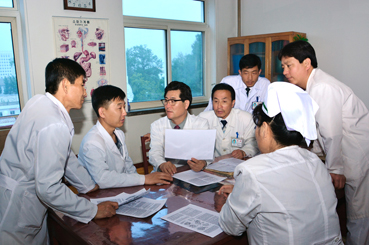


 Leftist Critic backup


.jpg)
